

Tennis Court Construction Melbourne
New tennis courts, rebuilds and resurfacing across Melbourne, built by our Victorian crew. Acrylic or synthetic grass, from about $40,000.
Jamie (24/7 quotes): 0468 069 002AS 1742.2 Compliant
Fully Insured
24/7 Availability

15+ Years
Get FREE Quote
Fixed-Price Quote Within 48 Hours
Trusted by 5,000+ businesses
VicRoads approved · AS/NZS compliant · $20M insured
Compliance-Ready Guarantee: every job is marked to AS/NZS 2890 & AS 1742, dimensionally verified, and delivered with full compliance documentation, backed by our 12-month workmanship guarantee.
Last updated:
What is Tennis Court Construction Melbourne?
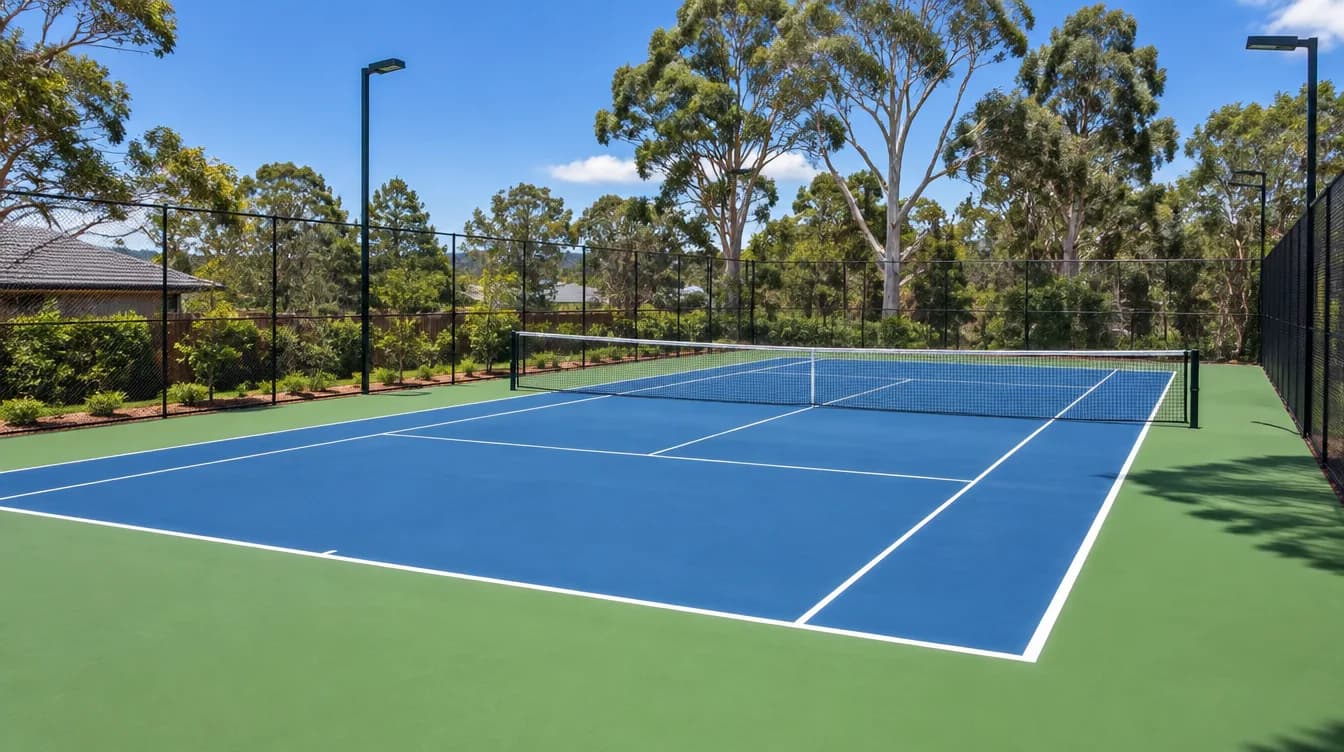
Line Marking Australia builds tennis courts across Melbourne with our own Victorian crew, from backyard courts to club and school rebuilds. A new tennis court in Australia starts from about $40,000 (Oneflare cost guide, 2026). We handle the base, slab, acrylic or synthetic grass surface, lines, posts, nets, fencing and lighting.
Melbourne is tennis country. Every January the city fills up with the game, and every suburb has a club, a school court or a backyard court that has seen better days. Victoria is where our crews work every week, so this is the city where we know the ground best.
Below is how a Melbourne tennis court build works, what drives the price, and what your council and the state will want to see.
Who builds tennis courts in Melbourne?
Line Marking Australia builds tennis courts in Melbourne with its own Victorian crew, the same people who line mark ovals, school halls and courts across the state. You deal with one contact for the whole job: site visit, earthworks, slab, surface, line marking, nets, fencing and lighting, rather than juggling separate trades.
Our Victorian crews already build school multi-sport courts on modular tiles, backyard half courts and indoor school halls lined for several sports. A tennis court is a bigger slab and a different surface, but the same discipline: get the base right, get the falls right, then mark it exactly.
How much does a tennis court cost in Melbourne?
A tennis court in Melbourne starts from about $40,000 for a new court (Oneflare cost guide, 2026), and an acrylic resurface of an existing court starts from about $8,000 (Airtasker cost guide, 2026). Reactive clay, slope, access for trucks and the extras you choose are what move a Melbourne price up or down.
| Melbourne tennis project | Starting point | What moves the price |
|---|---|---|
| New acrylic hard court | From about $40,000 (Oneflare, 2026) | Clay depth, slab design, fencing and lighting |
| New synthetic grass court | Quoted per site | Base preparation, grass and sand infill choice |
| Acrylic resurface of an existing court | From about $8,000 (Airtasker, 2026) | Crack repairs, number of coats, colours |
| Club or school bank of courts | Quoted per site | Number of courts, lighting, spectator paths |
We itemise every line of the quote, so you can see what the slab, the surface and the extras each cost, and add lights or fencing later if the budget is tight.
Does a Melbourne builder need to be registered in Victoria?
Yes, for most home tennis courts. In Victoria, the Building and Plumbing Commission (BPC) says a builder must be registered to carry out domestic building work worth more than $10,000, or any work that needs a building permit, and must use a major domestic building contract for work over $10,000.
- Check the register: the BPC's Find a Practitioner search shows a builder's registration and class.
- Insurance: Consumer Affairs Victoria says that from 1 July 2026, Home Warranty insurance applies to domestic work over a higher threshold, so ask your builder which cover your job needs.
- Schools, clubs and councils: commercial work follows different rules, and we confirm what applies before you sign.
Do you need a permit for a tennis court in Melbourne?
A tennis court in Melbourne may need a planning permit, a building permit or both. It depends on your council's planning scheme and overlays, such as heritage, vegetation protection or flood-related overlays, plus fencing over about 2 m, lights, retaining walls and earthworks. We check your property before the final quote.
In Victoria, building permits are issued by a registered building surveyor, either private or at council. Common triggers we see on Melbourne tennis courts:
- Fencing around the court that goes above about 2 m
- Floodlights near neighbours, where councils often ask about hours and light spill
- Cut and fill on sloping blocks in the eastern suburbs and the hills, with retaining walls
- Trees protected by a vegetation overlay close to the court footprint
How does Melbourne's clay soil affect a tennis court?
Much of Melbourne sits on reactive clay that swells when wet and shrinks in dry summers, and that movement is the main reason old Melbourne tennis courts crack. A good tennis court slab in Melbourne is designed for the soil it sits on, with a compacted base, the right reinforcement and falls that move water off quickly.
Sandy soils in parts of the bayside and south-east suburbs drain well but need firm compaction. Basalt areas to the west and north can mean rock close to the surface. We look at the ground first and design the base to suit.
Acrylic or synthetic grass: which suits Melbourne weather?
Both work well in Melbourne. An acrylic hard court gives a true bounce and dries fast after rain, while synthetic grass is softer underfoot and plays in light drizzle, which suits Melbourne's changeable weather. Tennis Australia's Victorian maintenance guides suggest acrylic resurfacing about every 7 to 10 years and synthetic grass about every 10 to 15 years.
| Surface | Good for | Melbourne note |
|---|---|---|
| Acrylic hard court | Homes, schools, competitive club play | Dries quickly after a passing shower; recoat about every 7 to 10 years |
| Cushioned acrylic | Clubs and older players | Softer on joints; costs more than standard acrylic |
| Synthetic grass (sand-filled) | Clubs, schools, social play | Plays in light rain; needs brushing and sand top-ups; about every 10 to 15 years |
Tennis Australia classifies surfaces in its National Court Surface Policy, and we follow its guidance on club and community courts.
How big is a tennis court and how long does a build take?
A doubles tennis court is 23.77 m long and 10.97 m wide, plus run-off behind the baselines and beside the sidelines, so a full court with fencing takes a large slice of a Melbourne block. Most new courts take a few weeks on site once permits are in place, including concrete curing time before the surface goes on.
Melbourne's winter rain and cold mornings can slow acrylic work, because coatings need dry weather to cure. Where we can, we plan surfacing for the warmer months.
Who we build tennis courts for in Melbourne
Line Marking Australia builds Melbourne tennis courts for homeowners on larger blocks, private and government schools, local tennis clubs, retirement villages and body corporates with a shared court. Each buyer needs something different: homeowners want a neat court that fits the garden, clubs want competition specification and lighting, schools want durable multi-use surfaces.
Many Melbourne clubs now add pickleball lines to tennis courts as Tennis Australia and the National Pickleball League turn venues into multi-sport racquet hubs. For club projects, see sports courts for clubs, and for the full guide to the court itself, see our tennis court construction page.
How we keep every Melbourne tennis court compliant
Every Melbourne tennis court we build follows the same compliance checklist, from the council check to the last line. That means the right registration for Victorian domestic work, a Before You Dig Australia search, safe work plans for excavation and plant, dust and sediment controls, and court dimensions and lighting built to the relevant standards.
- Council planning and building permit triggers checked: overlays, fencing over about 2 m, lighting, retaining walls, drainage
- Domestic work by a builder registered with the BPC, with public liability insurance
- Before You Dig Australia check before excavation
- Slab to AS 3600, designed for reactive clay, with drainage falls
- Sports lighting to AS 2560.1:2018 and AS 2560.2:2021, with light spill limited under AS/NZS 4282
- Safe Work Method Statements for excavation and mobile plant; silica dust controls when cutting concrete
- Sediment and stormwater controls so clay doesn't wash into Melbourne's drains
- Tennis Australia guidance for club and community courts; accessible paths considered against AS 1428.1
What do you need from me to quote a tennis court in Melbourne?
To quote a tennis court in Melbourne, we need to know what you're building, where it is and what's on the ground now. Photos, a rough sketch with measurements and your suburb let us flag council overlays and soil issues early, so the first quote is close to the final one.
- New court, rebuild or resurface, and how many courts
- Your suburb and site type: home, school, club, village or strata
- What's there now (lawn, old court, concrete) and any slope or drainage problems
- Truck and machinery access, including side gates and driveway width
- Preferred surface: acrylic, cushioned acrylic or synthetic grass
- Extra sports to mark, such as pickleball
- Fencing height, lighting and power on site
- Any permits already in hand, plans or photos
- Timing and budget
Key Benefits
Our own Victorian crew: Melbourne courts built by the team that marks Victorian courts and ovals every week
Slabs for reactive clay: base and reinforcement designed for Melbourne soils to resist cracking
Permits checked first: council overlays, fencing, lighting and earthworks reviewed before the final quote
Clear starting prices: new courts from about $40,000; resurfacing from about $8,000
Lines done properly: tennis and pickleball lines marked to exact dimensions

Site Inspection
Free assessment and detailed quote

Professional Marking
Expert application with premium materials

Quality Assurance
Final inspection and compliance sign-off
Compliance Standards
BPC registration (Victoria)
Domestic court work over $10,000, or needing a building permit, done by a builder registered with the Building and Plumbing Commission, under a major domestic building contract.
Council planning and building permits
Overlays, fencing over about 2 m, lighting, earthworks and drainage checked against your council's planning scheme before the final quote.
Tennis court dimensions
23.77 m × 10.97 m doubles court plus run-off, built to Tennis Australia guidance for club and community courts.
AS 3600 · BYDA
Slab designed for Melbourne's reactive clay with drainage falls; Before You Dig Australia check before excavation.
AS 2560 · AS/NZS 4282
Sports lighting to the AS 2560 series with light spill onto neighbours limited under AS/NZS 4282.
WHS, SWMS and silica controls
Safe Work Method Statements for excavation and mobile plant; water suppression or vacuum extraction when cutting concrete.
Fully Compliant & Certified
All our work meets or exceeds Australian Standards and state road authority requirements
VicRoads Approved
Registered Contractor
$20M Public Liability
$10M Professional Indemnity
5,000+ Projects
Since 2009
Fixed Prices
Not Estimates
AS 1742
Traffic Control Devices
Specifies line colours, widths, arrow designs, and placement for road markings. Ensures all traffic control devices meet national safety standards.
AS/NZS 2890
Parking Facilities
Covers bay dimensions (2.4m × 5.4m standard, 2.4m × 5.4m accessible plus a 2.4m shared zone), aisle widths, and traffic flow requirements for compliant parking areas.
AS 4586
Slip Resistance
Defines slip resistance classifications (P rating) for pedestrian surfaces. Critical for wet areas, ramps, and high-traffic zones.
AS/NZS 1428
Access & Mobility
Sets requirements for accessible parking bays, tactile indicators, and mobility access. Essential for DDA compliance and accessibility audits.
What Our Clients Say
Results based on typical project outcomes. Individual results may vary.
Upload your site plans for a detailed quote within 48 hours
Get an accurate, fixed-price quote tailored to your specific project requirements
Frequently Asked Questions
A new tennis court in Melbourne starts from about $40,000 (Oneflare cost guide, 2026), and an acrylic resurface from about $8,000 (Airtasker, 2026). Line Marking Australia quotes each Melbourne court on site, because reactive clay, slope, access and lighting change the price.
Line Marking Australia builds tennis courts in Melbourne with its own Victorian crew. One contact manages the site visit, earthworks, slab, acrylic or synthetic grass surface, line marking, nets, fencing and lighting for homes, schools and clubs.
Usually, yes. The Building and Plumbing Commission says domestic building work worth more than $10,000, or work needing a building permit, must be done by a registered builder under a major domestic building contract. Check the BPC's Find a Practitioner register.
A Melbourne tennis court may need a planning or building permit depending on your council's overlays, fencing over about 2 m, lighting, retaining walls and earthworks. Line Marking Australia checks these triggers for your property before giving a final quote.
Most Melbourne tennis courts crack because reactive clay swells in wet weather and shrinks in dry summers, moving the slab. A tennis court designed for the soil, with a compacted base, proper reinforcement and good drainage falls, resists that movement far better.
Both suit Melbourne. Acrylic gives a true bounce and dries fast after showers; synthetic grass is softer and plays in light rain. Tennis Australia's Victorian guides suggest resurfacing acrylic about every 7 to 10 years and synthetic grass about every 10 to 15 years.
Yes. A tennis court can carry two pickleball courts with the tennis lines kept, or more with the tennis net removed. Line Marking Australia marks the lines in a contrasting colour, often as part of a Melbourne tennis court resurface.
Related Services

Court Resurfacing
Learn more about this service
Sports Court Construction
Learn more about this service
Sports Court Lighting
Learn more about this service
Sports Courts for Sports Clubs
Learn more about this service
Tennis Court Construction
Learn more about this service
Tennis Court to Pickleball Conversion
Learn more about this service
More Sports & Playground Line Marking Services
Ready to Get Your Line Marking Sorted?
Upload your site plans and receive a fixed-price quote within 48 hours. No surprises, no cost blowouts, just clear pricing you can take to your committee or manager.
Or call us directly: 0417 460 236