Shopping Centre Pedestrian Crossings
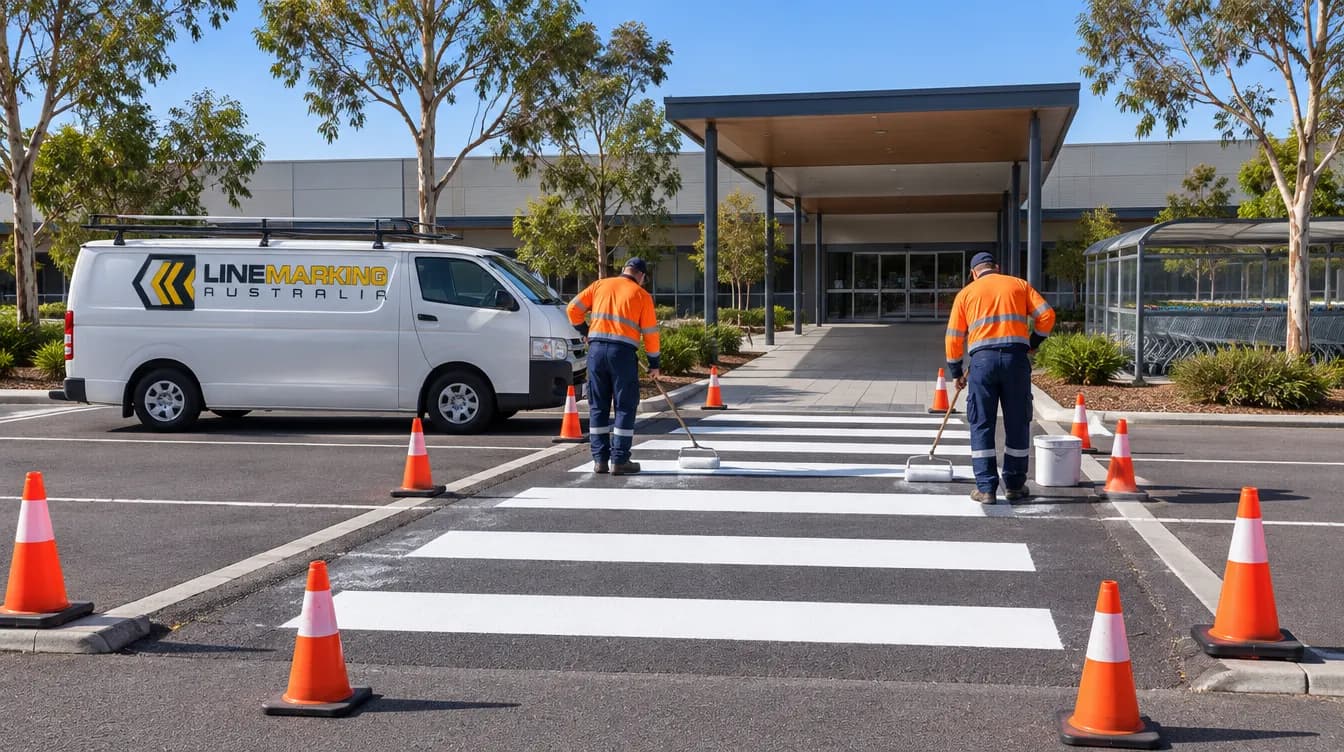
We've marked pedestrian crossings in shopping centres, retail parks, and commercial carparks across Australia. Zebra crossings, raised platform approaches, and defined pedestrian paths that protect shoppers from vehicle traffic. Creating safe pedestrian environments since 2009.
Jamie (24/7 quotes): 0468 069 002AS 1742.2 Compliant
Fully Insured
24/7 Availability

15+ Years
Get FREE Quote
Fixed-Price Quote Within 48 Hours
Trusted by 5,000+ businesses
VicRoads approved · AS/NZS compliant · $20M insured
Compliance-Ready Guarantee: every job is marked to AS 1742 and the state road authority specification, dimensionally verified and delivered with full compliance documentation, backed by our 12-month workmanship guarantee.
Last updated:
Shoppers Shouldn't Risk Their Lives Walking to the Entrance
Quick answer: Line Marking Australia marks pedestrian crossings in shopping centre car parks, including zebra crossings, marked walkways along aisle edges, raised crossing approaches and warning markings. We design routes that keep shoppers away from reversing cars and mark them to AS/NZS 2890.1:2004 and AS 1742.10:2024, working overnight so the centre stays open.
A shopping centre in Knox called us after a serious pedestrian incident in their carpark. A shopper was hit by a reversing vehicle while walking between parked cars. There were no defined pedestrian paths, no crossings, and no visual cues telling shoppers where to walk safely. The centre needed a comprehensive pedestrian safety marking scheme urgently.
We designed a system of marked pedestrian paths along the edges of parking aisles where pedestrians wouldn't cross behind reversing vehicles. Zebra crossings at main pedestrian desire lines gave shoppers clear, visible crossing points. Raised crossing approaches with advance warning marking slowed vehicles. Within a month, the centre reported pedestrians actually using the defined paths rather than cutting between cars.
Why shopping centre car parks are risky for pedestrians
Shopping centre carparks are uniquely dangerous pedestrian environments. Shoppers are distracted, carrying bags, wrangling children. Drivers are focused on finding spaces, not watching for pedestrians. The geometry puts pedestrians directly in the path of reversing vehicles. Good marking can't eliminate these risks, but it can channel pedestrians to safer routes and alert drivers to crossing points.
How we mark car park zebra crossings
Zebra crossing marking in carparks follows the same principles as road crossings but often with adaptations for the slower-speed environment. White stripes laid across the aisle, parallel to the direction of traffic, create a high-visibility crossing zone. Approach marking warns drivers of the crossing ahead. Where raised platforms are installed, the marking needs to align with the platform edges.
We made a design error at a retail park in Braybrook in 2016.
Crossings work best with clear walkways and traffic flow. See our pedestrian pathway marking, shopping centre traffic flow marking and speed hump installation pages.
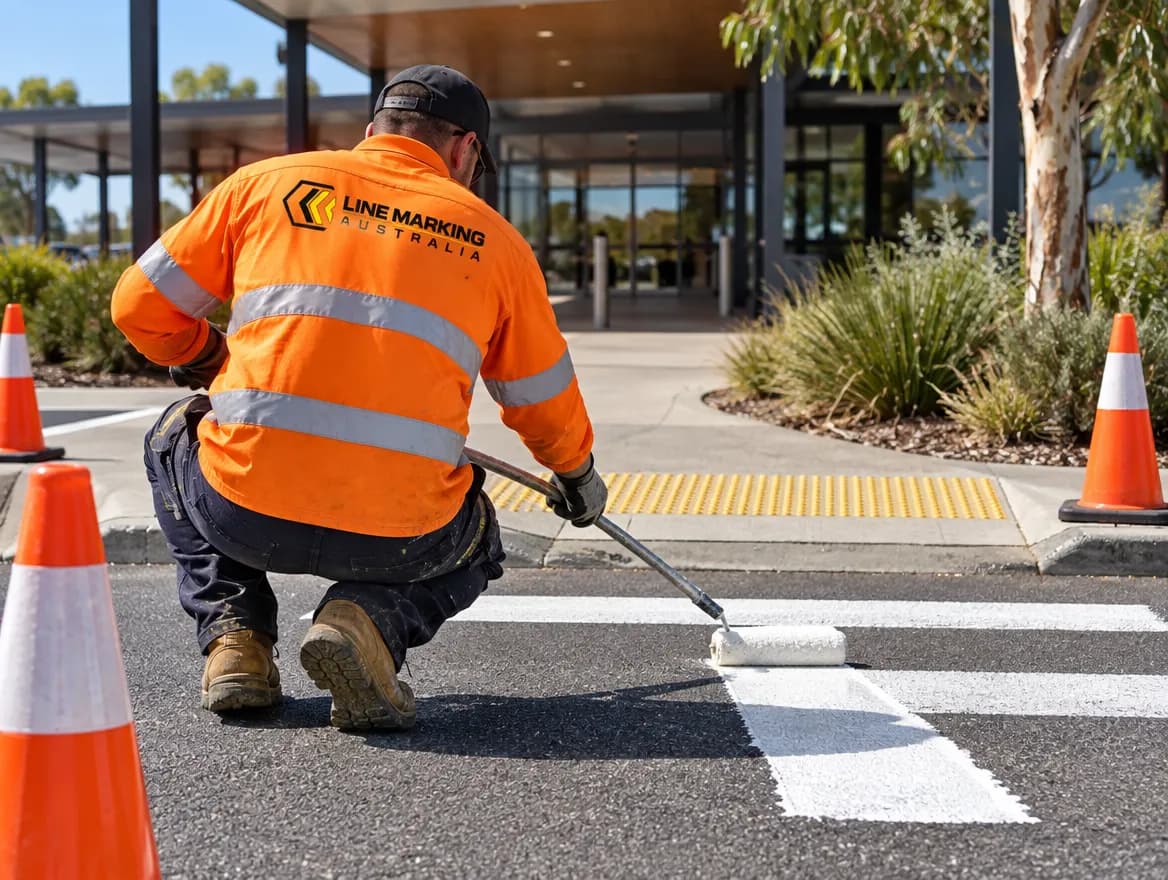

Site Inspection
Free assessment and detailed quote

Professional Marking
Expert application with premium materials

Quality Assurance
Final inspection and compliance sign-off
Compliance Standards
Parking Facility Pedestrian Provisions
AS/NZS 2890.1:2004 Section 4 specifies pedestrian provisions in off-street parking including crossing requirements, path widths, and separation from vehicle traffic.
Pedestrian Crossing Marking Standards
AS 1742.10:2024 specifies pedestrian crossing marking requirements including zebra stripe dimensions, placement, and approach warning marking applicable to carpark crossings.
Tactile Indicators at Crossings
AS/NZS 1428.4.1:2009 sets how tactile warning indicators are installed at pedestrian crossing points. We integrate TGSI installation with crossing marking for complete accessibility compliance.
Shopping Centre Design Guidelines
Shopping Centre Council of Australia guidelines recommend pedestrian safety provisions including marked crossings, defined paths, and separation from vehicle circulation.
Traffic Calming Integration
AS 1742.13 covers speed management devices including raised platforms at pedestrian crossings. Our marking aligns with platform edges and integrates with traffic calming infrastructure.
Workplace Pedestrian Safety
Safe Work Australia guidelines for pedestrian safety in workplaces apply to shopping centre loading areas and staff parking. Our marking supports workplace safety compliance.
Fully Compliant & Certified
All our work meets or exceeds Australian Standards and state road authority requirements
VicRoads Approved
Registered Contractor
$20M Public Liability
$10M Professional Indemnity
5,000+ Projects
Since 2009
Fixed Prices
Not Estimates
AS 1742
Traffic Control Devices
Specifies line colours, widths, arrow designs, and placement for road markings. Ensures all traffic control devices meet national safety standards.
AS 4049
Pavement Marking Paint
Sets the performance of road marking paints, including waterborne paint used on most public roads.
AS/NZS 2009
Glass Beads
Covers the retroreflective glass beads that make road lines visible at night and in the wet.
State specs
Road Authority Rules
Public road work follows the state specification, such as VicRoads Section 721, TMR MRTS45 or MRWA Specification 604.
What Our Clients Say
Results based on typical project outcomes. Individual results may vary.
Upload your site plans for a detailed quote within 48 hours
Get an accurate, fixed-price quote tailored to your specific project requirements
Frequently Asked Questions
We primarily mark zebra crossings with white stripes laid across the aisle, parallel to the direction of traffic. For raised platform crossings, we mark the approach ramps and platform edges. We also mark defined pedestrian paths along parking aisles where crossings aren't practical.
Crossings should be at main pedestrian desire lines, typically connecting parking areas to building entries. Critically, they should be positioned where drivers have clear sight lines, not between parking rows where reversing vehicles block visibility.
Yes, AS/NZS 1428.4.1 requires tactile warning indicators where pedestrian paths cross vehicle routes. We install warning tactiles at carpark crossing points as part of our pedestrian safety marking.
We mark paths along the edges of parking aisles using continuous edge lines or hatched zones. These paths keep pedestrians beside parked vehicles rather than behind them where reversing is a risk. Path marking connects to crossings at aisle ends.
Yes, we mark the approach ramps, platform surface, and edges of raised crossings. Marking typically includes advance warning triangles, edge lines on the ramps, and zebra stripes on the platform surface.
Zebra stripes in thermoplastic last 3-5 years in typical carpark traffic. Paint markings last 18-24 months. High-traffic crossings near entries wear faster than those in distant areas. We recommend annual inspection and touch-up.
Related Services

Pedestrian Crossings Line Marking
Learn more about this service
Roads & Carparks
Learn more about this service
School Zone Line Marking
Learn more about this service
Speed Stencils & RRPMs
Learn more about this service
Thermoplastic Marking That Lasts 4-6 Years Under Heavy Traffic
Learn more about this service
Traffic Management for Works
Learn more about this service
Ready to Get Your Line Marking Sorted?
Upload your site plans and receive a fixed-price quote within 48 hours. No surprises, no cost blowouts, just clear pricing you can take to your committee or manager.
Or call us directly: 0417 460 236