

Tennis Court Construction Adelaide
Home, club and school tennis courts across Adelaide, with slabs designed for reactive clay and surfaces that handle a South Australian summer. From about $40,000.
Jamie (24/7 quotes): 0468 069 002AS 1742.2 Compliant
Fully Insured
24/7 Availability

15+ Years
Get FREE Quote
Fixed-Price Quote Within 48 Hours
Trusted by 5,000+ businesses
VicRoads approved · AS/NZS compliant · $20M insured
Compliance-Ready Guarantee: every job is marked to AS/NZS 2890 & AS 1742, dimensionally verified, and delivered with full compliance documentation, backed by our 12-month workmanship guarantee.
Last updated:
What is Tennis Court Construction Adelaide?
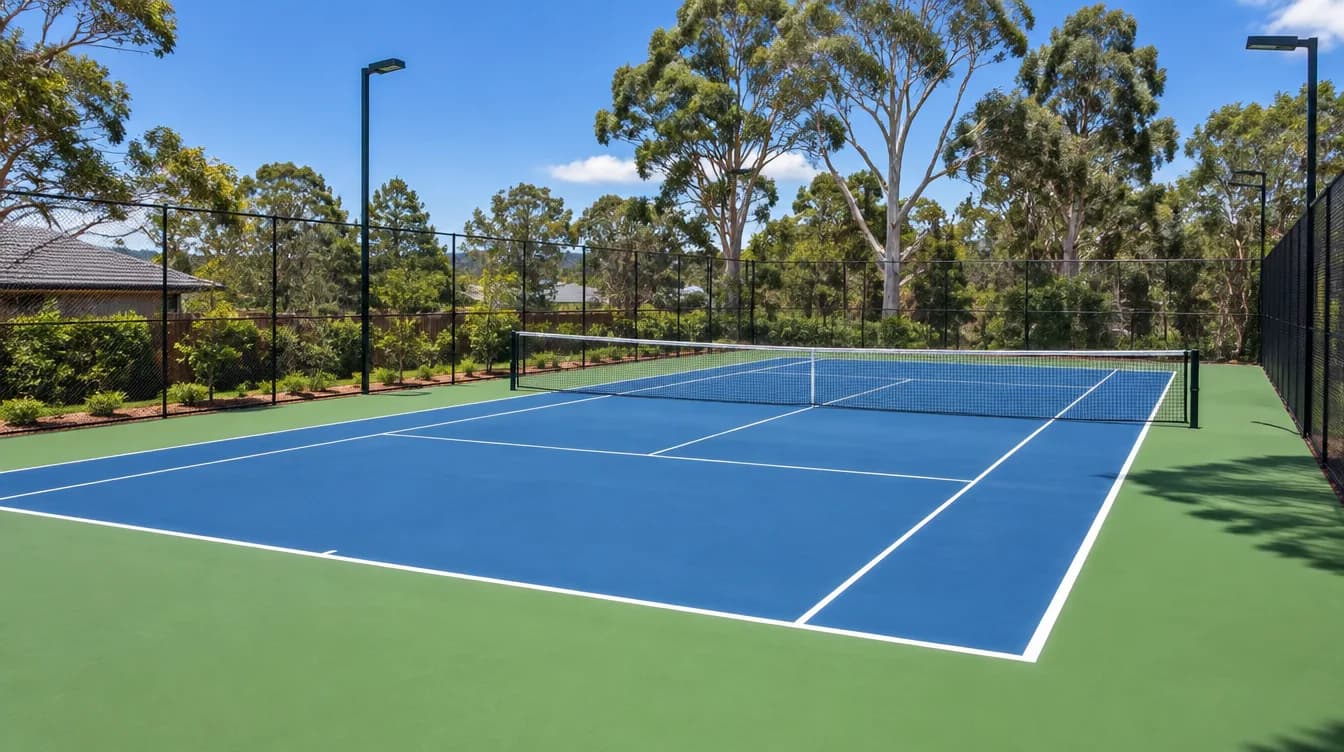
Line Marking Australia arranges tennis court construction in Adelaide for homes, clubs, schools and councils, using our network of local builders in South Australia. A new tennis court in Australia starts from about $40,000 (Oneflare cost guide, 2026). We manage the slab, drainage, acrylic or synthetic grass surface, lines, posts, nets, fencing and lighting.
Adelaide has a deep tennis culture. Plenty of suburbs have a club court on the corner, and older homes in the eastern and inner southern suburbs often have a court out the back that needs bringing back to life.
We handle the planning and line marking ourselves and arrange the build through our network of local builders. You get one point of contact from the first site check to the last line.
How much does a tennis court cost in Adelaide?
A tennis court in Adelaide starts from about $40,000 for a new court, based on the Oneflare cost guide (2026), and resurfacing an existing acrylic court starts from about $8,000 (Airtasker cost guide, 2026). Ground conditions, the slab design for clay soils, fencing and lighting move the final price.
| Project | Starting point | Source |
|---|---|---|
| New tennis court (slab, surface, lines, net) | From about $40,000 | Oneflare cost guide, 2026 |
| Acrylic resurface of an existing court | From about $8,000 | Airtasker cost guide, 2026 |
| Fencing, lighting, retaining, extra earthworks | Quoted per site | Itemised in your quote |
On Adelaide jobs the biggest swing items are how much reactive clay has to be dealt with, slope in the foothills, truck access down a side driveway and whether the court needs lights for evening play.
How much space do you need for a tennis court?
A doubles tennis court has a playing area of 23.77 m by 10.97 m, plus run-off behind the baselines and beside the sidelines so players can chase the ball safely. Many Adelaide house blocks are long and narrow, so we check the true usable area, setbacks and fall before you commit.
- Orientation: north to south where possible, so the low winter sun and the afternoon summer glare stay out of players' eyes
- Run-off: more space behind the baselines is always better for club-standard play
- Fencing: allow room for fence posts and a gate on the side with the best access
Which tennis court surface suits Adelaide's heat?
For most Adelaide tennis courts, an acrylic hard court on a well-designed concrete or asphalt slab is the most durable choice, while synthetic grass suits clubs and families who want a softer feel. Adelaide's long hot summers favour UV-stable acrylic colours and lighter tones that stay cooler underfoot.
| Surface | Why Adelaide owners choose it | Watch out for |
|---|---|---|
| Acrylic hard court | True bounce, low upkeep, handles dry heat well | Recoat about every 7 to 10 years |
| Cushioned acrylic | Easier on knees for older club members | Costs more than standard acrylic |
| Synthetic grass (sand-filled) | Soft feel, popular at community clubs | Brushing, sand top-ups, replace about every 10 to 15 years |
The resurfacing intervals come from Tennis Australia's Victorian maintenance guides, and Tennis Australia's National Court Surface Policy is the reference we use when a club needs a recognised surface category.
How do Adelaide's clay soils affect a tennis court?
Much of the Adelaide plains sits on reactive clay that swells when wet and shrinks in a dry summer. Under a tennis court that movement shows up as cracks in the surface. Good slab design, correct joints, moisture control and drainage that keeps water away from the edges are what make an Adelaide court last.
Before we price a court we look at what the site tells us:
- Cracks in nearby driveways, paths and house walls
- Large trees close to the court area, which dry out clay unevenly
- Where stormwater goes now and where it will go once the slab is in
- Whether a soil report or engineered slab design is needed for the site
Do you need council approval for a tennis court in Adelaide?
A tennis court in Adelaide may need development approval under South Australia's Planning and Design Code, lodged through PlanSA. Whether it does depends on the zone, earthworks, retaining walls, fence height, lighting, any heritage or bushfire overlay and how close the court sits to neighbours. We check your site before the final quote.
Courts in the Adelaide Hills and foothills often meet more questions about cut and fill, retaining and bushfire overlays. Lit courts near homes draw questions about light spill, which is managed under AS/NZS 4282.
Who needs a builder's licence for a court in South Australia?
In South Australia, anyone who carries on business contracting building work must hold a building work contractor's licence under the Building Work Contractors Act 1995, with a registered building work supervisor. The licence number must appear on domestic building contracts and advertising, so ask to see it before you sign.
We arrange your court through our network of local builders who hold the licence the job needs, with public liability insurance. Electrical work for lighting is done by licensed electricians.
How often should an Adelaide tennis court be resurfaced?
An acrylic tennis court usually needs resurfacing about every 7 to 10 years, and synthetic grass about every 10 to 15 years, according to Tennis Australia's Victorian maintenance guides. In Adelaide, strong summer UV fades colour faster, and clay movement can open cracks that need repair before any recoat goes on.
A typical Adelaide resurface involves cleaning, crack repair, patching low spots that hold water, new acrylic coats and fresh lines. Many home owners use the resurface to add pickleball lines at the same time.
Are there grants for club tennis courts in South Australia?
Yes. South Australian clubs and councils often fund new courts, resurfacing and lighting through state sport infrastructure grants. The SA Community Facilities Program recently funded the Mount Gambier Tennis Club with $431,000. Council community grants can also help. We supply scopes and itemised quotes to support applications.
If you run a club, see our page on sports courts for sports clubs for how we plan staged court upgrades.
How we keep every tennis court build compliant in Adelaide
Every Adelaide tennis court we arrange follows the same compliance steps, from approvals to the final line. These checks protect you, your neighbours and the builders on site, and they are priced into the quote from the start rather than added later as surprises.
- Development approval needs checked under the Planning and Design Code (lighting, fences over about 2 m, retaining walls, earthworks, drainage, setbacks, heritage and bushfire overlays)
- Before You Dig Australia (BYDA) check before excavation
- Work Health and Safety laws followed, with Safe Work Method Statements for excavation and mobile plant
- Silica dust controls with water suppression or on-tool vacuum extraction when cutting concrete
- Sediment and stormwater controls during earthworks
- Slabs to AS 3600, sports lighting to AS 2560.1:2018 and AS 2560.2:2021, light spill under AS/NZS 4282
- Court dimensions of 23.77 m by 10.97 m and Tennis Australia guidance for club and community courts
- Builders holding the South Australian licence the work requires
For the full picture of how we run court builds nationally, see tennis court construction and our sports court construction hub.
What do you need from me to quote a tennis court in Adelaide?
To quote a tennis court in Adelaide accurately we need a picture of the site and what you want from the court. Photos, a rough sketch and your suburb let us flag clay, slope and access issues early, so the first quote is close to the final price.
- New court, resurface of an old court, or conversion to add pickleball
- Your suburb and whether the block is flat or in the hills
- What is on the ground now: lawn, old court, pavers or garden
- Any cracking in nearby slabs, and large trees near the court area
- Truck and machinery access, including side gate widths
- Preferred surface: acrylic, cushioned acrylic or synthetic grass
- Fencing, lighting and power needs
- Any approvals already lodged through PlanSA, and plans or photos
- Your timing and budget
Key Benefits
Built for clay soils: slab design, joints and drainage planned for the Adelaide plains
Heat-ready surfaces: UV-stable acrylic or synthetic grass for long summers
Licensed local builders: arranged through our South Australian builder network
Grant-ready quotes: itemised scopes for clubs and councils
One point of contact: approvals, build, lines, nets, fencing and lighting

Site Inspection
Free assessment and detailed quote

Professional Marking
Expert application with premium materials

Quality Assurance
Final inspection and compliance sign-off
Compliance Standards
PlanSA development approval
Planning and Design Code requirements checked for earthworks, retaining, fencing, lighting and overlays.
SA building work contractor licence
Builders licensed under the Building Work Contractors Act 1995 with a registered supervisor.
AS 3600 · BYDA
Slabs designed for reactive clay to AS 3600; services located before digging.
AS 2560 · AS/NZS 4282
Sports lighting to the AS 2560 series with light spill controlled for neighbours.
WHS & silica controls
SWMS for high-risk work and dust controls when cutting concrete.
Fully Compliant & Certified
All our work meets or exceeds Australian Standards and state road authority requirements
VicRoads Approved
Registered Contractor
$20M Public Liability
$10M Professional Indemnity
5,000+ Projects
Since 2009
Fixed Prices
Not Estimates
AS 1742
Traffic Control Devices
Specifies line colours, widths, arrow designs, and placement for road markings. Ensures all traffic control devices meet national safety standards.
AS/NZS 2890
Parking Facilities
Covers bay dimensions (2.4m × 5.4m standard, 2.4m × 5.4m accessible plus a 2.4m shared zone), aisle widths, and traffic flow requirements for compliant parking areas.
AS 4586
Slip Resistance
Defines slip resistance classifications (P rating) for pedestrian surfaces. Critical for wet areas, ramps, and high-traffic zones.
AS/NZS 1428
Access & Mobility
Sets requirements for accessible parking bays, tactile indicators, and mobility access. Essential for DDA compliance and accessibility audits.
What Our Clients Say
Results based on typical project outcomes. Individual results may vary.
Upload your site plans for a detailed quote within 48 hours
Get an accurate, fixed-price quote tailored to your specific project requirements
Frequently Asked Questions
A new tennis court in Adelaide starts from about $40,000 (Oneflare cost guide, 2026), and acrylic resurfacing starts from about $8,000 (Airtasker cost guide, 2026). Line Marking Australia itemises clay-soil slab work, fencing and lighting so you can see what drives the price.
Reactive clay across much of the Adelaide plains swells and shrinks with moisture, which can crack a tennis court. Line Marking Australia arranges slabs with suitable design, joints and drainage so the court moves as little as possible over its life.
A tennis court in Adelaide may need development approval under the Planning and Design Code through PlanSA, depending on zone, earthworks, retaining, fencing, lighting and overlays. Line Marking Australia checks your site before the final quote.
In South Australia, businesses contracting building work need a building work contractor's licence with a registered supervisor. Line Marking Australia arranges your court through our network of local builders who hold the licence the job requires.
Acrylic hard court on a well-designed slab suits most Adelaide tennis courts because it handles dry heat and needs little upkeep. Synthetic grass gives a softer feel and is popular with community clubs, but needs brushing and sand top-ups.
Tennis Australia's Victorian maintenance guides suggest acrylic courts need resurfacing about every 7 to 10 years and synthetic grass about every 10 to 15 years. Adelaide's strong UV and clay movement can shorten that, so regular crack repair helps.
Yes. The SA Community Facilities Program funded the Mount Gambier Tennis Club with $431,000, and councils run community grants too. Line Marking Australia supplies scopes and itemised quotes to support a club's tennis court application.
Related Services

Backyard Sports Courts
Learn more about this service
Sports Court Construction
Learn more about this service
Sports Courts for Councils
Learn more about this service
Sports Courts for Sports Clubs
Learn more about this service
Tennis Court Construction
Learn more about this service
More Sports & Playground Line Marking Services
Ready to Get Your Line Marking Sorted?
Upload your site plans and receive a fixed-price quote within 48 hours. No surprises, no cost blowouts, just clear pricing you can take to your committee or manager.
Or call us directly: 0417 460 236