Tactile Ground Surface Indicators
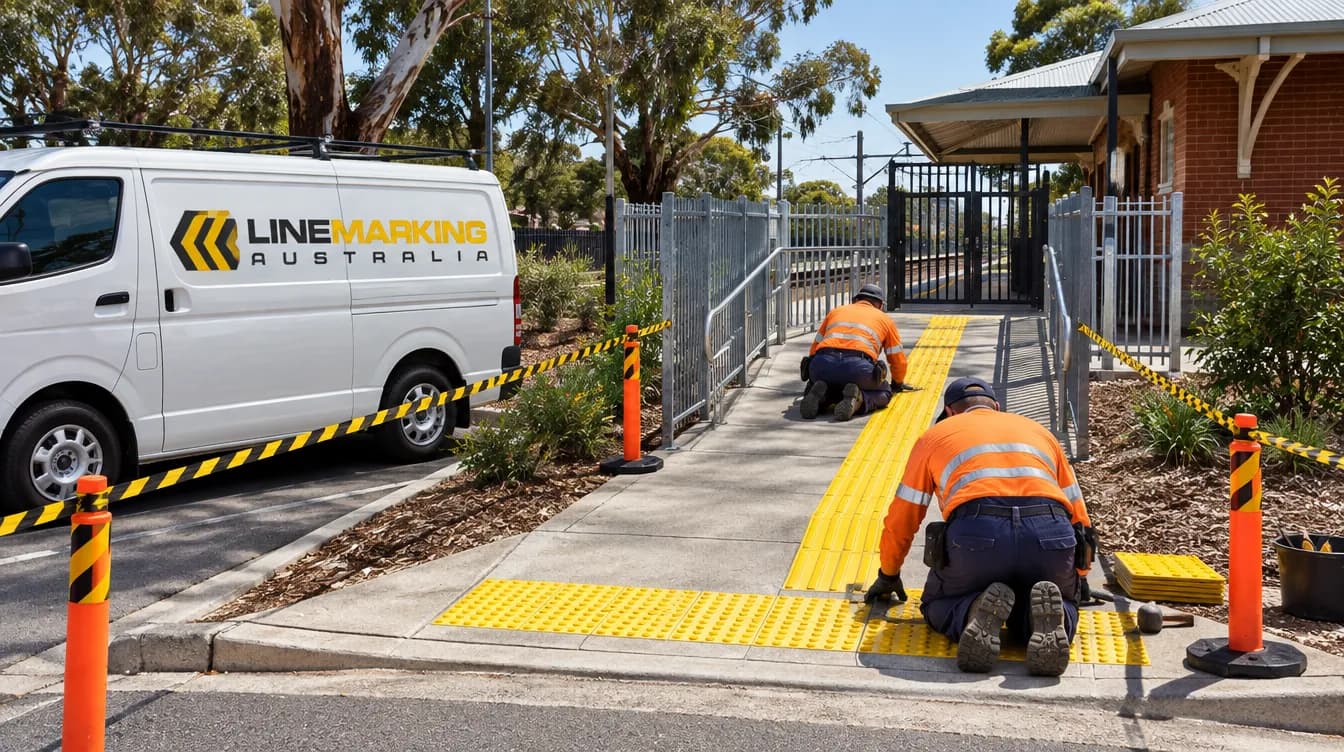
We've installed tactile ground surface indicators at shopping centres, transport hubs, hospitals, and public buildings across Australia. Warning tactiles at hazards, directional tactiles for wayfinding, and integrated systems for complex facilities. AS/NZS 1428.4.1 compliant since 2009.
Jamie (24/7 quotes): 0468 069 002AS 1742.2 Compliant
Fully Insured
24/7 Availability

15+ Years
Get FREE Quote
Fixed-Price Quote Within 48 Hours
Trusted by 5,000+ businesses
VicRoads approved · AS/NZS compliant · $20M insured
Compliance-Ready Guarantee: every job is installed to AS 1428 and AS 4586, checked on completion and delivered with full compliance documentation, backed by our 12-month workmanship guarantee.
Last updated:
Tactile Indicator Supply and Installation
Quick answer: Line Marking Australia installs tactile ground surface indicators (TGSIs) to AS/NZS 1428.4.1. Warning TGSIs, with raised dots, go at stairs, ramps, escalators, glass doors and crossings. Directional TGSIs, with raised bars, guide people along safe paths. Both need the right setback and enough luminance contrast so people with low vision can find and feel them.
A hospital in Box Hill called us after a vision-impaired patient walked into a glass door because there was no tactile warning. The hospital faced a complaint and urgent need to install appropriate tactile indicators throughout their public areas. Glass doors, stairs, ramps, escalators, platform edges, and pedestrian crossings all needed warning tactiles. Reception areas and long corridors needed directional tactiles to assist wayfinding.
We assessed the entire facility and developed a comprehensive TGSI installation plan. Warning tactiles (the dots pattern) at every hazard point. Directional tactiles (the bars pattern) connecting key destinations. The hospital passed their accessibility re-audit and, more importantly, became genuinely navigable for vision-impaired patients and visitors.
How tactile indicators work
Tactile indicators work through texture that can be felt underfoot or detected with a cane. Warning tactiles have raised dots in a grid pattern that signal 'hazard ahead, stop and assess'. Directional tactiles have raised bars aligned with the direction of travel that signal 'safe path this way'. The patterns are internationally standardised so a vision-impaired person encountering them anywhere knows what they mean.
Correct installation requires attention to detail that many contractors miss.
For setbacks and dimensions, see our AS/NZS 1428.4.1 TGSI guide. Stairs also need stair nosings with luminance contrast, and many sites pair TGSIs with pedestrian crossing line marking.
Supply and install in one visit
We supply and install for station platforms, crossings and building entries, and line mark around the new work in the same visit, so you deal with one contractor. Our crews have installed bollards beside disabled bays and tactiles on rail platforms.

Site Inspection
Free assessment and detailed quote

Professional Marking
Expert application with premium materials

Quality Assurance
Final inspection and compliance sign-off
Compliance Standards
Tactile Ground Surface Indicators
AS/NZS 1428.4.1:2009 is the primary standard for TGSIs. Specifies warning and directional patterns, dimensions, setbacks from hazards, luminance contrast requirements, and installation guidance.
Warning Tactile Pattern
AS/NZS 1428.4.1 specifies warning tactiles as raised truncated domes (dots) in a regular grid pattern. Used to warn of hazards including stairs, ramps, escalators, roads, and level changes.
Directional Tactile Pattern
AS/NZS 1428.4.1 specifies directional tactiles as raised flat-topped bars aligned with direction of travel. Used to indicate safe paths and assist wayfinding for vision-impaired pedestrians.
Luminance Contrast Requirements
AS/NZS 1428.4.1 requires minimum 30% luminance contrast between tactiles and surrounding surface. We verify contrast using light reflectance value measurements to ensure compliance.
Building Code Accessibility
Building Code of Australia references AS 1428 series for accessibility requirements. TGSIs are required at specific hazard points in buildings and public spaces to achieve compliance.
Public Transport Accessibility
Disability Standards for Accessible Public Transport (DSAPT) specify TGSI requirements at public transport facilities including platform edges, ramps, and interchange areas.
Fully Compliant & Certified
Installed to the Australian Standards for access and mobility used in building approvals
$20M Public Liability
$10M Professional Indemnity
5,000+ Projects
Since 2009
AS 1428 Installs
Access & mobility
Fixed Prices
Not Estimates
AS/NZS 1428.4.1
Tactile Indicators
Sets the layout, size and luminance contrast of warning and directional tactile ground surface indicators.
AS 1428.1
Stair Nosings
Requires a contrasting nosing strip on each step, with at least 30% luminance contrast, so the edge is easy to see.
AS 4586
Slip Resistance
Defines slip resistance classifications (P rating) for pedestrian surfaces. Critical for wet areas, ramps, and high-traffic zones.
Premises Standards
Access to Buildings
The Disability (Access to Premises — Buildings) Standards 2010 and the NCC call up AS 1428 for new and upgraded buildings.
Upload your site plans for a detailed quote within 48 hours
Get an accurate, fixed-price quote tailored to your specific project requirements
Frequently Asked Questions
Warning tactiles have a raised dot pattern that signals 'hazard ahead, stop and assess'. Directional tactiles have raised bars aligned with travel direction that signal 'safe path this way'. Different patterns communicate different information to vision-impaired pedestrians.
Warning tactiles are required at stairs, ramps, escalators, pedestrian road crossings, railway platform edges, and other hazard points. Specific setback distances vary by hazard type and are specified in AS/NZS 1428.4.1.
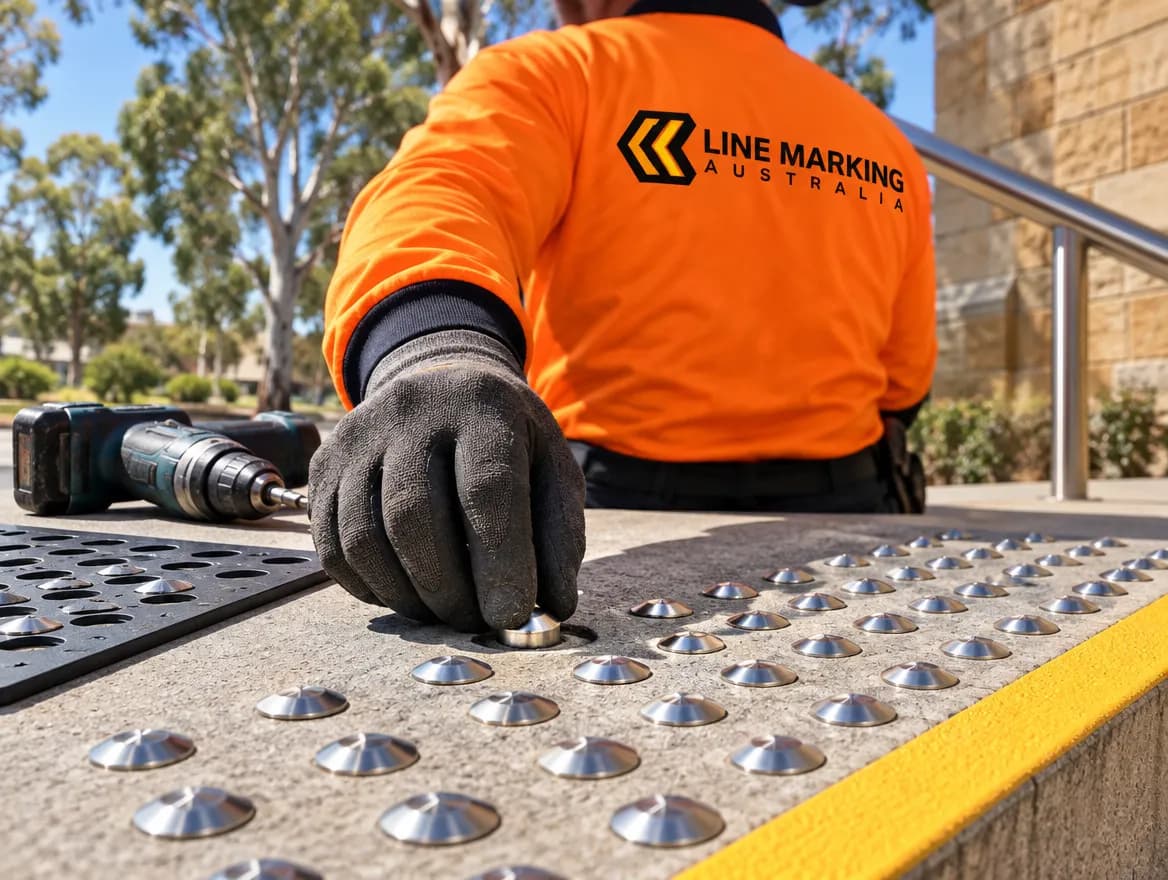
Common options include stainless steel discrete studs drilled into existing surfaces, polymer or rubber tiles adhered to surfaces, and polyurethane integrated tiles for new construction. We recommend materials based on your surface type, traffic, and aesthetic requirements.
We measure the light reflectance value (LRV) of both the tactile and surrounding surface to calculate luminance contrast ratio. AS/NZS 1428.4.1 requires minimum 30% contrast. We select tactile colours that achieve this on your specific surface.
Yes, stainless steel discrete studs can be drilled into existing concrete, tiles, or pavers. Adhesive-applied polymer tiles work on smooth surfaces. We assess your existing surface and recommend the most appropriate installation method.
Yes, accessible parking often requires tactile indicators at the transition between shared spaces and pedestrian paths. We coordinate TGSI installation with accessible parking marking for complete accessibility compliance.
Expert Guides
In-depth compliance guides and resources related to tactile ground surface indicators.
Related Services

Accessible Parking Line Marking
Learn more about this service
Anti-Slip Stair Nosings & Edge Painting
Learn more about this service
Pedestrian Pathways Line Marking
Learn more about this service
Slip Resistance Ratings
Learn more about this service
Stair Nosings & Luminance Contrast
Learn more about this service
Tactile Ground Surface Indicators
Learn more about this service
Ready to Get Your Line Marking Sorted?
Upload your site plans and receive a fixed-price quote within 48 hours. No surprises, no cost blowouts, just clear pricing you can take to your committee or manager.
Or call us directly: 0417 460 236