Slip Resistance Ratings
Slips and falls cost Australian businesses millions annually. AS 4586 classifies floor slip resistance. Understanding and meeting these ratings keeps your facility safe and compliant.
Jamie (24/7 quotes): 0468 069 002AS 1742.2 Compliant
Fully Insured
24/7 Availability

15+ Years
Get FREE Quote
Fixed-Price Quote Within 48 Hours
Trusted by 5,000+ businesses
VicRoads approved · AS/NZS compliant · $20M insured
Compliance-Ready Guarantee: every job is installed to AS 1428 and AS 4586, checked on completion and delivered with full compliance documentation, backed by our 12-month workmanship guarantee.
Last updated:
Why Slip Resistance Matters for Line Marking
Quick answer: Slip resistance ratings come from AS 4586:2013, which rates new floor surfaces with P ratings (P0 to P5, wet pendulum test) and R ratings (R9 to R13, oil-wet ramp test). Line Marking Australia picks line marking paint and anti-slip finishes to match each area, for example P4 for wet wash-down zones, so markings never create a new slip hazard.
Most people don't think about slip resistance when they think about line marking. But paint changes the surface characteristics of your floor. Apply the wrong product and you can create a slip hazard where none existed before.
AS 4586 classifies floors by slip resistance using P ratings (pendulum test, wet) and R ratings (ramp test, oil). Different areas need different ratings. A dry warehouse aisle has different requirements than a wet processing area.
We received a callback from a food processing plant in Laverton where staff were slipping on newly marked pedestrian lanes. The paint we'd used was fine for dry conditions but became slippery when wet from their regular wash-down.
We returned and applied anti-slip aggregate to the pedestrian lanes, bringing them up to P4 rating suitable for wet conditions. Now we always confirm the expected conditions before selecting materials.
Testing existing floors
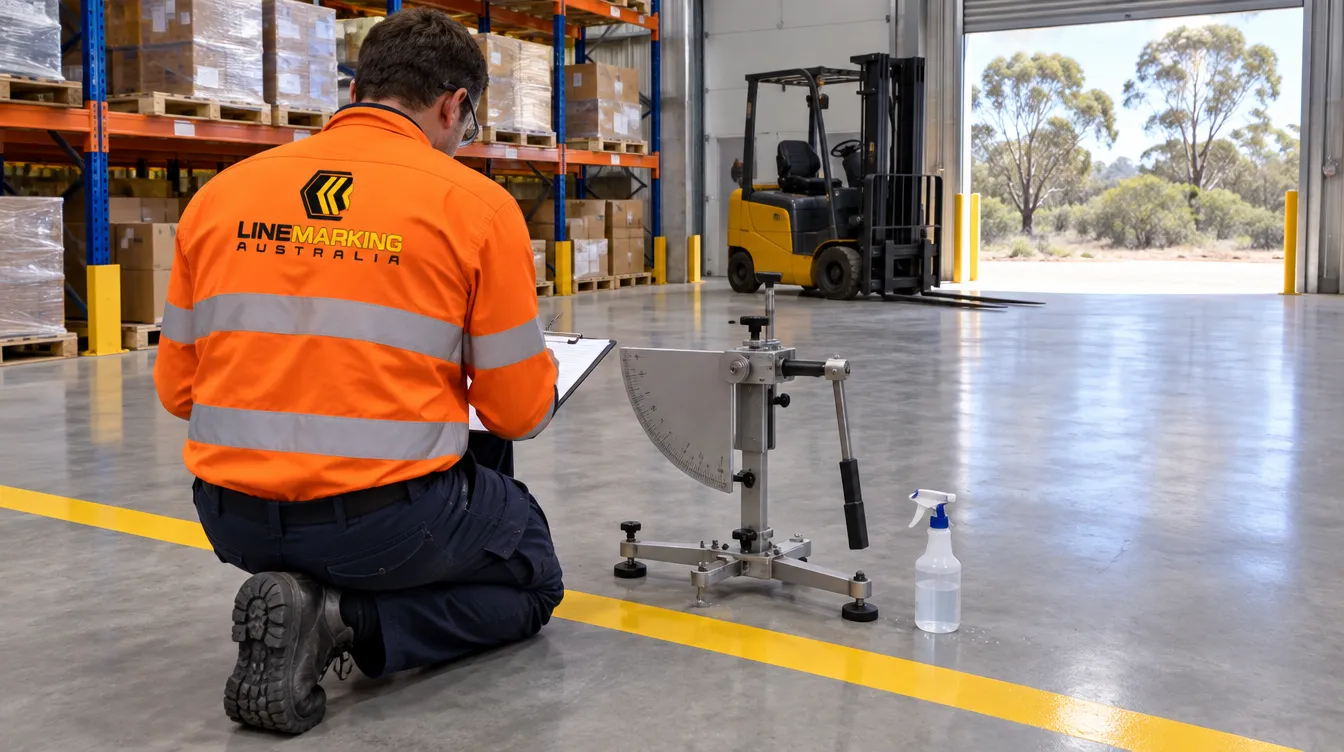
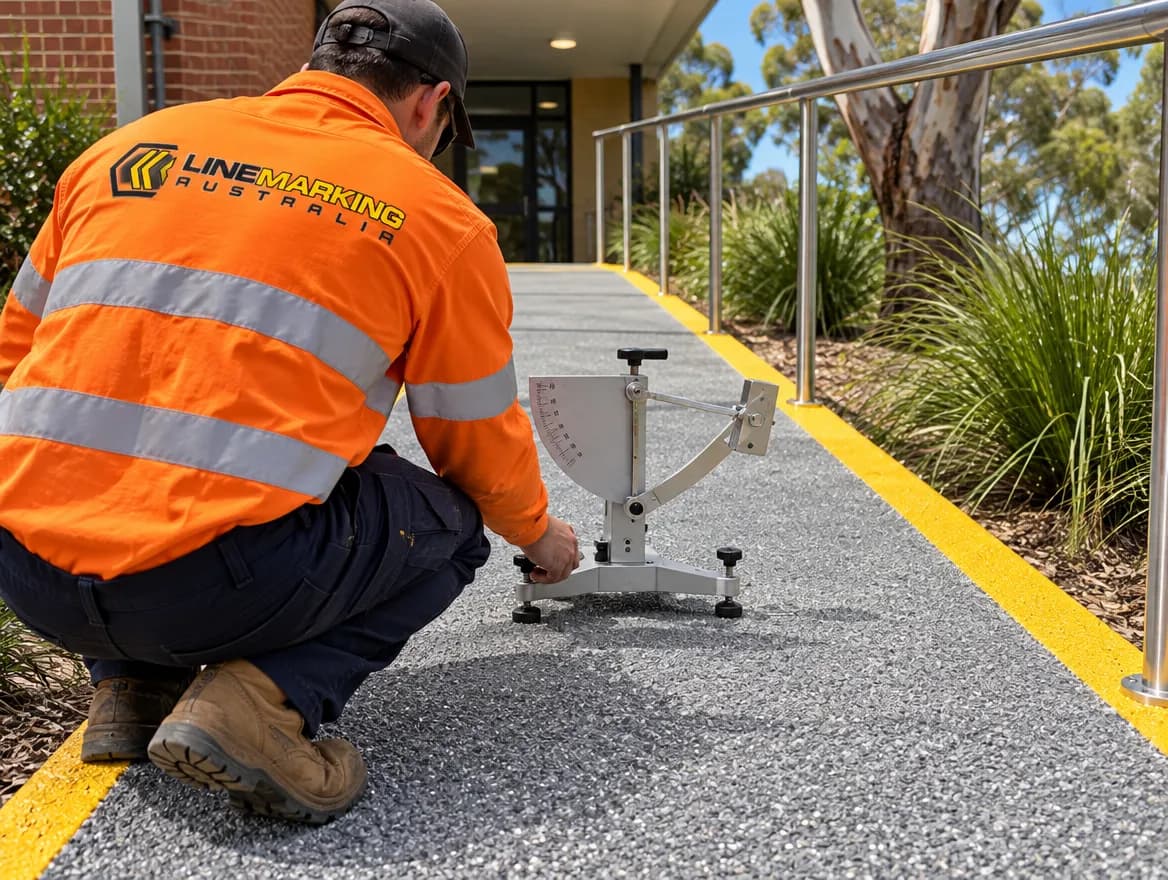
New products are rated under AS 4586:2013. Floors already in use are tested on site under AS 4663:2013. If your markings need more grip, see our slip-resistant coatings, anti-slip stair nosings and warehouse walkway marking pages.

Site Inspection
Free assessment and detailed quote

Professional Marking
Expert application with premium materials

Quality Assurance
Final inspection and compliance sign-off
Compliance Standards
AS 4586:2013
Primary standard for slip resistance classification of new pedestrian surface materials.
AS/NZS 4663:2013
Slip resistance measurement of existing pedestrian surfaces using pendulum testing.
Safe Work Australia
Workplace safety requirements including floor slip resistance in work areas.
Building Code of Australia
References slip resistance requirements for floors in building design.
SA HB 198:2014
Handbook on specifying and testing slip resistance of pedestrian surfaces (replaced HB 197:1999).
Fully Compliant & Certified
Installed to the Australian Standards for access and mobility used in building approvals
$20M Public Liability
$10M Professional Indemnity
5,000+ Projects
Since 2009
AS 1428 Installs
Access & mobility
Fixed Prices
Not Estimates
AS/NZS 1428.4.1
Tactile Indicators
Sets the layout, size and luminance contrast of warning and directional tactile ground surface indicators.
AS 1428.1
Stair Nosings
Requires a contrasting nosing strip on each step, with at least 30% luminance contrast, so the edge is easy to see.
AS 4586
Slip Resistance
Defines slip resistance classifications (P rating) for pedestrian surfaces. Critical for wet areas, ramps, and high-traffic zones.
Premises Standards
Access to Buildings
The Disability (Access to Premises — Buildings) Standards 2010 and the NCC call up AS 1428 for new and upgraded buildings.
Upload your site plans for a detailed quote within 48 hours
Get an accurate, fixed-price quote tailored to your specific project requirements
Frequently Asked Questions
P3 is suitable for dry internal areas. P4 for areas that may get wet occasionally. P5 for areas that are frequently wet. We help determine the appropriate rating for each area of your facility.
P ratings (pendulum test) measure slip resistance on wet surfaces. R ratings (ramp test) measure slip resistance in oily conditions wearing footwear. Different tests for different hazards.
Yes, paint changes surface characteristics. Standard paint can reduce slip resistance on some surfaces. Anti-slip additives can increase slip resistance where needed.
Yes, we can arrange pendulum testing to verify slip resistance ratings after line marking application. This provides documented evidence of compliance.
We can apply anti-slip aggregates or coatings over existing marking to increase slip resistance. Or remark with appropriate anti-slip materials.
Slightly, due to aggregate additives. But this is minimal compared to the cost of a slip injury. We recommend anti-slip materials for any area that may get wet.
Related Services

Anti-Slip Stair Nosings & Edge Painting
Learn more about this service
Pedestrian Pathways Line Marking
Learn more about this service
Slip-Resistant Coatings
Learn more about this service
Stair Nosings & Luminance Contrast
Learn more about this service
Tactile Ground Surface Indicators
Learn more about this service
Tactile Ground Surface Indicators
Learn more about this service
More Specialty Line Marking Services Services
Ready to Get Your Line Marking Sorted?
Upload your site plans and receive a fixed-price quote within 48 hours. No surprises, no cost blowouts, just clear pricing you can take to your committee or manager.
Or call us directly: 0417 460 236