

Pickleball Court Construction Melbourne
New pickleball courts and tennis-court conversions across Melbourne, built by our Victorian crew. Home courts from about $20,000.
Jamie (24/7 quotes): 0468 069 002AS 1742.2 Compliant
Fully Insured
24/7 Availability

15+ Years
Get FREE Quote
Fixed-Price Quote Within 48 Hours
Trusted by 5,000+ businesses
VicRoads approved · AS/NZS compliant · $20M insured
Compliance-Ready Guarantee: every job is marked to AS/NZS 2890 & AS 1742, dimensionally verified, and delivered with full compliance documentation, backed by our 12-month workmanship guarantee.
Last updated:
What is Pickleball Court Construction Melbourne?
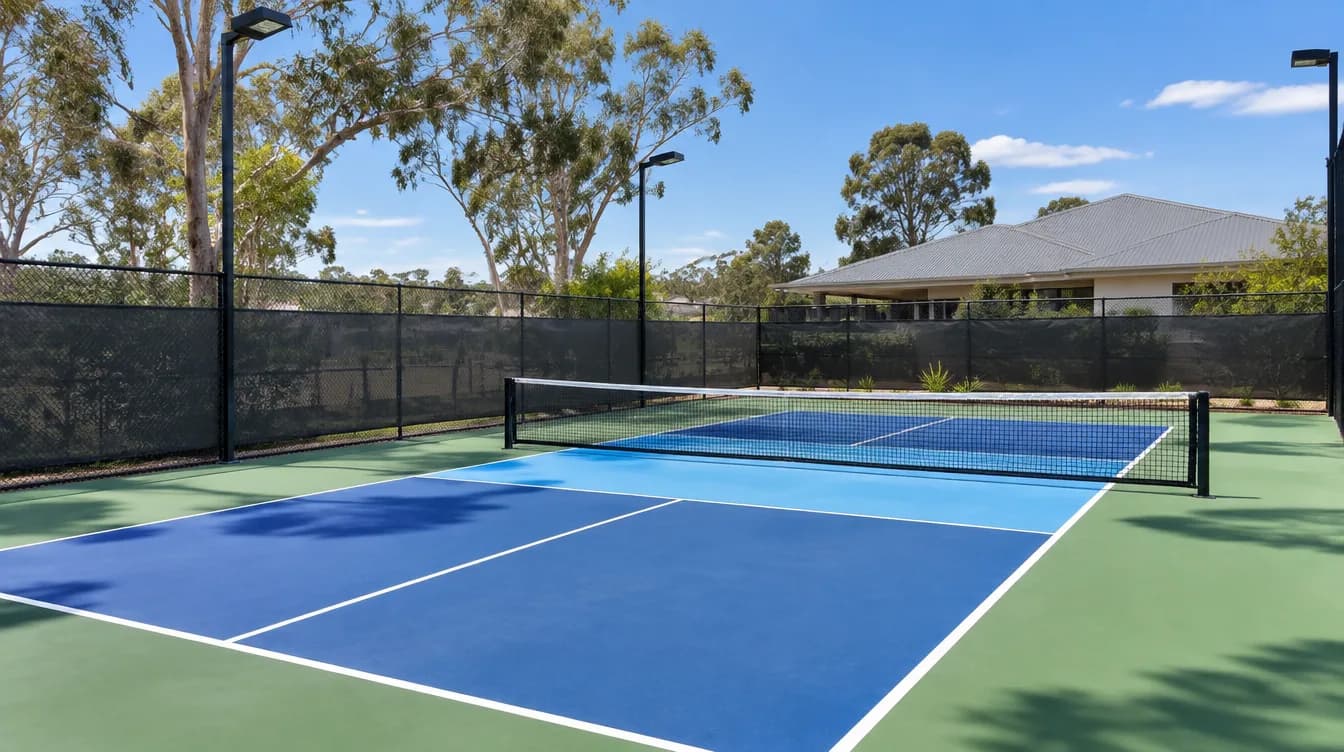
Line Marking Australia builds pickleball courts across Melbourne with its own Victorian crew, and converts tired tennis courts into pickleball courts. A home pickleball court in Australia starts from about $20,000 (published Australian builder pricing, 2026). We do the slab, acrylic or cushioned surface, 50 mm lines, posts, nets, fencing and lighting.
Pickleball has taken off in Melbourne. Clubs that used to have empty tennis courts on weekday mornings now have waiting lists, and councils, villages and schools are asking how to make room for it. Pickleball Australia reports more than 27,000 members and over 410 affiliated clubs and venues (June 2026).
Because our own crew works in Victoria every week, Melbourne is where we can move fastest. Here's how a build works.
Who builds pickleball courts in Melbourne?
Line Marking Australia builds pickleball courts in Melbourne using its own Victorian crew, who already build courts and line mark school halls, ovals and multi-sport courts across the state. One contact runs the whole job, from the site visit and slab to the surface, lines, nets, fencing and lighting, for homes, clubs, schools and villages.
Pickleball lines are 50 mm wide and the kitchen line has to be exact, so having court builders who are also line marking specialists matters more than it sounds.
How much does a pickleball court cost in Melbourne?
A home pickleball court in Melbourne starts from about $20,000 installed (published Australian builder pricing, 2026). Converting an existing tennis court usually costs less than building new, because the slab is already there. Reactive clay, slope, fencing, lighting and cushioned surfaces are what push a Melbourne price higher.
| Melbourne pickleball project | Starting point |
|---|---|
| Pickleball lines added to a sound tennis court | The lowest-cost option: line marking and portable nets |
| Tennis court converted to dedicated pickleball courts | From the cost of an acrylic resurface (from about $8,000, Airtasker 2026), plus lines and nets |
| New home pickleball court | From about $20,000 (published Australian builder pricing, 2026) |
| Club, council or village bank of courts | Quoted per site |
Can you convert a Melbourne tennis court to pickleball?
Yes. A Melbourne tennis court can hold two pickleball courts with the tennis lines kept, or up to four dedicated pickleball courts with the tennis net removed and enough run-off. Most conversions need crack repairs, often from clay movement, a fresh acrylic coat, contrasting lines and pickleball posts or portable nets.
This is the most common pickleball job in Melbourne right now. Tennis Australia and the National Pickleball League are turning tennis venues into multi-sport racquet hubs, and many Melbourne clubs have courts that are sound underneath but faded on top. Our tennis court to pickleball conversion page covers layouts in detail.
Does a Melbourne pickleball builder need to be registered?
For most home pickleball courts, yes. Victoria's Building and Plumbing Commission (BPC) says domestic building work worth more than $10,000, or work that needs a building permit, must be done by a registered building practitioner, with a major domestic building contract for work over $10,000. A line-marking-only conversion may sit below that.
You can check any builder on the BPC's Find a Practitioner register. For club, school and council courts, commercial rules apply, and we confirm what your project needs before work starts.
Do you need council approval for a pickleball court in Melbourne?
A pickleball court in Melbourne may need council approval, depending on your planning scheme overlays, earthworks, fencing height, lighting and distance to neighbours. Paddle noise is the issue Melbourne councils and neighbours raise most often, so court position, screening and hours of use can matter as much as the build itself.
- Courts close to a boundary: we look at orientation and acoustic screening early
- Lighting: designed to limit spill under AS/NZS 4282
- Fencing over about 2 m and retaining walls: common building permit triggers
- Heritage and vegetation overlays: checked on your property before the final quote
What is the best pickleball surface for Melbourne's climate?
The best pickleball surface for Melbourne is an acrylic hard court on a concrete slab designed for the local clay, with a textured finish for grip on damp mornings. Cushioned acrylic is easier on knees and backs, which is why many Melbourne clubs and retirement villages choose it. Modular tiles drain fast and suit backyards.
| Surface | Why Melbourne buyers choose it |
|---|---|
| Standard acrylic | True bounce, dries quickly after showers, lowest upkeep |
| Cushioned acrylic | Softer for older players; popular with clubs and villages |
| Modular tiles | Quick install on a slab, drains fast, easy to repair one tile |
How much space does a pickleball court need?
A pickleball court's playing area is 13.41 m long and 6.10 m wide, with a 2.13 m non-volley zone (kitchen) on each side of the net and 50 mm lines. Allow extra run-off around the lines so players can chase wide balls. That is roughly a third of a tennis court's footprint, so it fits many Melbourne backyards.
North-south orientation keeps the low winter sun out of players' eyes, which matters in Melbourne from May to August.
Who we build pickleball courts for in Melbourne
Line Marking Australia builds Melbourne pickleball courts for homeowners, tennis clubs converting courts, councils adding courts to parks, schools, retirement villages and body corporates. Retirement villages are a big part of Melbourne demand, and Victorian retirement villages legislation may require resident consultation before capital works, so we supply scopes that residents can review.
See sports courts for retirement villages for village projects, or our national pickleball court construction guide.
How we keep every Melbourne pickleball court compliant
Every Melbourne pickleball court follows the same compliance steps, whether it's a backyard court or a club conversion. We check council triggers, use a builder registered for Victorian domestic work where required, search Before You Dig Australia, plan safe work, control dust and sediment, and build to the sport's dimensions and lighting standards.
- Court dimensions: 13.41 m × 6.10 m, 2.13 m kitchen, 50 mm lines
- Council planning and building permit triggers checked: noise, lighting, fencing, earthworks, overlays
- BPC-registered builder for domestic work over $10,000, with public liability insurance
- Before You Dig Australia check before excavation
- Slab to AS 3600, designed for reactive clay, with drainage falls
- Sports lighting to AS 2560.1:2018 and AS 2560.2:2021; light spill limited under AS/NZS 4282
- SWMS for high-risk construction work; silica dust controls when cutting concrete; sediment controls
- Accessible paths to the court considered against AS 1428.1
What do you need from me to quote a pickleball court in Melbourne?
To quote a Melbourne pickleball court, we need to know whether it's a new court or a tennis conversion, how many courts, and what the site looks like today. Your suburb, a few photos and rough measurements let us check overlays, soil and access before we price it.
- New court or tennis conversion, and how many courts
- Site type: home, club, school, council park, village or strata
- Indoor or outdoor, and what's on the ground now
- Slope, drainage and any cracking on an existing court
- Machinery access
- Preferred surface: standard acrylic, cushioned or tiles
- Lines for other sports, nets and posts
- Fencing, lighting, power and any noise concerns from neighbours
- Permits already in hand, plans, timing and budget
Key Benefits
Our own Victorian crew: Melbourne pickleball courts built and marked by our Victorian team
New courts and conversions: build new, or turn a tennis court into two to four pickleball courts
Noise and permits checked: court position, screening, lighting and overlays reviewed early
Clear starting prices: home courts from about $20,000; conversions usually cost less
Exact 50 mm lines: kitchen and court lines marked by line marking specialists

Site Inspection
Free assessment and detailed quote

Professional Marking
Expert application with premium materials

Quality Assurance
Final inspection and compliance sign-off
Compliance Standards
BPC registration (Victoria)
Domestic court work over $10,000, or needing a building permit, done by a builder registered with the Building and Plumbing Commission, under a major domestic building contract.
Council planning and building permits
Overlays, fencing over about 2 m, lighting, earthworks and drainage checked against your council's planning scheme before the final quote.
Pickleball court dimensions
13.41 m × 6.10 m playing area, 50 mm lines and a 2.13 m non-volley zone each side of the net.
AS 3600 · BYDA
Slab designed for Melbourne's reactive clay with drainage falls; Before You Dig Australia check before excavation.
AS 2560 · AS/NZS 4282
Sports lighting to the AS 2560 series with light spill onto neighbours limited under AS/NZS 4282.
WHS, SWMS and silica controls
Safe Work Method Statements for excavation and mobile plant; water suppression or vacuum extraction when cutting concrete.
Fully Compliant & Certified
All our work meets or exceeds Australian Standards and state road authority requirements
VicRoads Approved
Registered Contractor
$20M Public Liability
$10M Professional Indemnity
5,000+ Projects
Since 2009
Fixed Prices
Not Estimates
AS 1742
Traffic Control Devices
Specifies line colours, widths, arrow designs, and placement for road markings. Ensures all traffic control devices meet national safety standards.
AS/NZS 2890
Parking Facilities
Covers bay dimensions (2.4m × 5.4m standard, 2.4m × 5.4m accessible plus a 2.4m shared zone), aisle widths, and traffic flow requirements for compliant parking areas.
AS 4586
Slip Resistance
Defines slip resistance classifications (P rating) for pedestrian surfaces. Critical for wet areas, ramps, and high-traffic zones.
AS/NZS 1428
Access & Mobility
Sets requirements for accessible parking bays, tactile indicators, and mobility access. Essential for DDA compliance and accessibility audits.
What Our Clients Say
Results based on typical project outcomes. Individual results may vary.
Upload your site plans for a detailed quote within 48 hours
Get an accurate, fixed-price quote tailored to your specific project requirements
Frequently Asked Questions
A home pickleball court in Melbourne starts from about $20,000 installed (published Australian builder pricing, 2026). Converting an existing tennis court usually costs less. Line Marking Australia itemises slab, surface, fencing and lighting so you can choose what to include.
Line Marking Australia builds pickleball courts in Melbourne with its own Victorian crew. One contact manages the site visit, slab, acrylic or cushioned surface, 50 mm lines, nets, fencing and lighting for homes, clubs, schools, councils and retirement villages.
Yes. A Melbourne tennis court fits two pickleball courts with the tennis lines kept, or up to four dedicated courts with enough run-off. Most conversions need crack repairs, a fresh acrylic coat, new contrasting lines and pickleball nets.
A Melbourne pickleball court may need council approval depending on overlays, earthworks, fencing over about 2 m, lighting and neighbours. Paddle noise is a common concern. Line Marking Australia checks your property's triggers before the final quote.
For most home courts, yes. The Building and Plumbing Commission requires registration for domestic building work worth more than $10,000 or needing a building permit, with a major domestic building contract over $10,000.
Acrylic on a concrete slab designed for Melbourne's clay is the most popular pickleball surface, with a textured finish for grip. Cushioned acrylic is softer on joints and suits clubs and villages; modular tiles drain fast and suit backyards.
A pickleball court is 13.41 m by 6.10 m, plus run-off around the lines for safe play. It needs roughly a third of a tennis court's space, so many Melbourne backyards can fit one once access and drainage are checked.
Related Services

Court Resurfacing
Learn more about this service
Pickleball Court Construction
Learn more about this service
Pickleball Court Line Marking
Learn more about this service
Sports Court Construction
Learn more about this service
Sports Courts for Retirement Villages
Learn more about this service
Tennis Court to Pickleball Conversion
Learn more about this service
Ready to Get Your Line Marking Sorted?
Upload your site plans and receive a fixed-price quote within 48 hours. No surprises, no cost blowouts, just clear pricing you can take to your committee or manager.
Or call us directly: 0417 460 236