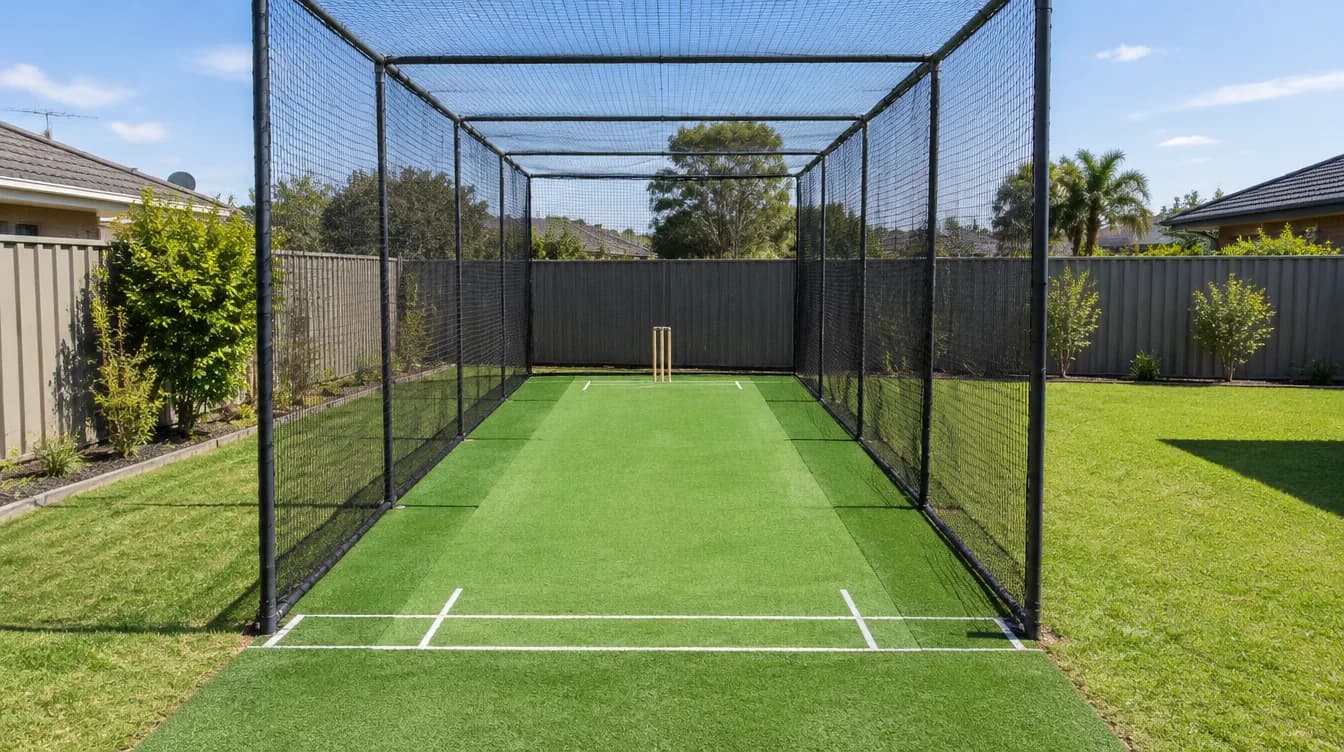
Backyard Cricket Nets
A proper practice net at home: a synthetic pitch on a stable base, a steel frame and netting that keeps the ball in the yard.
Jamie (24/7 quotes): 0468 069 002AS 1742.2 Compliant
Fully Insured
24/7 Availability

15+ Years
Get FREE Quote
Fixed-Price Quote Within 48 Hours
Trusted by 5,000+ businesses
VicRoads approved · AS/NZS compliant · $20M insured
Compliance-Ready Guarantee: every job is set out to the sport's official court dimensions, built by licensed local builders and handed over with full documentation.
Last updated:
Backyard Cricket Nets
Line Marking Australia builds backyard cricket nets across Australia: a synthetic cricket pitch on a stable base, a steel frame and netting that keeps the ball inside your yard. Every backyard net is sized to the space you have and the players using it, so we quote each one for your site after a quick look.
A backyard net turns a few throwdowns into proper practice. Kids can bat every afternoon, bowlers can work on their run-up, and the ball stops landing in the neighbour's pool.
These are the questions parents and keen cricketers ask us before they build one.
How much do backyard cricket nets cost?
Backyard cricket nets in Australia are quoted per site, because the cost depends on the length of the pitch, the base underneath, the frame and how much netting you need. A batting-only net is the most affordable option, and a full-length net with roof netting costs more. Line Marking Australia itemises every part.
What changes the price:
- Pitch length and width
- Base: new concrete slab, existing concrete or compacted crushed rock
- Synthetic pitch grade and underlay
- Frame type and height, side netting and roof netting
- Earthworks, slope and access for machinery
How long should a backyard cricket net be?
A backyard cricket net should be long enough for the bowlers using it. A batting-focused net can be shorter, with bowlers using a shortened run-up or a bowling machine, while a full net allows a proper pitch length plus run-up. Junior players need less length, so many families build to suit the kids now.
| Common net we build | Who it suits | Space needed |
|---|---|---|
| Batting bay | Throwdowns, bowling machine, younger kids | Short and narrow; fits most yards |
| Junior-length pitch | Junior cricketers with a short run-up | A long side yard or back yard |
| Full-length pitch | Senior bowlers and batters | A long, level strip with room for a run-up |
We'll measure your yard and show you which length fits before you commit.
Synthetic or concrete pitch for a backyard net?
A synthetic cricket pitch laid over a concrete or well-compacted base is the best choice for most backyard nets. It gives a consistent bounce, is kind on the ball and the knees, and dries quickly after rain. Bare concrete is cheaper but harsh on balls and players, and natural turf needs constant care.
| Pitch | Good points | Downsides |
|---|---|---|
| Synthetic on concrete | Consistent bounce, long-lasting, low upkeep | Higher upfront cost than rock base |
| Synthetic on crushed rock | Lower cost, drains well | Can settle over time; needs a good base |
| Bare concrete | Cheapest hard surface | Hard on balls, unforgiving to fall on |
| Natural turf | Real grass feel | Mowing, rolling and watering; wears quickly |
What base does a synthetic cricket pitch need?
A synthetic cricket pitch needs a flat, stable base so the bounce stays true. A reinforced concrete slab built to AS 3600 gives the most consistent result and lasts longest. A compacted crushed-rock base costs less and drains well, but it must be laid and compacted properly or it will dip where bowlers land.
The base also needs a gentle fall so water doesn't pool on the pitch. On clay soils we take extra care with drainage, because wet clay moves and lifts.
What netting and frame does a backyard net need?
A backyard cricket net needs a sturdy frame, side netting the full length of the pitch and back netting behind the batter. Roof netting is strongly recommended in suburban yards because it stops lofted shots and edges from reaching windows, cars and neighbours. Galvanised steel frames last best outdoors in Australian weather.
- Frame: galvanised steel posts set in concrete footings
- Netting: UV-stabilised cricket netting, tensioned so it doesn't sag
- Roof net: covers the batting end, or the whole tunnel
- Entry: a gap or flap at the bowler's end for safe access
Do I need council approval for backyard cricket nets?
Backyard cricket nets may need council approval if the frame is tall, close to a boundary, or involves retaining walls, earthworks or drainage changes. Structures and fences over about 2 m are a common trigger, as are heritage and flood overlays. Line Marking Australia checks your council's rules before confirming the design.
How do we keep a backyard net safe?
A safe backyard cricket net keeps the ball contained, keeps spectators out of the line of fire and gives players a non-slip surface. Roof netting, a clear entry point and enough space behind the batter all help. Helmets and pads still matter, especially for juniors facing hard balls or a bowling machine.
- Netting tight to the frame with no gaps at ground level
- Bowler's entry away from where people walk past
- Smooth, flush edges where the pitch meets the surrounding ground
- Synthetic surface kept clean of leaves, which are slippery when wet
How long does it take to build a backyard cricket net?
A backyard cricket net usually takes about one to two weeks on site, depending on the base. A crushed-rock base can be laid quickly, while a concrete slab needs curing time before the synthetic pitch goes down. Frame footings are poured early, and the netting goes up last once the pitch is in.
How do I look after a synthetic cricket pitch?
A synthetic cricket pitch needs very little care: blow or sweep off leaves, hose off dirt and check the edges and seams now and then. Keep shoes clean of mud and avoid metal spikes. Check netting for wear each season and retension it if it sags, so balls don't escape the net.
How we keep every backyard cricket net compliant
Every backyard cricket net we build follows the same compliance steps as our larger court work. We check council rules for the frame and earthworks, locate underground services before digging footings, work under Work Health and Safety laws, control dust and sediment, and use builders who hold the licence your state requires.
- Council check for structure height, setbacks, earthworks, drainage and overlays
- Before You Dig Australia (BYDA) search before footings and excavation
- Safe Work Method Statements for excavation and mobile plant
- Silica dust controls when cutting concrete
- Sediment and stormwater controls on site
- Concrete base and footings to AS 3600
- Builders with public liability insurance
Our main cricket nets and synthetic pitches page covers club and school nets, and backyard sports courts covers other courts at home.
What do you need from me to quote backyard cricket nets?
To quote backyard cricket nets, we need the space you have, the age and level of the players and whether you want roof netting. Send the details below with photos and rough measurements, and we'll check levels, access and drainage on a short site visit before giving you an itemised quote.
- New net, replacing an old pitch, or adding netting to an existing slab
- Length and width available, and where in the yard
- What's there now: lawn, garden, old concrete
- Slope and drainage after rain
- Access for a small excavator and concrete truck
- Pitch length wanted and players' ages
- Roof netting, side netting, bowling machine use, lighting and power
- Approvals, photos, timing and budget
Related court pages
Key Benefits
Sized to your yard: batting bay, junior or full-length pitch
Proper base: concrete or compacted rock so the bounce stays true
Netting that contains: side, back and roof netting on galvanised frames
Low upkeep: synthetic pitch that dries fast after rain
Itemised quote: every part priced for your site

Site Inspection
Free assessment and detailed quote

Professional Marking
Expert application with premium materials

Quality Assurance
Final inspection and compliance sign-off
Compliance Standards
Local council approval
Frame height, setbacks, earthworks, drainage and overlays checked for your block.
Before You Dig Australia
Underground services located before footings and excavation.
AS 3600
Concrete base and frame footings built to the concrete structures standard.
WHS & SWMS
Safe Work Method Statements for excavation and plant; silica dust controls.
Sediment control
Runoff and sediment managed during the build.
Fully Compliant & Certified
Courts are set out to the sport's official dimensions and built to the Australian Standards that apply to slabs, surfaces and lighting
Licensed Local Builders
One contact, start to finish
$20M Public Liability
$10M Professional Indemnity
Official Dimensions
Set out before the slab
Fixed Prices
Not Estimates
Court layout
Official Dimensions
Courts are set out to the governing body's playing area and run-off, such as Tennis Australia, Basketball Australia or FIBA, before any concrete or surface goes down.
AS 3600
Concrete Structures
Slabs are designed for the site's soil, with falls for drainage and a Before You Dig Australia check before excavation.
AS 2560
Sports Lighting
Court lighting is designed to the AS 2560 series, with light spill onto neighbours limited under AS/NZS 4282.
AS 4586
Slip Resistance
Court surfaces and coatings are chosen for slip resistance and safe play when the court is damp.
Upload your site plans for a detailed quote within 48 hours
Get an accurate, fixed-price quote tailored to your specific project requirements
Frequently Asked Questions
Backyard cricket nets in Australia are quoted per site, because the price depends on pitch length, the base, the synthetic surface, frame height and netting. Line Marking Australia itemises each part so you can choose a batting bay or a full net.
A backyard cricket net should suit the bowlers using it. Batting bays are short and fit most yards, junior pitches need a long strip, and full-length nets need extra room for a run-up. Line Marking Australia measures your yard to show what fits.
A synthetic cricket pitch over a concrete or well-compacted base is the best backyard surface. It bounces consistently, drains fast and needs little care. Bare concrete is harsh on balls, and natural turf needs constant mowing and rolling.
Roof netting is strongly recommended for backyard cricket nets in suburban yards. It stops edges and lofted shots reaching windows, cars and neighbours. Line Marking Australia can net the batting end or the whole tunnel.
Backyard cricket nets may need council approval if the frame is tall or near a boundary, or if earthworks, retaining or drainage changes are involved. Line Marking Australia checks your council's rules before finalising the design.
A backyard cricket net usually takes about one to two weeks on site. Concrete bases need curing time before the synthetic pitch goes down, and the frame and netting go up last. Line Marking Australia confirms the program before starting.
A synthetic cricket pitch at home needs leaves blown off, the occasional hose-down and a check of edges and seams. Avoid metal spikes and muddy shoes, and retension the netting each season so balls can't escape.
Related Services

Backyard Multi-Sport Courts
Learn more about this service
Court Resurfacing
Learn more about this service
Sports Court Construction
Learn more about this service
Sports Court Fencing
Learn more about this service
Sports Court Lighting
Learn more about this service
Tennis Court Construction Mackay
Learn more about this service
Ready to Get Your Line Marking Sorted?
Upload your site plans and receive a fixed-price quote within 48 hours. No surprises, no cost blowouts, just clear pricing you can take to your committee or manager.
Or call us directly: 0417 460 236