

Cricket Nets for Schools and Clubs
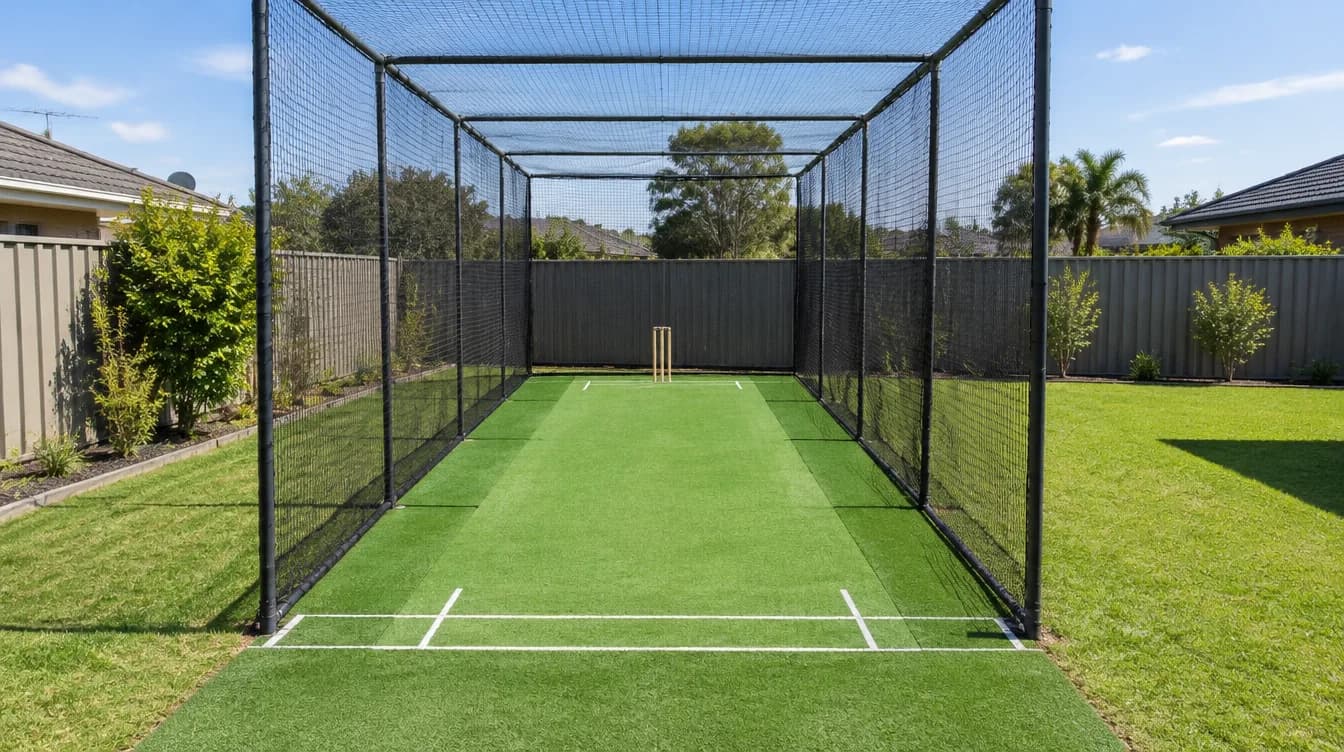
Multi-lane practice nets with synthetic pitches, strong frames and full netting, built for heavy school and club use outside the cricket season.
Jamie (24/7 quotes): 0468 069 002AS 1742.2 Compliant
Fully Insured
24/7 Availability

15+ Years
Get FREE Quote
Fixed-Price Quote Within 48 Hours
Trusted by 5,000+ businesses
VicRoads approved · AS/NZS compliant · $20M insured
Compliance-Ready Guarantee: every job is marked to AS/NZS 2890 & AS 1742, dimensionally verified, and delivered with full compliance documentation, backed by our 12-month workmanship guarantee.
Last updated:
What is Cricket Nets for Schools and Clubs?
Line Marking Australia builds cricket nets for schools and clubs across Australia: synthetic pitches on solid concrete or compacted bases, multi-lane steel frames, side and roof netting and run-up areas. We schedule school work for the holidays where possible and club work outside the season. Every school or club cricket net is quoted per site.
Practice nets get more use than almost any other sports facility at a school or club. Junior training, senior squads, PE lessons and holiday clinics can all run through the same lanes in one week.
That workload is why the base, the pitch and the netting matter so much. These are the questions sport coordinators, business managers and club committees ask us first.
How many lanes do school and club cricket nets need?
School and club cricket nets usually need between two and four lanes, depending on squad sizes and how many teams train on the same night. More lanes let batters rotate quickly and keep bowlers busy. Many schools start with two lanes and leave space and footings to add more when funding allows.
| Common setup we build | Good for | Notes |
|---|---|---|
| Single lane | Small schools, PE, individual coaching | Lowest cost, limited throughput |
| Two lanes | Most primary and secondary schools | Room to expand later |
| Three or four lanes | Clubs and large secondary schools | Several teams training at once |
| Lanes plus a bowling machine bay | Clubs and cricket programs | Power and roof netting needed |
How long should school cricket nets be?
School and club cricket nets should be long enough for a full pitch plus a run-up for senior bowlers, and enough space behind the batter for the keeper and back netting. Primary schools can build shorter junior-length lanes. We plan the length around who trains in the nets and the space you have.
Leave a safe walkway beside the bowlers' run-ups, so players and spectators never walk behind or across a lane in use.
What is the best pitch surface for school cricket nets?
A synthetic cricket pitch over a reinforced concrete base is the best surface for school and club nets. It gives a consistent bounce for years, dries fast after rain and copes with heavy use. Synthetic over compacted crushed rock costs less upfront, while natural turf nets need a lot of ground staff time.
| Pitch | Strengths | Downsides |
|---|---|---|
| Synthetic on concrete | Consistent bounce, long life, low upkeep | Higher upfront cost |
| Synthetic on crushed rock | Lower cost, good drainage | Can dip where bowlers land over time |
| Natural turf | Real match conditions | Mowing, rolling, watering; wears fast |
Synthetic pitch carpets eventually wear, especially at the bowlers' landing area and the batting crease, but they can be replaced without rebuilding the base.
How much do cricket nets for schools cost?
Cricket nets for schools and clubs are quoted per site, because the cost depends on the number of lanes, lane length, base type, synthetic pitch, frame, roof netting and earthworks. Replacing the pitch and netting on an existing base costs much less than a new build. Line Marking Australia itemises every part of the quote.
- Number and length of lanes
- Concrete or crushed-rock base
- Synthetic pitch grade and run-up surfaces
- Frame height, side and roof netting
- Earthworks, drainage, power and lighting
What frame and netting do school nets need?
School and club cricket nets need a strong galvanised steel frame set in concrete footings, tensioned side netting between lanes, back netting behind the batter and, ideally, roof netting. Roof netting stops lofted shots and edges leaving the nets, which matters near classrooms, car parks and playgrounds. UV-stabilised netting lasts longest in Australian sun.
How do we keep cricket nets safe for students?
Safe school cricket nets keep the ball contained, keep people out of the line of fire and give players a sound, non-slip surface. Full-height side netting between lanes, roof netting, a clear walkway beside the run-ups and controlled entry at the bowler's end all help. Helmets and pads remain essential for batters.
- Netting tensioned with no gaps at ground level or between lanes
- Walkways kept away from the batting end
- Smooth, flush joins where pitch meets run-up
- Pitches kept clear of leaves, which are slippery when wet
Can old cricket nets be refurbished?
Yes. Many old school and club cricket nets can be refurbished rather than rebuilt. If the concrete base is sound and drains, we replace the worn synthetic pitch, repair or replace the netting and fix the frame. If the base has cracked or sunk, we rebuild the affected lanes so the bounce is true again.
When can school or club nets be built?
We schedule school cricket net work for the school holidays wherever possible, and club nets outside the cricket season so training isn't disrupted. Concrete bases need curing time before the synthetic pitch goes down, so planning early helps. School work zones are fenced from students and crews hold Working with Children checks.
Are there grants for school and club cricket nets?
Schools and clubs often fund cricket nets through a mix of budgets, fundraising and grants. The Queensland Gambling Community Benefit Fund offers up to $35,000 for club facility projects such as resurfacing, lighting and fencing, and state programs like South Australia's Community Facilities Program fund club facilities. We provide scopes and itemised quotes for applications.
Clubs can find more on our sports courts for sports clubs page.
How we keep every school and club cricket net build compliant
Every school and club cricket net we build follows clear compliance steps. We check council requirements, run a Before You Dig Australia search, work under Work Health and Safety laws with Safe Work Method Statements, control silica dust and sediment, schedule around terms and seasons and use crews with Working with Children checks on school sites.
- Work scheduled for school holidays where possible
- Working with Children checks for crews on school sites
- Council check for frame height, lighting, earthworks, drainage and overlays
- BYDA search before footings and excavation
- SWMS for excavation and mobile plant; silica dust controls
- Sediment and stormwater controls
- Concrete base and footings to AS 3600; lighting to the AS 2560 series and AS/NZS 4282
- Builders who hold the licence your state requires, with public liability insurance
See cricket nets and synthetic pitches and sports courts for schools for more.
What do you need from us to quote school or club cricket nets?
To quote school or club cricket nets, we need the number of lanes, who trains in them and the site you have in mind. Send the details below with photos and a site plan, and we'll visit at a suitable time to check levels, access and drainage before giving you an itemised quote.
- New nets, refurbishing old nets, or replacing pitches only
- Number of lanes and preferred length
- Location and what's on the ground now
- Slope, drainage and machinery access
- Base and synthetic pitch preferences
- Roof netting, bowling machine bay, lighting and power
- Fencing or walkways around the nets
- Approvals, grant deadlines, plans or photos, timing and budget
Key Benefits
Multi-lane nets: two to four lanes, with room to expand
Solid bases: synthetic pitches on concrete or compacted rock
Full netting: side, back and roof netting on galvanised frames
Built around terms and seasons: holiday and off-season scheduling
Grant-ready quotes: itemised scopes for funding

Site Inspection
Free assessment and detailed quote

Professional Marking
Expert application with premium materials

Quality Assurance
Final inspection and compliance sign-off
Compliance Standards
School scheduling & WWC
Holiday scheduling where possible; Working with Children checks for crews on school sites.
Local council approval
Frame height, lighting, earthworks, drainage and overlays checked.
AS 3600 · BYDA
Concrete base and footings to AS 3600; services located before digging.
WHS & silica controls
SWMS for excavation and plant; dust controls when cutting concrete.
AS 2560 · AS/NZS 4282
Net lighting for evening training with spill controlled.
Fully Compliant & Certified
All our work meets or exceeds Australian Standards and state road authority requirements
VicRoads Approved
Registered Contractor
$20M Public Liability
$10M Professional Indemnity
5,000+ Projects
Since 2009
Fixed Prices
Not Estimates
AS 1742
Traffic Control Devices
Specifies line colours, widths, arrow designs, and placement for road markings. Ensures all traffic control devices meet national safety standards.
AS/NZS 2890
Parking Facilities
Covers bay dimensions (2.4m × 5.4m standard, 2.4m × 5.4m accessible plus a 2.4m shared zone), aisle widths, and traffic flow requirements for compliant parking areas.
AS 4586
Slip Resistance
Defines slip resistance classifications (P rating) for pedestrian surfaces. Critical for wet areas, ramps, and high-traffic zones.
AS/NZS 1428
Access & Mobility
Sets requirements for accessible parking bays, tactile indicators, and mobility access. Essential for DDA compliance and accessibility audits.
What Our Clients Say
Results based on typical project outcomes. Individual results may vary.
Upload your site plans for a detailed quote within 48 hours
Get an accurate, fixed-price quote tailored to your specific project requirements
Frequently Asked Questions
Most school cricket nets have two to four lanes, depending on squad sizes and how many teams train together. Line Marking Australia often builds two lanes first and leaves space and footings to add more when funding allows.
A synthetic cricket pitch over reinforced concrete is the best surface for school and club nets. It bounces consistently, dries fast and handles heavy use. Line Marking Australia also builds lower-cost crushed-rock bases.
School and club cricket nets are quoted per site, depending on lanes, length, base, synthetic pitch, frame and roof netting. Line Marking Australia itemises each part, and replacing pitches on a sound base costs much less than a new build.
Yes. If the base is sound, Line Marking Australia replaces worn synthetic pitches, repairs or replaces netting and fixes frames. Cracked or sunken lanes are rebuilt so the bounce is true again.
Roof netting is strongly recommended for school cricket nets near classrooms, car parks and playgrounds. It stops lofted shots and edges leaving the nets. Line Marking Australia uses UV-stabilised netting on galvanised frames.
Line Marking Australia schedules school cricket net work for the holidays where possible, and club nets outside the cricket season. Concrete bases need curing time, so planning early helps meet the next season.
Clubs often use grants for facilities. The Queensland Gambling Community Benefit Fund offers up to $35,000 for club projects such as resurfacing, lighting and fencing. Line Marking Australia supplies scopes and itemised quotes for applications.
Related Services

Cricket Nets and Synthetic Pitches
Learn more about this service
Cricket Pitches & Ovals Line Marking
Learn more about this service
Sports Court Lighting
Learn more about this service
Sports Courts for Schools
Learn more about this service
Sports Courts for Sports Clubs
Learn more about this service
More Industry-Specific Line Marking Melbourne Services
Ready to Get Your Line Marking Sorted?
Upload your site plans and receive a fixed-price quote within 48 hours. No surprises, no cost blowouts, just clear pricing you can take to your committee or manager.
Or call us directly: 0417 460 236