

Sports Courts for Councils
Public pickleball, basketball, multi-sport and beach volleyball courts, plus resurfacing, lighting and fencing, quoted to your procurement process.
Jamie (24/7 quotes): 0468 069 002AS 1742.2 Compliant
Fully Insured
24/7 Availability

15+ Years
Get FREE Quote
Fixed-Price Quote Within 48 Hours
Trusted by 5,000+ businesses
VicRoads approved · AS/NZS compliant · $20M insured
Compliance-Ready Guarantee: every job is marked to AS/NZS 2890 & AS 1742, dimensionally verified, and delivered with full compliance documentation, backed by our 12-month workmanship guarantee.
Last updated:
What is Sports Courts for Councils?
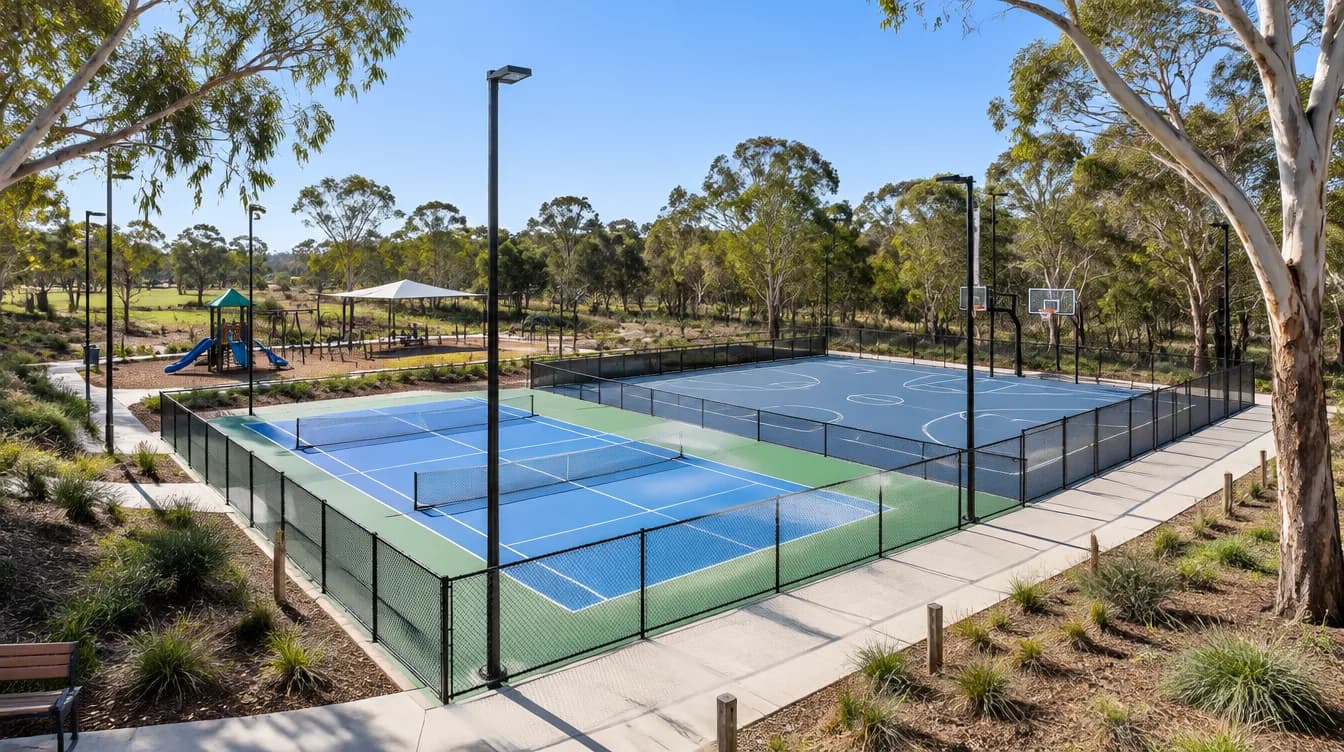
Line Marking Australia builds and renews public sports courts for councils across Australia: pickleball, basketball, multi-sport and beach volleyball courts, plus resurfacing, lighting and fencing. We quote to tender or panel requirements, plan for the full lifecycle and accessibility, and full-size basketball courts start from about $70,000 installed.
Council recreation and asset officers juggle competing demands: residents asking for pickleball, ageing tennis and netball courts, tight capital budgets, and neighbours worried about noise and lights.
Our crews already work on council assets, marking football ovals with boundary lines and logos, accessible parking bays with bollards and dust-free line removal. Here's how we approach public court projects.
Which public courts are councils building now?
Councils across Australia are adding pickleball courts, renewing basketball and multi-sport courts and converting under-used tennis courts. Pickleball Australia reports more than 27,000 members and 410-plus affiliated clubs and venues (June 2026), and Tennis Australia and the National Pickleball League are converting tennis venues into multi-sport racquet hubs.
- Pickleball courts, new or converted from tennis courts
- Basketball courts: full courts, half courts and three-on-three courts in parks
- Multi-sport courts for youth precincts and reserves
- Beach volleyball courts for foreshores and sports parks
- Resurfacing, lighting and fencing for existing courts
Noosa's pickleball project, for example, drew $248,900 from federal and council grants. See our pickleball court construction page.
How much does a public court cost?
Public court costs depend on the sport, the site and the extras. A full-size basketball court of about 420 m² starts from about $70,000 installed (published Australian builder pricing, 2026), and a tennis court from about $40,000 (Oneflare cost guide, 2026). Lighting, fencing, shade, paths and seating are itemised separately in our quote.
| Court or work | Starting price (installed) | Source |
|---|---|---|
| Full-size basketball court (about 420 m²) | from about $70,000 | Published Australian builder pricing, 2026 |
| Tennis court | from about $40,000 | Oneflare cost guide, 2026 |
| Pickleball court | from about $20,000 | Published Australian builder pricing, 2026 |
| Tennis court acrylic resurfacing | from about $8,000 | Airtasker cost guide, 2026 |
| Beach volleyball, lighting, fencing | Quoted per site | We itemise it in your quote |
Can you quote through a tender or quote panel?
Yes. We price council court projects to the format your procurement process requires, whether that's a request for quote, an open tender or a works package under an existing panel. We return itemised schedules of rates, methodology, program, insurances and safety documents so your evaluation panel can compare like with like.
- Itemised pricing that matches your schedule of quantities
- Construction methodology and staging program
- Public liability insurance and licence details for the builders
- Safe Work Method Statements and site management plans
- Product data for surfaces, posts, nets, fencing and lighting
What does a court cost over its lifecycle?
A public court's lifecycle cost is mostly cleaning, re-lining and resurfacing on a predictable cycle. Tennis Australia's Victorian maintenance guides suggest acrylic resurfacing about every 7 to 10 years and synthetic grass about every 10 to 15 years. Building a sound base and good drainage up front keeps that cycle long.
| Surface | Typical renewal cycle | Notes for asset plans |
|---|---|---|
| Acrylic hard court | Resurface about every 7 to 10 years | Crack repair and re-line at each recoat |
| Synthetic grass | Replace about every 10 to 15 years | Regular brushing and infill top-ups |
| Modular tiles | Replace damaged tiles as needed | Base condition drives life |
Can under-used tennis courts become pickleball courts?
Yes. Converting an under-used public tennis court is often the fastest way for a council to meet pickleball demand. One tennis court can carry two pickleball courts while keeping tennis, or up to four dedicated pickleball courts with enough run-off. The existing slab, fencing and lighting can usually be reused.
We repair cracks, resurface, mark pickleball lines in a contrasting colour and fit pickleball posts and nets. See our tennis court to pickleball conversion service.
What about beach volleyball courts?
Beach volleyball courts suit foreshore reserves, sports parks and youth precincts. The playing area is 16 m by 8 m, plus run-off, on a deep bed of washed sand with drainage underneath so the court dries quickly after rain. Posts, nets, boundary tapes and edging complete the build, all quoted per site.
How do you make public courts accessible?
Accessible public courts start with a step-free path from the car park or footpath to the court gate. We design paths and gate openings with AS 1428.1 (access and mobility) in mind, add firm level surfaces beside the court for wheelchairs and spectators, and can install accessible parking bays with bollards and tactile indicators.
See our tactile ground surface indicators service for paths and crossings.
How do you manage lighting spill and neighbour noise?
Public court lighting is designed to the AS 2560 sports lighting series, with light spill and glare onto nearby homes limited under AS/NZS 4282. Noise is managed through court position, fencing, acoustic screening and sensible hours of use. We address both early so the design survives community consultation and the planning process.
- Lighting with switch-off timers and controlled aiming
- Courts placed away from bedrooms where the reserve allows
- Fencing and planting to soften paddle and ball noise
Can you support community consultation?
Yes. For community consultation we can supply concept layouts, court options and itemised costs so residents can see what's proposed and what it will cost. Showing pickleball and basketball options side by side, or conversion against new build, helps councils explain trade-offs clearly and choose a design the community supports.
How we keep every council court build compliant
Every council court build is delivered under the same compliance framework, documented for your contract file. We confirm planning and building approval needs, locate underground services, follow Work Health and Safety laws with Safe Work Method Statements, control dust and sediment and use builders who hold the licence your state requires.
- Planning and building approval checked for lighting, fencing, earthworks, drainage and overlays
- Before You Dig Australia (BYDA) check before excavation
- Safe Work Method Statements for excavation and mobile plant
- Silica dust controls and sediment and stormwater controls
- AS 3600 concrete structures and AS 1428.1 accessible paths
- AS 2560.1:2018 and AS 2560.2:2021 sports lighting, AS/NZS 4282 obtrusive light
- Tennis Australia guidance for community tennis courts
- Licensed, insured builders with public liability insurance
What do you need from council to quote a court?
To quote a council court project, we need the scope, the site and your procurement requirements. A site plan, survey or aerial photo, and any existing specification make pricing faster and more accurate. Where you only have a concept, we can price options to help you build the business case first.
- Court type and sports to mark; new build, resurface or conversion
- Number of courts, location in the reserve and what's there now
- Survey, slope, drainage and geotechnical information
- Machinery access and work hours
- Preferred surface and colour scheme
- Posts, nets, hoops, fencing, lighting, power, paths and seating
- Planning status, consultation timeline and approvals
- Tender or panel format, program and budget
Key Benefits
Tender-ready quotes: itemised schedules, methodology, program and safety documents
Lifecycle thinking: base and drainage designed for long renewal cycles
Accessible by design: AS 1428.1 paths, accessible bays, bollards and tactiles
Neighbour-aware lighting: AS 2560 design with light spill limited under AS/NZS 4282
Every public court: pickleball, basketball, multi-sport and beach volleyball

Site Inspection
Free assessment and detailed quote

Professional Marking
Expert application with premium materials

Quality Assurance
Final inspection and compliance sign-off
Compliance Standards
Planning & building approval
Approval needs checked for lighting, fencing, earthworks, drainage, overlays and noise.
AS 1428.1
Step-free paths and gates to public courts designed for access and mobility.
AS 2560 · AS/NZS 4282
Sports lighting to AS 2560.1:2018 and AS 2560.2:2021 with obtrusive light limited under AS/NZS 4282.
AS 3600 · BYDA
Concrete to AS 3600; Before You Dig Australia check before excavation.
WHS Act & SWMS
Safe Work Method Statements, silica dust controls and sediment controls.
Tennis Australia guidance
Community tennis courts built with Tennis Australia guidance in mind.
Fully Compliant & Certified
All our work meets or exceeds Australian Standards and state road authority requirements
VicRoads Approved
Registered Contractor
$20M Public Liability
$10M Professional Indemnity
5,000+ Projects
Since 2009
Fixed Prices
Not Estimates
AS 1742
Traffic Control Devices
Specifies line colours, widths, arrow designs, and placement for road markings. Ensures all traffic control devices meet national safety standards.
AS/NZS 2890
Parking Facilities
Covers bay dimensions (2.4m × 5.4m standard, 2.4m × 5.4m accessible plus a 2.4m shared zone), aisle widths, and traffic flow requirements for compliant parking areas.
AS 4586
Slip Resistance
Defines slip resistance classifications (P rating) for pedestrian surfaces. Critical for wet areas, ramps, and high-traffic zones.
AS/NZS 1428
Access & Mobility
Sets requirements for accessible parking bays, tactile indicators, and mobility access. Essential for DDA compliance and accessibility audits.
What Our Clients Say
Results based on typical project outcomes. Individual results may vary.
Upload your site plans for a detailed quote within 48 hours
Get an accurate, fixed-price quote tailored to your specific project requirements
Frequently Asked Questions
Councils are adding pickleball courts, renewing basketball and multi-sport courts and converting under-used tennis courts. Pickleball Australia reports more than 27,000 members across 410-plus clubs and venues, and Line Marking Australia builds all of these court types.
A full-size public basketball court of about 420 m² starts from about $70,000 installed, based on published Australian builder pricing for 2026. Line Marking Australia itemises lighting, fencing, shade, paths and seating separately for council budgets.
Yes. Line Marking Australia prices council court projects as requests for quote, open tenders or panel works packages, with itemised schedules, methodology, program, insurances and safety documents for your evaluation panel.
Tennis Australia's Victorian maintenance guides suggest acrylic courts are resurfaced about every 7 to 10 years and synthetic grass about every 10 to 15 years. Line Marking Australia helps councils plan these cycles in asset renewal programs.
Line Marking Australia designs court lighting to the AS 2560 sports lighting series and limits light spill and glare onto nearby homes under AS/NZS 4282, with controlled aiming and switch-off timers to suit council conditions.
Line Marking Australia designs step-free paths and gate openings to public courts with AS 1428.1 (access and mobility) in mind, and can add accessible parking bays, bollards and tactile ground surface indicators.
Councils often combine their own capital budgets with state and federal grants. Noosa's pickleball project, for example, drew $248,900 from federal and council grants. Line Marking Australia supplies itemised costs and scopes for funding applications.
Related Services

Basketball Court Construction
Learn more about this service
Court Resurfacing
Learn more about this service
Multi-Sport Court Construction
Learn more about this service
Pickleball Court Construction
Learn more about this service
Sports Court Lighting
Learn more about this service
Volleyball Court Construction
Learn more about this service
More Road and Council Line Marking Services
Ready to Get Your Line Marking Sorted?
Upload your site plans and receive a fixed-price quote within 48 hours. No surprises, no cost blowouts, just clear pricing you can take to your committee or manager.
Or call us directly: 0417 460 236