

Council Multi-Sport Courts
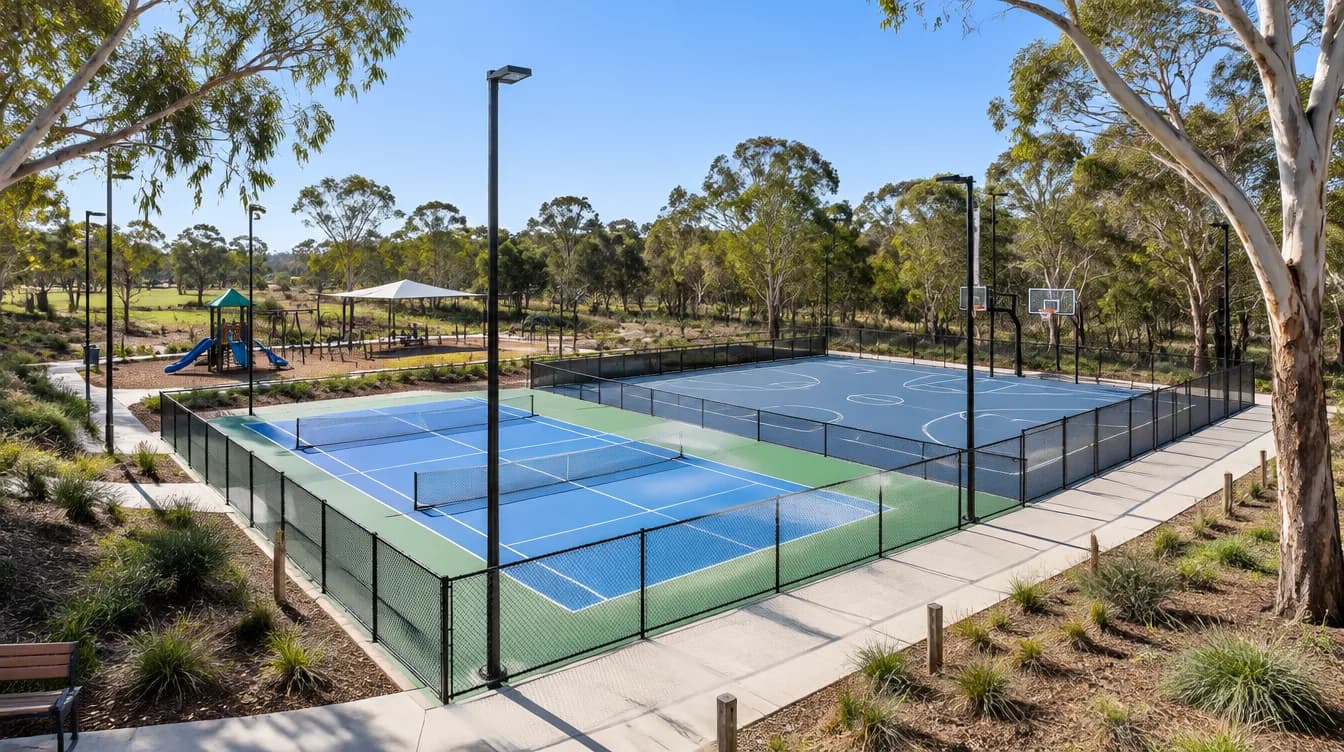
Public courts that serve basketball, netball, pickleball, futsal and tennis players on one slab, planned for heavy use, access and neighbours.
Jamie (24/7 quotes): 0468 069 002AS 1742.2 Compliant
Fully Insured
24/7 Availability

15+ Years
Get FREE Quote
Fixed-Price Quote Within 48 Hours
Trusted by 5,000+ businesses
VicRoads approved · AS/NZS compliant · $20M insured
Compliance-Ready Guarantee: every job is marked to AS/NZS 2890 & AS 1742, dimensionally verified, and delivered with full compliance documentation, backed by our 12-month workmanship guarantee.
Last updated:
What is Council Multi-Sport Courts?
Line Marking Australia builds multi-sport courts for councils across Australia, combining basketball, netball, pickleball, futsal, tennis and other sports on durable public courts. A half court starts from about $10,000 including the slab and a full-size court from about $70,000 (published Australian builder pricing, 2026), with extras quoted per site.
Community requests rarely come one sport at a time. Residents ask for basketball, pickleball and netball, often for the same park.
A well-planned multi-sport court answers several requests with one asset. Here's how councils can get the layout, procurement and long-term care right.
Why do councils choose multi-sport courts?
Councils choose multi-sport courts because one slab can serve basketball, netball, pickleball, futsal, volleyball and other activities. That stretches limited open space and capital budgets further. A multi-sport court also stays busy through the day: school groups in the morning, older adults playing pickleball, and teenagers shooting hoops after school.
- More community use from one asset
- Answers requests from several sports at once
- Uses limited park space efficiently
- Can grow with lighting, fencing and shade in later stages
Which sports fit on a council multi-sport court?
A council multi-sport court commonly combines basketball, netball, pickleball and futsal, with volleyball, badminton or tennis where the layout allows. Each sport is marked in a contrasting colour. The main sport should be chosen first, because it sets the court size, equipment positions and line priority. Too many lines can confuse players.
| Sport | Playing area | Notes for councils |
|---|---|---|
| Basketball | 28 m × 15 m (FIBA) | Most common anchor sport for public courts |
| Netball | 30.5 m × 15.25 m | Slightly larger than basketball; plan the slab for it |
| Pickleball | 13.41 m × 6.10 m | Several courts can sit across a larger slab |
| Tennis (doubles) | 23.77 m × 10.97 m | Needs a net and generous run-off |
| Volleyball | 18 m × 9 m | Portable or sleeved posts |
| Futsal | Common sizes we build to suit the slab | Goals and fencing to contain balls |
How much does a council multi-sport court cost?
A council multi-sport court starts from about $10,000 for a half court of up to about 165 m² including the slab, and from about $70,000 for a full-size court of about 420 m² (published Australian builder pricing, 2026). Netball-sized slabs, fencing, lighting, shade, seating and paths are quoted per site and itemised for tenders and grant applications.
Earthworks, drainage, soil conditions and access are usually the biggest variables. We can price base works separately so councils can compare tender responses clearly.
What surface suits a public multi-sport court?
A reinforced concrete slab with textured acrylic coating suits most public multi-sport courts, because it's durable, gives a reliable bounce for several sports and can be recoated and re-lined without rebuilding the slab. Modular sports tiles suit faster installs and sites where drainage is a concern. Cushioned acrylic suits courts heavily used by older players.
- Acrylic on concrete: long service life, easy to re-line as demand changes
- Modular tiles: quick install and replaceable panels
- Cushioned acrylic: softer for pickleball and older players
Our crews have built school multi-sport courts on modular tiles with basketball hoops, and the same system works in parks.
How do councils plan the layout?
Councils plan a multi-sport court layout by choosing the main sport, checking the space for run-off, deciding which secondary sports matter most, and placing hoops, posts and goals so they don't create hazards for other users. Accessible paths, seating, shade and lighting should be planned at the same time, even if they're built later.
- Community demand and main sport agreed
- Site survey: space, levels, drainage, trees and homes
- Line layout and colour key drawn
- Equipment positions checked for safety
- Paths, seating, shade, fencing and lighting staged
Are grants available for council multi-sport courts?
Yes, councils often fund multi-sport courts with a mix of their own capital budget, state and federal grants and developer contributions. Examples include federal and council funding for Noosa's $248,900 pickleball project, and Logan's Everleigh estate, where Mirvac built a 17-court pickleball complex with $1.1m from Logan City Council.
We provide itemised quotes, staged scopes and layout drawings to support applications. Check current funding rounds on official websites before applying.
How do councils manage neighbours, noise and lighting?
Councils manage multi-sport court impacts by choosing a location away from homes where possible, setting hours for lighting, using landscaping to soften views and noise, and designing lighting to keep spill off neighbouring properties. Lighting is designed to AS 2560, with obtrusive light assessed under AS/NZS 4282. Pickleball paddle noise should be considered near houses.
How should a council maintain a multi-sport court?
A council multi-sport court lasts longest with regular inspections, debris removal, drain cleaning, early crack repair and checks of hoops, posts, nets and fencing. Acrylic courts are typically recoated about every 7 to 10 years, based on Tennis Australia's Victorian guidance for acrylic courts. Re-lining can follow changes in community demand.
How we keep every council multi-sport court compliant
Every council multi-sport court we build is delivered against planning requirements, safety laws, the sports' court dimensions and relevant Australian Standards. That means services located before excavation, safe work methods around the public, concrete to AS 3600, accessible paths considered against AS 1428.1, sediment controls on site, and lighting designed to AS 2560.
- Each sport's court dimensions marked in contrasting colours
- Planning and building requirements checked, including overlays and setbacks
- Before You Dig Australia check before excavation
- Concrete slabs to AS 3600 with drainage falls
- Accessible paths and spectator areas considered against AS 1428.1
- Sports lighting to AS 2560.1:2018 and AS 2560.2:2021, spill limited under AS/NZS 4282
- Safe Work Method Statements, silica dust controls and sediment and stormwater controls
- Slip-resistant textured finishes; builders licensed for the state with public liability insurance
See our multi-sport court construction page for court builds, our sports courts for councils page for other public courts, and our multi-sport court line marking page for re-lining existing courts.
What do you need from us to quote a council multi-sport court?
To quote a council multi-sport court, Line Marking Australia needs the park location, the sports to include, the main sport, the court size and what's on the ground now. Site plans, survey details, procurement requirements, grant deadlines and lighting, fencing or shade plans help us return an accurate, itemised quote for your process.
- Park location and site plan
- Main sport and secondary sports to mark
- New court, resurface or re-line, and preferred size
- Existing surface, levels, drainage and trees
- Machinery access and public pedestrian routes
- Surface preference: acrylic, cushioned acrylic or tiles
- Hoops, posts, goals, fencing, lighting, shade and seating
- Approvals, procurement method, timing, budget and grant deadline
Key Benefits
More sports per slab: basketball, netball, pickleball, futsal and more
Tender-ready: itemised pricing, staged scopes and safety documents
Durable public surfaces: acrylic on concrete, cushioned acrylic or tiles
Layout that works: main sport first, safe equipment positions
Future-ready: lighting, shade and fencing can be staged

Site Inspection
Free assessment and detailed quote

Professional Marking
Expert application with premium materials

Quality Assurance
Final inspection and compliance sign-off
Compliance Standards
Sport court dimensions
Each sport marked to its playing area in contrasting colours.
Planning & approvals
Overlays, setbacks, drainage and lighting requirements checked.
AS 3600 · BYDA
Slabs to AS 3600; Before You Dig Australia check before excavation.
AS 1428.1
Accessible paths and spectator areas considered against AS 1428.1.
AS 2560 · AS/NZS 4282
Court lighting with spill controlled for neighbouring homes.
Fully Compliant & Certified
All our work meets or exceeds Australian Standards and state road authority requirements
VicRoads Approved
Registered Contractor
$20M Public Liability
$10M Professional Indemnity
5,000+ Projects
Since 2009
Fixed Prices
Not Estimates
AS 1742
Traffic Control Devices
Specifies line colours, widths, arrow designs, and placement for road markings. Ensures all traffic control devices meet national safety standards.
AS/NZS 2890
Parking Facilities
Covers bay dimensions (2.4m × 5.4m standard, 2.4m × 5.4m accessible plus a 2.4m shared zone), aisle widths, and traffic flow requirements for compliant parking areas.
AS 4586
Slip Resistance
Defines slip resistance classifications (P rating) for pedestrian surfaces. Critical for wet areas, ramps, and high-traffic zones.
AS/NZS 1428
Access & Mobility
Sets requirements for accessible parking bays, tactile indicators, and mobility access. Essential for DDA compliance and accessibility audits.
What Our Clients Say
Results based on typical project outcomes. Individual results may vary.
Upload your site plans for a detailed quote within 48 hours
Get an accurate, fixed-price quote tailored to your specific project requirements
Frequently Asked Questions
A half court starts from about $10,000 including the slab, and a full-size court from about $70,000 (published Australian builder pricing, 2026). Line Marking Australia itemises netball-sized slabs, lighting, fencing and paths for council tenders.
Basketball, netball, pickleball and futsal are common, with volleyball, badminton or tennis where space allows. Line Marking Australia helps councils choose a main sport first, then marks secondary sports in contrasting colours.
A reinforced concrete slab with textured acrylic coating suits most public courts. Line Marking Australia also offers modular tiles for fast installation and cushioned acrylic for courts used heavily by older pickleball players.
Yes. Councils often combine capital budgets with state and federal grants or developer contributions. Line Marking Australia provides itemised quotes, staged scopes and layout drawings to support state, federal and council funding applications.
Acrylic courts are typically recoated about every 7 to 10 years, based on Tennis Australia's Victorian guidance for acrylic courts. Line Marking Australia can inspect, repair, recoat and re-line council courts.
Courts placed away from homes, lighting hours, landscaping and lighting designed under AS/NZS 4282 all help. Line Marking Australia also considers pickleball paddle noise when planning multi-sport courts near houses.
Related Services

Multi-Sport Court Construction
Learn more about this service
Multi-Sport Court Line Marking
Learn more about this service
Pickleball Court Construction
Learn more about this service
Sports Court Lighting
Learn more about this service
Sports Courts for Councils
Learn more about this service
More Road and Council Line Marking Services
Ready to Get Your Line Marking Sorted?
Upload your site plans and receive a fixed-price quote within 48 hours. No surprises, no cost blowouts, just clear pricing you can take to your committee or manager.
Or call us directly: 0417 460 236