Public Pickleball Courts for Councils
New public pickleball courts and tennis-to-pickleball conversions for councils, planned around neighbours, accessibility, lighting and long-term upkeep.
Jamie (24/7 quotes): 0468 069 002AS 1742.2 Compliant
Fully Insured
24/7 Availability

15+ Years
Get FREE Quote
Fixed-Price Quote Within 48 Hours
Trusted by 5,000+ businesses
VicRoads approved · AS/NZS compliant · $20M insured
Compliance-Ready Guarantee: every job is set out to the sport's official court dimensions, built by licensed local builders and handed over with full documentation.
Last updated:
Public Pickleball Courts for Councils
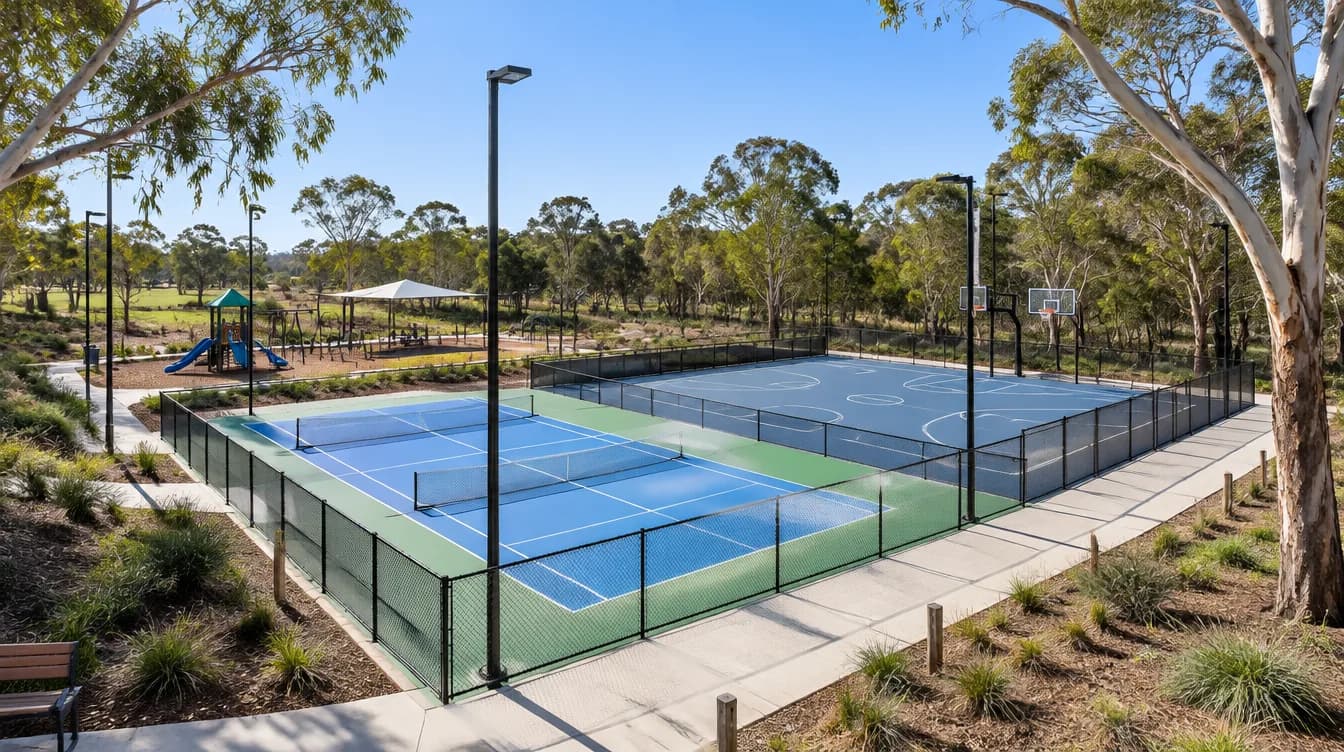
Line Marking Australia builds public pickleball courts for councils across Australia, from new multi-court sites to converting under-used tennis courts. Each court is 13.41 m by 6.10 m plus run-off. We plan for neighbour noise, accessible paths, lighting and lifecycle costs, and provide itemised scopes for quotes, tenders and grant applications. Council projects are quoted per site.
Pickleball demand has moved faster than most councils' facility plans. Residents are asking for courts, clubs are forming, and existing tennis courts are being booked for pickleball sessions.
These are the questions council recreation planners, asset managers and project officers ask us when they're scoping public courts.
Why are councils building public pickleball courts?
Councils are building public pickleball courts because participation has grown quickly across age groups. Pickleball Australia reports more than 27,000 members and 410-plus affiliated clubs and venues (June 2026), and AusPlay found about 92,000 Australians played pickleball in the year to June 2024. Courts are small, social and suit older residents.
Tennis Australia and the National Pickleball League are also converting tennis venues into multi-sport racquet hubs (October 2026), which shows how the sport is being folded into existing facilities.
What does a council pickleball complex look like?
A council pickleball complex can range from a pair of courts in a local park to a large multi-court site. In Queensland, Logan's Everleigh estate has a 17-court pickleball complex delivered by Mirvac with $1.1m from Logan City Council. Most councils start smaller, grouping courts so players can share fencing, lighting and amenities.
| Option | Typical use | Planning notes |
|---|---|---|
| Two courts in a local park | Casual play, local residents | Low cost; check distance to homes |
| Four courts on a converted tennis court | Social groups and sessions | Uses an existing slab and fencing |
| Multi-court hub | Clubs, competitions, events | Parking, toilets, shade, lighting |
| Shared tennis and pickleball courts | Mixed community demand | Contrasting line colours, portable nets |
Can councils convert tennis courts to pickleball?
Yes. Converting an under-used council tennis court is often the fastest and best-value way to add public pickleball courts. One tennis court can take two pickleball courts while keeping tennis lines, or up to four dedicated pickleball courts. We repair cracks, resurface, mark contrasting lines and fit pickleball posts and nets.
See tennis court to pickleball conversion for the process.
How much do public pickleball courts cost?
Public pickleball courts are quoted per site. A single home court starts from about $20,000 (published Australian builder pricing, 2026), but council courts usually add multi-court slabs, fencing, lighting, paths, shade and amenities, so budgets vary widely. Tennis conversions usually cost less because the slab and fencing already exist. We itemise every scope item.
- Number of courts and new build versus conversion
- Earthworks, drainage and ground conditions
- Standard or cushioned acrylic surface
- Fencing, windbreak and acoustic screening
- Lighting, paths, shade, seating and signage
How do councils manage pickleball noise near homes?
Pickleball noise is the most common concern with public courts, because paddle strikes make a sharp popping sound. Councils manage it mainly through site selection: keeping courts well away from homes, using buildings, landscaping or acoustic screening as buffers, and setting playing hours. Getting the location right at planning stage avoids conflict later.
- Choose sites with distance from residential boundaries
- Orient courts so noise faces away from homes
- Consider acoustic screening on fencing where needed
- Set and sign booking or playing hours
What surface suits public pickleball courts?
Acrylic on a concrete or asphalt slab is the most common surface for public pickleball courts in Australia. It gives a true bounce, a textured slip-resistant finish and a long life. Cushioned acrylic adds comfort for older players at a higher cost. Lighter colours stay cooler and contrasting lines suit shared tennis courts.
| Surface | Strengths | Lifecycle |
|---|---|---|
| Acrylic | True bounce, durable, low upkeep | Recoat about every 7 to 10 years |
| Cushioned acrylic | Softer on joints | Recoat cycle similar; higher upfront cost |
| Modular tiles | Fast install, good drainage | Individual tiles replaced as needed |
Recoat intervals for acrylic are from Tennis Australia's Victorian maintenance guides and vary with use and exposure.
What accessibility and amenities should public courts include?
Public pickleball courts should be reachable along step-free paths from parking and public transport, with accessible gates, seating, shade and drinking water nearby. We design access with AS 1428.1 (access and mobility) in mind. Pickleball attracts many older players, so shade, rest points and even surfaces make a real difference to use.
What lighting do public pickleball courts need?
Lighting extends public court use into evenings, especially in winter. Council court lighting should be designed to the AS 2560 sports lighting series, with light spill and glare onto homes and roads controlled under AS/NZS 4282. Timers or booking-linked controls help manage hours and running costs. See sports court lighting.
Are there grants for council pickleball courts?
Yes. Councils often combine their own capital budgets with state and federal funding. Federal and council funding delivered Noosa's $248,900 pickleball project, and state programs such as South Australia's Community Facilities Program fund sport facilities. Line Marking Australia supplies itemised scopes, drawings and quotes to support funding applications and procurement.
How we keep every council pickleball project compliant
Every council pickleball project we build follows clear compliance steps. We work within the council's planning and procurement requirements, run a Before You Dig Australia search, work under Work Health and Safety laws with Safe Work Method Statements, control silica dust and sediment, and use builders who hold the licence your state requires.
- Planning requirements checked: lighting, fencing, earthworks, drainage, overlays and noise
- BYDA search before excavation
- SWMS for excavation and mobile plant; silica dust controls
- Sediment and stormwater controls in public open space
- Slab to AS 3600; accessible paths designed with AS 1428.1 in mind
- Lighting to the AS 2560 series and AS/NZS 4282
- Courts marked to pickleball dimensions: 13.41 m × 6.10 m, 2.13 m kitchen, 50 mm lines
- Public liability insurance held by every builder
Read more on pickleball court construction and sports courts for councils.
What do you need from council to quote public pickleball courts?
To quote public pickleball courts, we need the site, the number of courts, whether it's a new build or conversion and the council's procurement and timing requirements. Send the details below with site plans, survey information and photos, and we'll inspect the site before providing an itemised scope and quote.
- New courts, resurfacing or tennis court conversion
- Number of courts and site location
- Existing surface, slope, drainage and services information
- Machinery access within the park or reserve
- Surface preference: acrylic, cushioned acrylic or tiles
- Shared tennis lines, nets and posts
- Fencing, acoustic screening, lighting, power, paths, shade and seating
- Planning approvals, grant conditions, procurement process, timing and budget
Related court pages
Key Benefits
New courts or conversions: from local pairs to multi-court hubs
Noise planned early: site selection, orientation and screening
Accessible and comfortable: step-free paths, shade and seating
Lifecycle clarity: resurfacing intervals built into scopes
Tender-ready scopes: itemised for procurement and grants

Site Inspection
Free assessment and detailed quote

Professional Marking
Expert application with premium materials

Quality Assurance
Final inspection and compliance sign-off
Compliance Standards
Pickleball court dimensions
13.41 m × 6.10 m courts with 2.13 m kitchen and 50 mm lines.
AS 1428.1
Step-free paths and accessible gates designed with access and mobility in mind.
AS 2560 · AS/NZS 4282
Sports lighting with spill and glare onto homes controlled.
Planning & noise
Site selection, setbacks, overlays and noise addressed at scoping.
WHS & silica controls
SWMS, BYDA, dust and sediment controls in public open space.
Fully Compliant & Certified
Courts are set out to the sport's official dimensions and built to the Australian Standards that apply to slabs, surfaces and lighting
Licensed Local Builders
One contact, start to finish
$20M Public Liability
$10M Professional Indemnity
Official Dimensions
Set out before the slab
Fixed Prices
Not Estimates
Court layout
Official Dimensions
Courts are set out to the governing body's playing area and run-off, such as Tennis Australia, Basketball Australia or FIBA, before any concrete or surface goes down.
AS 3600
Concrete Structures
Slabs are designed for the site's soil, with falls for drainage and a Before You Dig Australia check before excavation.
AS 2560
Sports Lighting
Court lighting is designed to the AS 2560 series, with light spill onto neighbours limited under AS/NZS 4282.
AS 4586
Slip Resistance
Court surfaces and coatings are chosen for slip resistance and safe play when the court is damp.
Upload your site plans for a detailed quote within 48 hours
Get an accurate, fixed-price quote tailored to your specific project requirements
Frequently Asked Questions
Councils are building pickleball courts because participation is growing fast. Pickleball Australia reports more than 27,000 members and 410-plus clubs and venues (June 2026). Line Marking Australia builds new council courts and tennis conversions.
Yes. One council tennis court can take two pickleball courts while keeping tennis, or up to four dedicated courts. Line Marking Australia repairs, resurfaces, marks contrasting lines and fits posts and nets.
Public pickleball courts are quoted per site. A single home court starts from about $20,000, but council projects add fencing, lighting, paths and amenities. Line Marking Australia itemises every item for budgets and tenders.
Councils reduce pickleball noise complaints mainly through site selection, keeping courts away from homes, using buildings, landscaping or acoustic screening as buffers and setting playing hours. Line Marking Australia plans these at scoping stage.
Logan's Everleigh estate in Queensland has a 17-court pickleball complex, delivered by Mirvac with $1.1m from Logan City Council. Most councils start with two to four public pickleball courts and expand as demand grows.
Public pickleball court lighting should be designed to the AS 2560 sports lighting series, with light spill controlled under AS/NZS 4282. Line Marking Australia designs court lighting to limit glare onto nearby homes and roads.
Yes. Councils often combine capital budgets with state and federal funding. Noosa's pickleball project received $248,900 in federal and council funding. Line Marking Australia supplies itemised scopes, drawings and quotes to support funding applications.
Related Services

Backyard Cricket Nets
Learn more about this service
Half Court Basketball for Backyards
Learn more about this service
Court Resurfacing
Learn more about this service
Sports Court Construction
Learn more about this service
Sports Court Fencing
Learn more about this service
Sports Court Lighting
Learn more about this service
Ready to Get Your Line Marking Sorted?
Upload your site plans and receive a fixed-price quote within 48 hours. No surprises, no cost blowouts, just clear pricing you can take to your committee or manager.
Or call us directly: 0417 460 236