

Beach Volleyball Courts for Councils
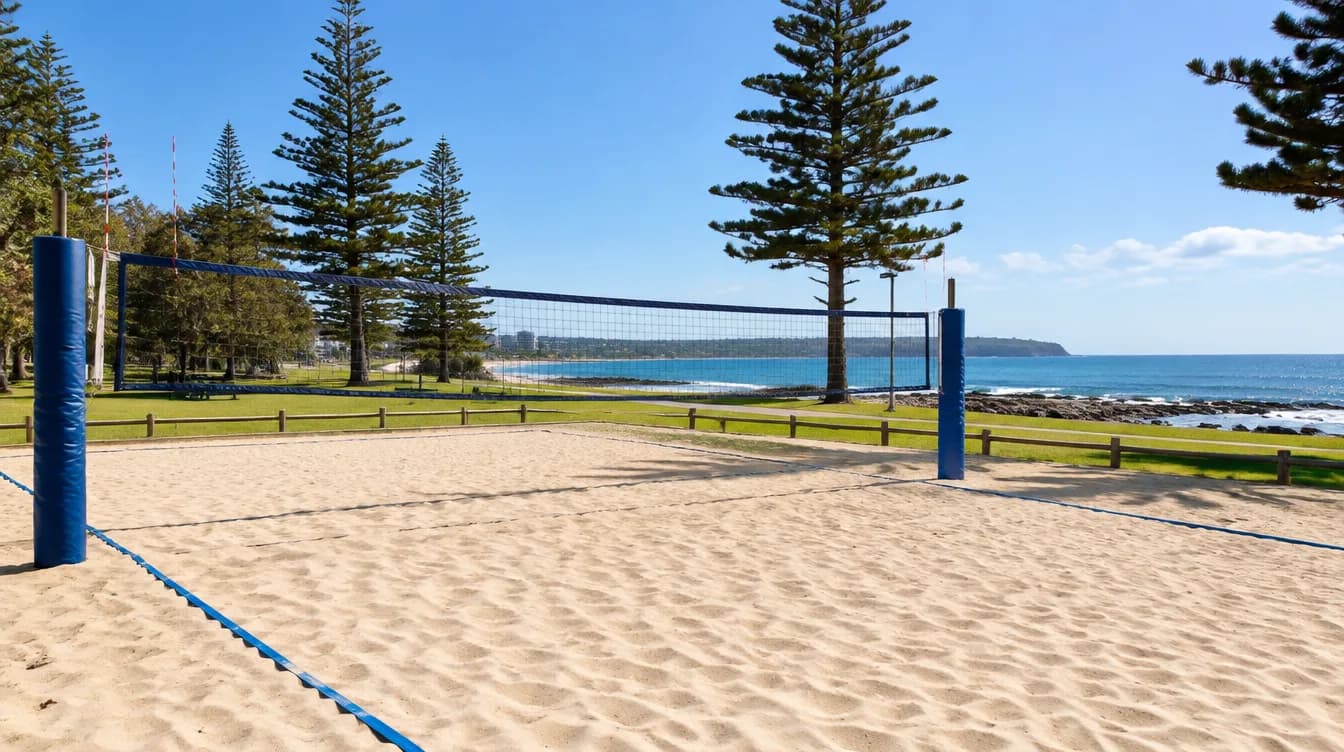
Public sand volleyball courts for foreshores, parks and reserves, with proper drainage, washed sand, padded posts and boundary lines.
Jamie (24/7 quotes): 0468 069 002AS 1742.2 Compliant
Fully Insured
24/7 Availability

15+ Years
Get FREE Quote
Fixed-Price Quote Within 48 Hours
Trusted by 5,000+ businesses
VicRoads approved · AS/NZS compliant · $20M insured
Compliance-Ready Guarantee: every job is marked to AS/NZS 2890 & AS 1742, dimensionally verified, and delivered with full compliance documentation, backed by our 12-month workmanship guarantee.
Last updated:
What is Beach Volleyball Courts for Councils?
Line Marking Australia builds beach volleyball courts for councils across Australia, from foreshore parks to inland reserves. We handle excavation, drainage, washed sand, padded posts, nets and boundary lines around the 16 m by 8 m playing area plus run-off. Each council court is quoted per site because drainage, sand and access vary.
Sand courts bring life to foreshores and parks. They host social games, school groups, summer competitions and casual players looking for something different.
A public court has to cope with heavy use, weather, wind and limited maintenance. Here's what councils ask before they build.
Why do councils build beach volleyball courts?
Councils build beach volleyball courts because they activate foreshores and parks, attract young adults and groups, and support social competitions and community events. Sand courts are soft underfoot and suit casual play. In inland areas, they bring a beach-style activity to residents who may not live near the coast.
- Activates foreshore parks and event spaces
- Supports social leagues and summer programs
- Low-cost, drop-in activity for groups
- Brings a beach feel to inland communities
What size is a council beach volleyball court?
A beach volleyball court's playing area is 16 m by 8 m. A council court also needs sand run-off around the lines so players can dive and chase safely, so the sand area is larger than the court. We size the run-off to your site and allow space for spectators, paths and maintenance access.
For multiple courts, spacing between them reduces collisions and stray balls, and a north–south orientation helps with low sun.
Councils planning summer competitions often build two or three courts side by side, so a league can run several games at once and casual players still find a free court on weekends.
How much does a council beach volleyball court cost?
A council beach volleyball court is quoted per site, because cost depends on excavation, drainage, sand volume and grade, edging, posts, lighting, paths and access for trucks. Foreshore sites can need extra controls for sand movement and environmental protection. We itemise each part so procurement and grant teams can compare scope clearly.
| Cost item | What drives it |
|---|---|
| Excavation and spoil | Court area, soil type and disposal |
| Drainage | Sub-surface drains, gravel layer and outfall |
| Sand | Volume, washed grade and delivery distance |
| Edging | Concrete, timber or soft edging |
| Posts, nets and lines | Sleeved posts, padding and boundary tapes |
| Public amenities | Lighting, seating, shade, paths and foot-wash |
How much sand does a public court need?
A public beach volleyball court needs a deep, consistent layer of sand across the playing area and run-off so players can dive safely. The exact depth and volume depend on court size and drainage design. We calculate it in the quote. Washed, screened sand with rounded grains drains better, stays softer and creates less dust.
- Low silt and clay content
- Rounded grains for skin comfort
- Consistent grade for drainage
- Light colour to reduce surface heat
Why does drainage matter for council sand courts?
Drainage matters because a public sand court without it holds water, compacts, smells and stays closed after rain. We excavate, install sub-surface drains, add a gravel drainage layer and separation fabric, then place the sand. On coastal sites, we check water-table levels and design outfalls to suit local conditions and council requirements.
In northern Australia, where tropical storms dump heavy rain in short bursts, drainage is sized generously. Inland, clay soils that drain slowly may need a larger gravel layer or a connection to the park's stormwater system.
Do foreshore beach volleyball courts need approval?
A foreshore beach volleyball court may need planning or building approval, especially with significant earthworks, drainage outfalls, lighting, fencing over about 2 m, or coastal, flood or heritage overlays. Internal council approvals may still apply even when council owns the land. We provide drawings and scope details to support the approval process.
Foreshore land may also be subject to coastal management plans or Crown land arrangements, so checking land tenure early avoids redesigns late in the project.
Where should councils place a beach volleyball court?
Councils should place a beach volleyball court where people can see and reach it easily, near paths, toilets, water and parking, but away from homes and quiet areas. Avoid trees that drop leaves into the sand. On exposed coastlines, screening or landscaping on the windward side helps reduce sand loss.
- Visible location for passive surveillance
- Step-free access from paths and parking
- Foot-wash point to keep sand off paths
- Seating and shade for players and spectators
How should councils maintain a public sand court?
Councils should maintain public sand courts with regular raking, debris and sharp-object checks, sand top-ups, drain inspections and post, net and boundary-tape checks. Wind-blown sand and heavy use change levels over time. A simple inspection schedule in the asset register keeps the court safe and playable.
Busy foreshore courts may need raking several times a week in summer and less in winter. Recording sand top-ups and drain checks helps councils plan budgets and spot drainage problems before they close the court.
How we keep every council beach volleyball build compliant
Every council beach volleyball court we build is planned against approval requirements, safety laws and the sport's court dimensions. That means services located before excavation, safe work methods for excavators and trucks, sediment and stormwater controls while sand is moved, padded posts, and lighting designed to Australian Standards where included.
- Beach volleyball court dimensions: 16 m × 8 m, plus run-off
- Planning, building and overlay requirements checked
- Before You Dig Australia check before excavation
- Safe Work Method Statements for excavation and mobile plant
- Sediment and stormwater controls during sand and spoil handling
- Accessible paths to the court considered against AS 1428.1
- Lighting, if added, to AS 2560.1:2018 and AS 2560.2:2021 with spill limited under AS/NZS 4282
- Builders who hold the licence the state requires, with public liability insurance
Read more on our volleyball court construction page, or see our sports courts for councils page for other public courts.
What do you need from us to quote a council beach volleyball court?
To quote a council beach volleyball court, Line Marking Australia needs the site location, number of courts, available area, ground conditions and access for trucks. Site plans, survey details, water-table or drainage information, approval requirements and funding deadlines help us return an accurate, itemised quote for your procurement process.
- Site location, available area and number of courts
- Existing ground, soil, levels and drainage
- Truck access and public pedestrian routes
- Posts, nets, boundary tapes and edging preference
- Lighting, seating, shade, paths and foot-wash point
- Coastal, flood or heritage overlays
- Procurement method, timing, budget and grant deadline
Key Benefits
Built for public use: drainage, sand and equipment for heavy use
Foreshore-aware: overlays, sand movement and outfalls considered
Correct court size: 16 m × 8 m with safe run-off
Accessible design: paths, seating and foot-wash planned
Procurement-ready: itemised scope for tenders and grants

Site Inspection
Free assessment and detailed quote

Professional Marking
Expert application with premium materials

Quality Assurance
Final inspection and compliance sign-off
Compliance Standards
Beach volleyball dimensions
16 m × 8 m playing area with safe sand run-off.
Planning & overlays
Earthworks, outfalls, lighting and coastal or flood overlays checked.
Before You Dig Australia
Underground services located before excavation.
Sediment & stormwater
Sand and spoil controlled during construction.
WHS & SWMS
SWMS for excavation and mobile plant; licensed, insured builders.
Fully Compliant & Certified
All our work meets or exceeds Australian Standards and state road authority requirements
VicRoads Approved
Registered Contractor
$20M Public Liability
$10M Professional Indemnity
5,000+ Projects
Since 2009
Fixed Prices
Not Estimates
AS 1742
Traffic Control Devices
Specifies line colours, widths, arrow designs, and placement for road markings. Ensures all traffic control devices meet national safety standards.
AS/NZS 2890
Parking Facilities
Covers bay dimensions (2.4m × 5.4m standard, 2.4m × 5.4m accessible plus a 2.4m shared zone), aisle widths, and traffic flow requirements for compliant parking areas.
AS 4586
Slip Resistance
Defines slip resistance classifications (P rating) for pedestrian surfaces. Critical for wet areas, ramps, and high-traffic zones.
AS/NZS 1428
Access & Mobility
Sets requirements for accessible parking bays, tactile indicators, and mobility access. Essential for DDA compliance and accessibility audits.
What Our Clients Say
Results based on typical project outcomes. Individual results may vary.
Upload your site plans for a detailed quote within 48 hours
Get an accurate, fixed-price quote tailored to your specific project requirements
Frequently Asked Questions
A beach volleyball court's playing area is 16 m by 8 m. Line Marking Australia adds sand run-off around the lines and plans spectator space, paths and maintenance access for council sites.
A council beach volleyball court is quoted per site, because excavation, drainage, sand volume, edging, access and public amenities vary. Line Marking Australia itemises each part for procurement and grant teams.
Washed, screened sand with rounded grains and low silt suits public beach volleyball courts. Line Marking Australia calculates the volume and specifies sand that drains well, stays soft and reduces dust.
Without drainage, sand holds water, compacts and stays unusable after rain. Line Marking Australia builds council beach volleyball courts with sub-surface drains, a gravel layer and separation fabric beneath the sand.
They may, especially with earthworks, drainage outfalls, lighting, fencing or coastal and flood overlays. Line Marking Australia provides drawings and scope details to support council approval processes, including internal approvals on council land.
Councils should rake sand, remove debris and sharp objects, top up lost sand, inspect drains and check posts, nets and boundary tapes. Line Marking Australia provides maintenance guidance for the asset register.
Related Services

Sports Court Construction
Learn more about this service
Sports Courts for Councils
Learn more about this service
Volleyball Court Construction
Learn more about this service
Volleyball, Badminton and Futsal Court Line Marking
Learn more about this service
More Road and Council Line Marking Services
Ready to Get Your Line Marking Sorted?
Upload your site plans and receive a fixed-price quote within 48 hours. No surprises, no cost blowouts, just clear pricing you can take to your committee or manager.
Or call us directly: 0417 460 236