

Volleyball Court Construction
Beach and sand volleyball courts with proper drainage and washed sand, plus hard courts indoors and out. Quoted per site.
Jamie (24/7 quotes): 0468 069 002AS 1742.2 Compliant
Fully Insured
24/7 Availability

15+ Years
Get FREE Quote
Fixed-Price Quote Within 48 Hours
Trusted by 5,000+ businesses
VicRoads approved · AS/NZS compliant · $20M insured
Compliance-Ready Guarantee: every job is marked to AS/NZS 2890 & AS 1742, dimensionally verified, and delivered with full compliance documentation, backed by our 12-month workmanship guarantee.
Last updated:
What is Volleyball Court Construction?
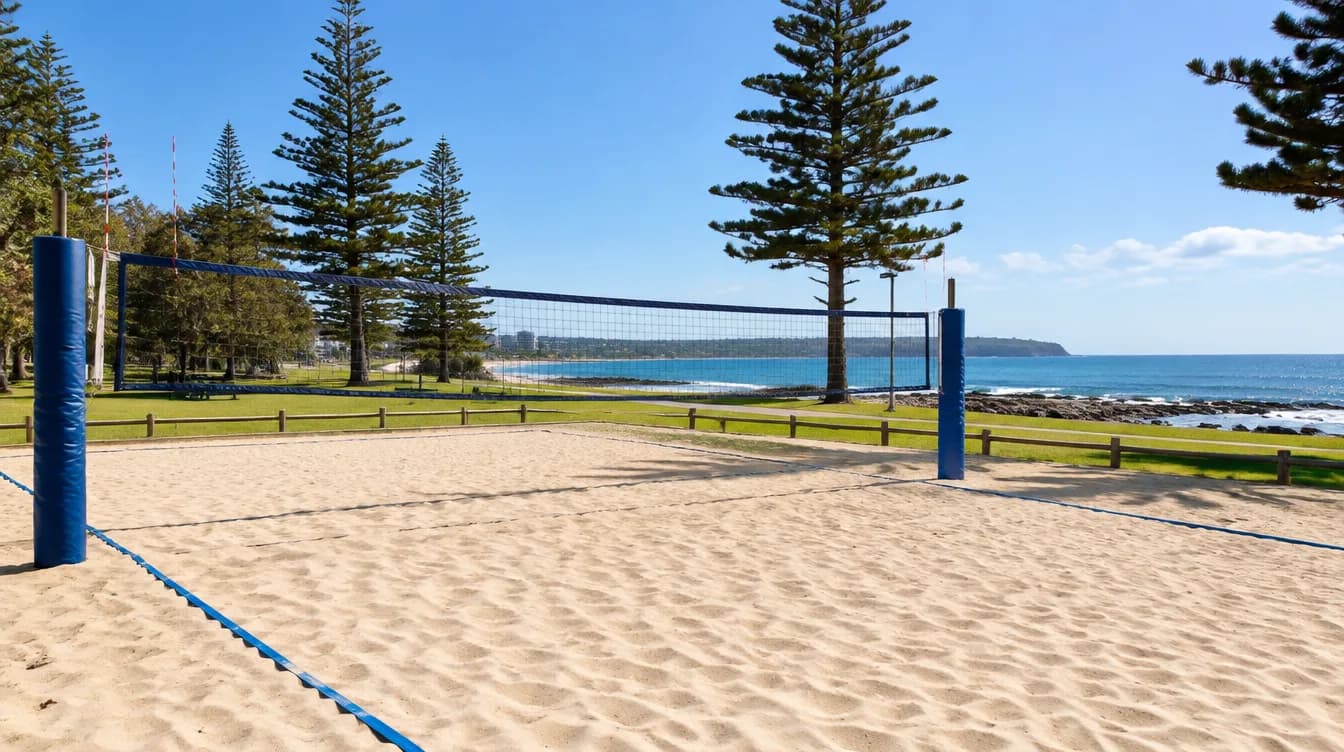
Line Marking Australia builds volleyball courts across Australia: beach and sand volleyball courts for resorts, schools, clubs, councils and backyards, and hard courts indoors and out. We handle excavation, drainage, edging, washed volleyball sand, post footings, nets, boundary lines and lighting. Every volleyball court is quoted per site because sand, drainage and access vary.
Beach volleyball is one of the most requested courts at resorts, caravan parks and schools near the coast, and it's popular in big backyards too. Hard-court volleyball suits school halls and multi-sport courts.
The secret to a good sand court is what you can't see: the drainage under the sand and the right type of sand on top. Get those right and the court stays playable after rain and kind to players who dive.
How much does a beach volleyball court cost?
The cost of a beach volleyball court in Australia depends on the volume of sand, the drainage needed, edging, post footings, delivery access and any lighting or fencing. Sand is often the biggest single item, so a site close to good access costs less. Line Marking Australia itemises every part of the quote.
| Cost item | What affects it |
|---|---|
| Excavation and spoil removal | Court size, depth, soil type and access |
| Drainage | Site soil and rainfall; pipes, gravel and geotextile |
| Edging and surrounds | Timber, concrete or padded edging; paths |
| Volleyball sand | Volume and delivery distance |
| Posts, net and boundary lines | Footings, net system and tensioned boundary tapes |
| Lighting and fencing | Evening play and keeping balls and sand contained |
Hard-court volleyball on an existing sound court can be as simple as sleeves for net posts and new lines, which costs far less than a sand court.
What size is a volleyball court?
An indoor or hard-court volleyball court has a playing area of 18 m by 9 m, and a beach volleyball court has a playing area of 16 m by 8 m. Both need a clear free zone around the lines so players can chase the ball safely, so the total sand or court area is larger than the lines.
| Court | Playing area | Surface |
|---|---|---|
| Volleyball (indoor or hard court) | 18 m × 9 m, plus free zone | Timber or synthetic floor indoors; acrylic or tiles outdoors |
| Beach volleyball | 16 m × 8 m, plus free zone | Washed volleyball sand over drainage |
For a backyard, a slightly smaller social court is fine if space is tight. We'll show you how it fits before you commit.
How much sand does a beach volleyball court need?
A beach volleyball court in Australia needs a deep layer of washed sand across the whole playing area and free zone, deep enough that players can dive and land safely without feeling the base beneath. We work out the volume from your court size and design depth, and include it as a line in your quote.
- Depth: deep enough for safe diving and landing, set during design
- Type: washed sand graded for volleyball, not builders' or brickies' sand, which compacts and stains
- Grain: rounded, free-draining grains that don't stick to skin or turn hard when wet
- Top-ups: sand is lost to wind and players over time, so plan for occasional top-ups
How do you build a sand volleyball court?
Building a sand volleyball court in Australia starts with excavating the court area, installing drainage, laying a geotextile layer so sand and soil don't mix, setting edging and post footings, then filling with washed volleyball sand. Boundary lines are tensioned tapes anchored below the sand, not painted lines.
- Site visit, layout and council check
- Before You Dig Australia search
- Excavation to the design depth, with falls to drains
- Drainage pipes and gravel where the soil needs it
- Geotextile layer over the base
- Edging and concrete footings with sleeves for the net posts
- Sand delivered, spread and levelled
- Posts, net and anchored boundary tapes installed
Can you build a beach volleyball court in your backyard?
Yes, a beach volleyball court can be built in an Australian backyard if there's room for the court plus free zone and a way to get sand delivered. Many families build a social-size court. Drainage matters even more at home, because a waterlogged sand pit becomes a mess.
Think about where the sand goes when people walk off the court: a hard path, a foot rinse and edging help keep it out of the house and pool. Our backyard sports courts page covers other home court options.
Do you build hard-court and indoor volleyball courts?
Yes. Line Marking Australia builds and lines hard-court volleyball courts in Australia on acrylic or tiles outdoors, and marks volleyball on timber and synthetic floors indoors. Our crews have lined indoor school sports halls for basketball, netball, volleyball and badminton, with each sport in its own colour.
Outdoor volleyball often shares a court with basketball and netball, using sleeved posts that lift out. See volleyball court line marking for re-lining existing courts.
How do you maintain a sand volleyball court?
A sand volleyball court in Australia stays playable with regular raking to level the sand and loosen it, removing leaves and rubbish, checking for weeds at the edges, re-tensioning boundary tapes and topping up sand when the level drops. Covers keep out leaves and animals between games.
- Rake and level after heavy use
- Remove debris and check for sharp objects before play
- Keep drains and edges clear
- Top up sand as needed
Who builds beach volleyball courts for resorts and schools?
Line Marking Australia builds beach volleyball courts for resorts, hotels, caravan parks, schools, universities, clubs and councils across Australia, managing excavation, drainage, sand, posts and lighting as one job. Resorts and caravan parks like sand courts because they're social, cheap to maintain and fit the holiday feel.
See sports courts for hotels and resorts for guest-friendly court options.
How we keep every volleyball court build compliant
Every volleyball court we build follows the same compliance steps, whether it's sand or hard court. We check council requirements, locate services before excavating, manage safety and sediment on site, and build footings, paths and lighting to the standards that apply, with the court marked to volleyball dimensions.
- Council requirements checked for earthworks, drainage, lighting, fencing and overlays
- Before You Dig Australia (BYDA) check before excavation
- Work Health and Safety laws, with Safe Work Method Statements for excavation and mobile plant
- Sediment and stormwater controls while sand and soil are moved
- Post footings and slabs to AS 3600; accessible paths considered against AS 1428.1
- Lighting to AS 2560.1:2018 and AS 2560.2:2021, with spill controlled under AS/NZS 4282
- Courts marked to 18 m × 9 m (volleyball) or 16 m × 8 m (beach volleyball)
What do you need from me to quote a volleyball court?
To quote a volleyball court in Australia we need to know whether it's sand or hard court, how big, and how trucks will get sand or concrete to the site. Photos, a sketch with measurements and a note on soil and drainage let us give you a realistic starting figure.
- Beach or sand court, or hard court; indoor or outdoor
- Full size or social size, and number of courts
- Home, resort, caravan park, school, club or council site
- What's on the ground now, soil type and drainage
- Truck access for sand delivery and spoil removal
- Posts and net system, edging, fencing, lighting and power
- Approvals in place, plans or photos, timing and budget
Key Benefits
Drainage done properly: courts that stay playable after rain
Proper volleyball sand: washed, free-draining sand that's safe to dive on
Sand or hard court: beach courts, outdoor hard courts and indoor lines
Resort and school ready: guest and student courts with lighting and paths
Compliance built in: council checks, BYDA, SWMS and sediment controls

Site Inspection
Free assessment and detailed quote

Professional Marking
Expert application with premium materials

Quality Assurance
Final inspection and compliance sign-off
Compliance Standards
Local council approval
Earthworks, drainage, lighting, fencing and overlays checked before the final quote.
Before You Dig Australia
Underground services located before excavation.
WHS Act & SWMS
Safe Work Method Statements for excavation and mobile plant.
Sediment and stormwater
Sediment controls while sand and soil are moved on site.
AS 3600 · AS 1428.1
Post footings to AS 3600; accessible paths considered against AS 1428.1.
AS 2560 · AS/NZS 4282
Court lighting to the AS 2560 series with spill controlled under AS/NZS 4282.
Fully Compliant & Certified
All our work meets or exceeds Australian Standards and state road authority requirements
VicRoads Approved
Registered Contractor
$20M Public Liability
$10M Professional Indemnity
5,000+ Projects
Since 2009
Fixed Prices
Not Estimates
AS 1742
Traffic Control Devices
Specifies line colours, widths, arrow designs, and placement for road markings. Ensures all traffic control devices meet national safety standards.
AS/NZS 2890
Parking Facilities
Covers bay dimensions (2.4m × 5.4m standard, 2.4m × 5.4m accessible plus a 2.4m shared zone), aisle widths, and traffic flow requirements for compliant parking areas.
AS 4586
Slip Resistance
Defines slip resistance classifications (P rating) for pedestrian surfaces. Critical for wet areas, ramps, and high-traffic zones.
AS/NZS 1428
Access & Mobility
Sets requirements for accessible parking bays, tactile indicators, and mobility access. Essential for DDA compliance and accessibility audits.
What Our Clients Say
Results based on typical project outcomes. Individual results may vary.
Upload your site plans for a detailed quote within 48 hours
Get an accurate, fixed-price quote tailored to your specific project requirements
Frequently Asked Questions
Beach volleyball court costs depend on sand volume, drainage, edging, post footings, access for deliveries and any lighting, so Line Marking Australia quotes each court per site. Sand is often the biggest single item, and good truck access keeps costs down.
A beach volleyball court has a playing area of 16 m by 8 m, while indoor and hard-court volleyball uses 18 m by 9 m. Both need a clear free zone around the lines, so the total sand area is larger than the court.
The sand on a beach volleyball court should be deep enough for players to dive and land safely without feeling the base. Line Marking Australia sets the depth during design and calculates the sand volume for your court size.
Beach volleyball courts use washed sand graded for volleyball, with rounded, free-draining grains that don't stick to skin or set hard when wet. Builders' sand compacts and stains, so Line Marking Australia doesn't use it for playing courts.
Yes, if there's room for the court plus free zone and access for sand delivery. Drainage is essential so the court doesn't waterlog. Line Marking Australia can build a social-size court and add edging and paths to keep sand contained.
Sand volleyball courts use tensioned boundary tapes anchored below the sand rather than painted lines. Line Marking Australia installs the tapes with the posts and net so the court is ready to play on handover.
Yes. Line Marking Australia builds hard-court volleyball on acrylic or tiles outdoors and lines volleyball on indoor timber and synthetic floors, often alongside basketball, netball and badminton in school halls.
Related Services

Backyard Sports Courts
Learn more about this service
Multi-Sport Court Construction
Learn more about this service
Sports Court Construction
Learn more about this service
Sports Courts for Hotels and Resorts
Learn more about this service
Volleyball, Badminton and Futsal Court Line Marking
Learn more about this service
Ready to Get Your Line Marking Sorted?
Upload your site plans and receive a fixed-price quote within 48 hours. No surprises, no cost blowouts, just clear pricing you can take to your committee or manager.
Or call us directly: 0417 460 236