

Putting Greens for Retirement Villages
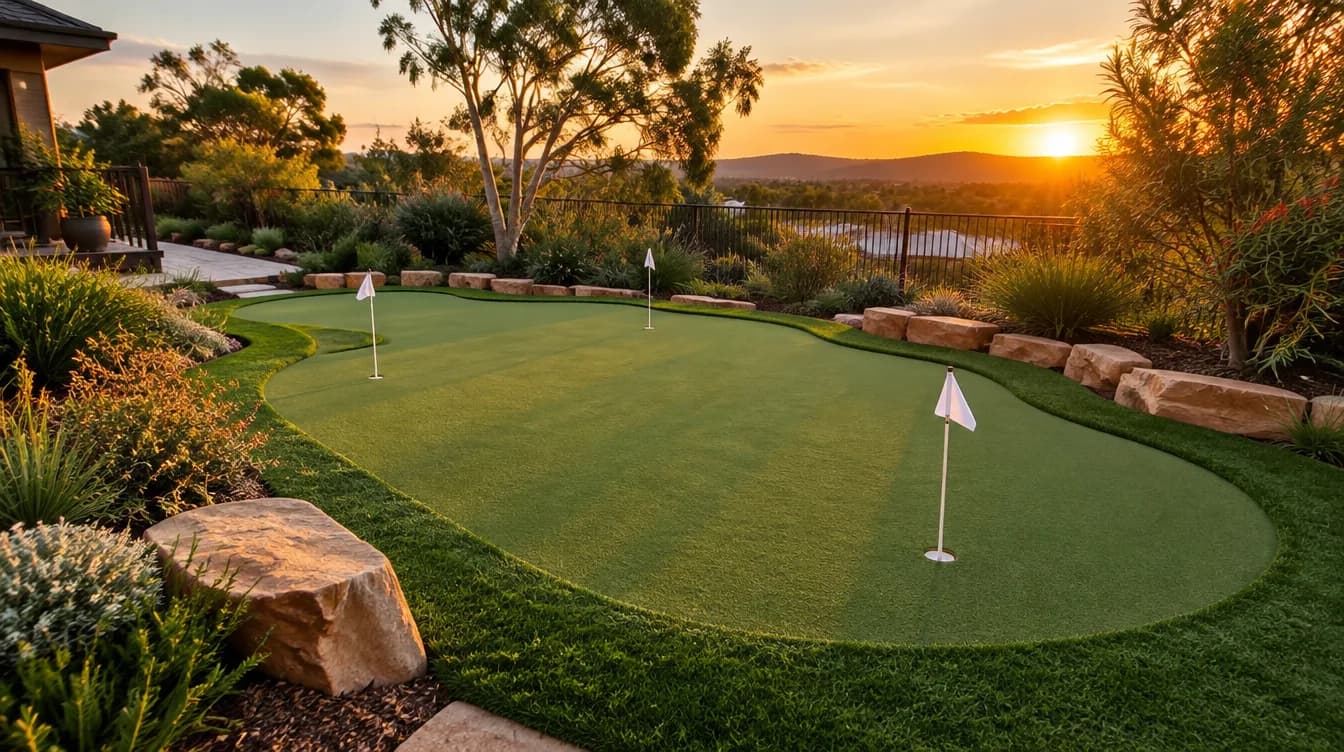
Synthetic putting greens designed for residents: flush edges, gentle breaks, shade, seating and step-free access, with low upkeep for grounds staff.
Jamie (24/7 quotes): 0468 069 002AS 1742.2 Compliant
Fully Insured
24/7 Availability

15+ Years
Get FREE Quote
Fixed-Price Quote Within 48 Hours
Trusted by 5,000+ businesses
VicRoads approved · AS/NZS compliant · $20M insured
Compliance-Ready Guarantee: every job is marked to AS/NZS 2890 & AS 1742, dimensionally verified, and delivered with full compliance documentation, backed by our 12-month workmanship guarantee.
Last updated:
What is Putting Greens for Retirement Villages?
Line Marking Australia builds synthetic putting greens for retirement villages across Australia. We design greens with flush, trip-free edges, gentle breaks, several cups, shade, seating and step-free paths, built on a compacted base that keeps the roll true for years. Every village putting green is quoted per site and itemised for the residents' committee.
A putting green is one of the easiest ways to bring golfers, former golfers and complete beginners together. It's gentle, social and right outside the door, so residents don't need a car or a club membership to enjoy a round.
Here's what village managers and residents' committees ask us when they're planning one.
Why are retirement villages adding putting greens?
Retirement villages add putting greens because they offer gentle, social activity that suits a wide range of residents, from former club golfers to people who've never held a putter. A green near the clubhouse becomes a meeting point for casual games and village competitions, and it looks attractive on tours for prospective residents.
- Light activity with plenty of rests built in
- No booking, tee times or travel needed
- Good for social days, family visits and village comps
- Green and tidy all year with synthetic turf
Is a putting green safe for older residents?
A well-designed putting green is a safe activity for most older residents. Safety comes down to the details: edges finished flush with surrounding paths so there's nothing to trip on, gentle slopes rather than steep tiers, a firm path to the green and seats close by. Even lighting helps residents play into summer evenings.
- Flush edges with no lip between path and turf
- Gentle contours that give breaks without awkward footing
- Step-free access designed with AS 1428.1 (access and mobility) in mind
- Slip-resistant path finishes leading to the green
- Seating with arms and shade beside the green
Residents with health conditions should check with their doctor before starting a new activity.
Synthetic or real grass for a village putting green?
Synthetic putting turf is the better choice for most retirement village putting greens. It putts consistently, stays green year round, copes with shade and heat and needs no mowing, watering or fertilising. A real grass green needs daily specialist care that most village grounds teams can't provide, and it suffers in shade and drought.
| Feature | Synthetic putting turf | Real grass green |
|---|---|---|
| Grounds staff time | Low: brush and blow off leaves | High: mow, roll, water, feed, treat |
| Playable after rain | Usually soon after | Often closed to protect the turf |
| Shade tolerance | Unaffected | Thins and wears in shade |
| Appearance | Green all year | Changes with seasons and wear |
What size and layout suits a retirement village?
The right putting green for a retirement village has enough cups for small groups to play at once without crowding. A compact green with a few cups suits smaller villages, while larger villages often build a green with several cups and a fringe for chipping. We shape it to fit the site and mark it out first.
| Common layout we build | Players at once | Best for |
|---|---|---|
| Compact social green with a few cups | A small group | Smaller villages, courtyards |
| Medium green with several cups | Two or three groups | Most villages, social comps |
| Larger green with fringe and chipping | Several groups | Golf-keen villages and events |
Where should a village putting green go?
A village putting green works best where residents already gather, such as beside the clubhouse, community centre or bowls green, with shade, seating and toilets nearby. It should be reachable along a step-free path, visible from social areas so people join in, and positioned where drainage is good and trees won't drop heavy leaf litter.
Many villages put a green alongside bocce and pickleball. See sports courts for retirement villages for how these fit together.
How much does a putting green for a retirement village cost?
A retirement village putting green is quoted per site, because the cost depends on the size, excavation and base, turf grade, number of cups, contours, edging, paths, shade and seating. Flat, accessible sites cost less than sloping ones. Line Marking Australia itemises every part so the residents' committee can see exactly where funds go.
Do retirement villages need approval for a putting green?
A putting green may need council approval if it involves retaining walls, earthworks, shade structures, lighting or drainage changes, or sits within a heritage or flood overlay. Your state's retirement villages legislation may also require residents to be consulted on capital works and their funding. We provide scopes and itemised quotes to support both.
How do you keep disruption to residents low?
We keep disruption low by agreeing work hours with the village manager, fencing and signing the work zone, keeping walking and scooter routes open and timing deliveries away from busy periods. Putting green builds are compact, so machinery is usually small and the noisy excavation and compaction work is finished within days.
- One contact for the village manager throughout
- Noisy work kept to the middle of the day
- Safe detours around the work zone
- Site left tidy at the end of each day
How do grounds staff look after a village putting green?
A synthetic village putting green needs light, regular care from grounds staff: blowing off leaves, a periodic brush to keep fibres upright and infill even, and infill top-ups if the speed changes. Keep paths and edges clear of trip hazards, check cups and flags, and inspect seams and edges each season.
How we keep every village putting green compliant
Every retirement village putting green we build follows clear compliance steps. We check council requirements, support resident consultation, run a Before You Dig Australia search, work under Work Health and Safety laws with Safe Work Method Statements, control dust and sediment and design access with AS 1428.1 in mind, using licensed, insured builders.
- Council approval checked for earthworks, retaining, shade, lighting, drainage and overlays
- Scopes and quotes for residents' consultation under state retirement villages legislation
- BYDA check before excavation
- SWMS for excavation and mobile plant
- Sediment and stormwater controls near paths and gardens
- Step-free paths designed with AS 1428.1 in mind; slip-resistant path finishes
- Builders who hold the licence your state requires, with public liability insurance
Our main synthetic putting greens page has more on how greens are built.
What do you need from us to quote a village putting green?
To quote a retirement village putting green, we need the location, the number of residents likely to play and what the committee wants around the green. Send the details below with photos and a site plan, and we'll visit to check levels, access and drainage before giving you an itemised quote.
- New green, replacing old synthetic turf, or converting a lawn
- Preferred size, number of cups and any chipping area
- Location and what's there now
- Slope, drainage, trees and shade
- Machinery access through the village
- Paths, edging, shade, seating, lighting and power
- Council and residents' committee approvals, plans, timing and budget
Key Benefits
Trip-free design: flush edges and gentle contours
Low upkeep: synthetic turf with no mowing or watering
Room for groups: several cups so residents can play together
Low disruption: compact builds, agreed hours, safe routes
Committee-ready quotes: every item listed

Site Inspection
Free assessment and detailed quote

Professional Marking
Expert application with premium materials

Quality Assurance
Final inspection and compliance sign-off
Compliance Standards
AS 1428.1
Step-free paths to the green designed with access and mobility in mind.
Residents' consultation
Scopes and itemised quotes for consultation under state retirement villages legislation.
Local council approval
Retaining, earthworks, shade, lighting, drainage and overlays checked.
WHS & site safety
Fenced work zone, SWMS and dust controls around residents.
Slip-resistant paths
Flush edges and slip-resistant path finishes to reduce trip and slip risk.
Fully Compliant & Certified
All our work meets or exceeds Australian Standards and state road authority requirements
VicRoads Approved
Registered Contractor
$20M Public Liability
$10M Professional Indemnity
5,000+ Projects
Since 2009
Fixed Prices
Not Estimates
AS 1742
Traffic Control Devices
Specifies line colours, widths, arrow designs, and placement for road markings. Ensures all traffic control devices meet national safety standards.
AS/NZS 2890
Parking Facilities
Covers bay dimensions (2.4m × 5.4m standard, 2.4m × 5.4m accessible plus a 2.4m shared zone), aisle widths, and traffic flow requirements for compliant parking areas.
AS 4586
Slip Resistance
Defines slip resistance classifications (P rating) for pedestrian surfaces. Critical for wet areas, ramps, and high-traffic zones.
AS/NZS 1428
Access & Mobility
Sets requirements for accessible parking bays, tactile indicators, and mobility access. Essential for DDA compliance and accessibility audits.
What Our Clients Say
Results based on typical project outcomes. Individual results may vary.
Upload your site plans for a detailed quote within 48 hours
Get an accurate, fixed-price quote tailored to your specific project requirements
Frequently Asked Questions
Retirement villages build putting greens because they offer gentle, social activity for former golfers and beginners alike. A green near the clubhouse becomes a meeting point. Line Marking Australia designs village greens around safe access and low upkeep.
A putting green is safe for most older residents when edges are flush with paths, slopes are gentle, paths are step-free and seating is nearby. Line Marking Australia designs village putting greens with AS 1428.1 access in mind.
Synthetic putting turf suits most village putting greens because it putts consistently, stays green all year and needs no mowing or watering. Real grass greens need daily specialist care that most village grounds teams can't provide.
A retirement village putting green is quoted per site, depending on size, base work, turf, cups, contours, paths, shade and seating. Line Marking Australia itemises every part so the residents' committee can see where funds go.
State retirement villages legislation may require residents to be consulted on capital works and how they are funded. Line Marking Australia supplies scopes and itemised quotes to support consultation and any council approval needed.
A village putting green usually takes from a few days to about two weeks on site, depending on size, earthworks and paths. Line Marking Australia agrees work hours with the village and keeps walking routes open throughout.
Grounds staff maintain a synthetic putting green by blowing off leaves, brushing to keep fibres upright and infill even, and topping up infill if the speed changes. Edges, seams, cups and paths should be checked each season.
Related Services

Bocce Court Construction
Learn more about this service
Sports Court Construction
Learn more about this service
Sports Courts for Golf Clubs
Learn more about this service
Sports Courts for Retirement Villages
Learn more about this service
Synthetic Putting Greens
Learn more about this service
Ready to Get Your Line Marking Sorted?
Upload your site plans and receive a fixed-price quote within 48 hours. No surprises, no cost blowouts, just clear pricing you can take to your committee or manager.
Or call us directly: 0417 460 236