

Backyard Putting Greens
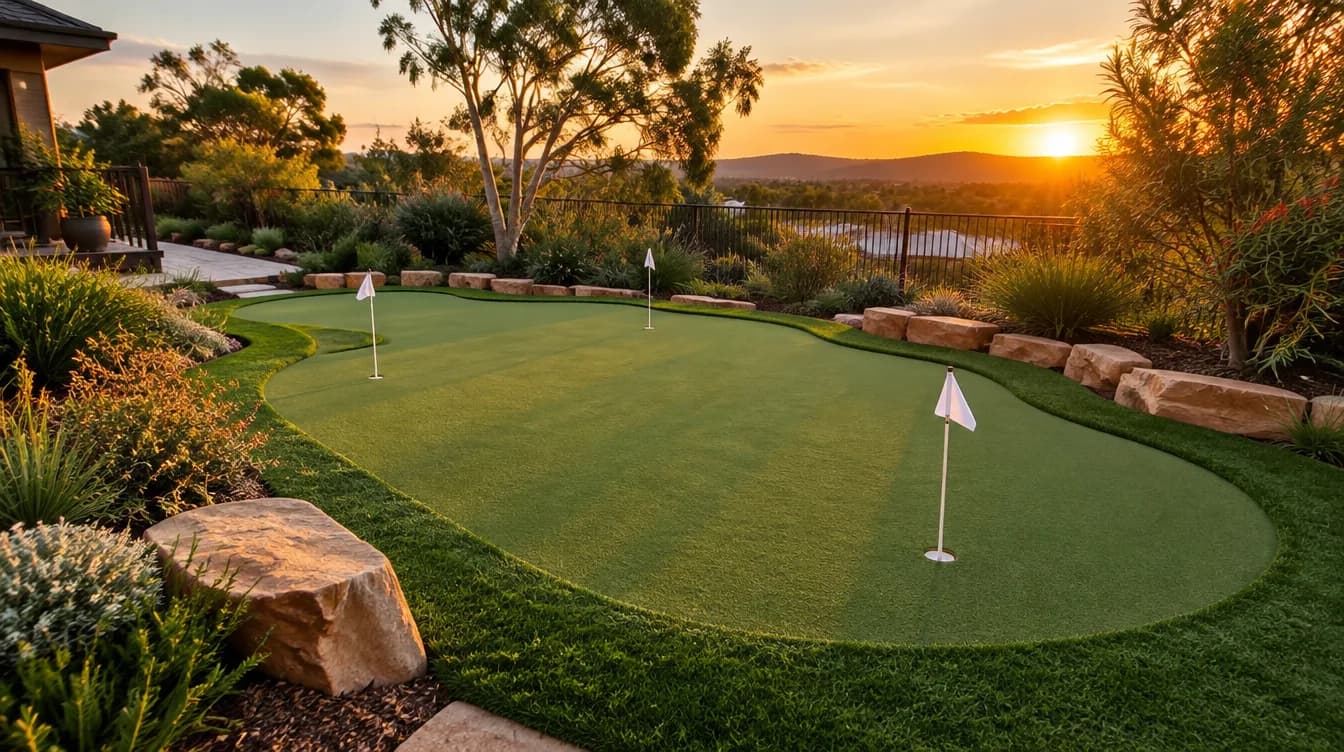
A synthetic putting green at home with true roll, gentle contours, cups and a fringe, built on a properly compacted base.
Jamie (24/7 quotes): 0468 069 002AS 1742.2 Compliant
Fully Insured
24/7 Availability

15+ Years
Get FREE Quote
Fixed-Price Quote Within 48 Hours
Trusted by 5,000+ businesses
VicRoads approved · AS/NZS compliant · $20M insured
Compliance-Ready Guarantee: every job is marked to AS/NZS 2890 & AS 1742, dimensionally verified, and delivered with full compliance documentation, backed by our 12-month workmanship guarantee.
Last updated:
What is Backyard Putting Greens?
Line Marking Australia builds backyard putting greens for homes across Australia. We excavate, lay and compact a crushed-rock base, shape gentle contours, then install synthetic putting turf with cups, flags and a fringe. Every home putting green is designed around your yard and quoted per site, so the price matches the size and shaping you want.
A putting green at home is the golfer's version of the backyard hoop. Ten minutes before work or a few putts after dinner adds up fast, and it looks great from the deck.
Here's what homeowners ask us before they put one in.
How much does a backyard putting green cost?
A backyard putting green in Australia is quoted per site, because the price depends on the area, how much excavation and base work is needed, the grade of synthetic putting turf, the number of cups and any contours or fringe. Small, flat greens cost the least. Line Marking Australia itemises every part of the build.
What moves the price:
- Green size and shape
- Excavation and crushed-rock base depth
- Putting turf grade and infill
- Contours, tiers and borrows
- Number of cups, fringe or chipping turf around the edge
- Access for machinery and removing spoil
What size putting green suits a backyard?
The right size putting green for a backyard is one that gives you several different putts, not just one straight line. Even a compact green with two or three cups can give short, medium and breaking putts. Larger greens allow long lag putts and chipping in from the fringe. We design the shape around your garden.
| Common green we build | What you can practise | Typical spot |
|---|---|---|
| Compact green, one or two cups | Short putts and starting lines | Courtyards, side yards, beside a patio |
| Medium green, two or three cups | Short and medium putts with gentle breaks | Most suburban backyards |
| Large green with fringe | Long putts, breaks and chipping | Larger blocks and acreage |
Curved, natural shapes usually look better than a rectangle and blend into the garden. Think about where you'll stand most: a green you can see from the kitchen or deck gets used far more than one tucked behind the shed.
What is the best material for a home putting green?
Synthetic putting turf is the best material for most home putting greens in Australia. It rolls true, stays green year round, doesn't need mowing or watering and handles summer heat. Real grass greens can putt beautifully but need daily mowing, rolling and specialist care that few homeowners can keep up with.
| Feature | Synthetic putting turf | Real grass green |
|---|---|---|
| Roll | Consistent, can be tuned with infill | Excellent when perfectly maintained |
| Upkeep | Brush and blow off leaves | Daily mowing, rolling, watering and feeding |
| Shade and heat | Unaffected by shade; can get warm in sun | Struggles in shade and drought |
| Year-round look | Green all year | Varies by season |
How is a synthetic putting green built?
A synthetic putting green is built by excavating the area, laying and compacting a crushed-rock base, shaping it to the contours you want, then fixing the putting turf, cutting in the cups and adding infill to set the speed. The base is the part that matters most: it controls how the ball rolls for years.
- Design the shape, cup positions and breaks
- Before You Dig Australia check, then excavation
- Edge restraint and drainage
- Crushed-rock base laid and compacted in layers
- Fine shaping for contours and borrows
- Putting turf laid, joined and fixed
- Cups cut in, infill brushed through, flags set
Can you put a putting green on concrete?
Yes, a putting green can go on concrete if the slab is sound and reasonably flat. Synthetic putting turf is laid over a foam or rubber underlay and fixed at the edges. The downside is that you can't shape contours or sink full-depth cups easily, so concrete greens are mostly flat practice surfaces.
On patios and balconies, we'll check drainage first so water can still escape under the turf.
Can a home putting green have breaks and a chipping area?
Yes. A home putting green can be shaped with gentle slopes and borrows so putts break like a real course, and a longer fringe or chipping turf around the edge lets you practise short chips onto the green. Keep slopes gentle, because steep contours on a small green make putts run off.
Does a putting green suit shady yards, kids and pets?
A synthetic putting green suits shady yards well because it doesn't need sun to grow. It's also hardy enough for kids and pets, though dogs digging at the edges and sharp toys can damage turf. Pet waste can be picked up and the area hosed. We fix edges securely so they don't lift.
How long does a backyard putting green take to install?
Most backyard putting greens take a few days to about a week on site, depending on size, access and how much shaping is needed. Excavation and base compaction take the most time. Wet weather can delay base work, because a soaked base won't compact properly, so we schedule around the forecast.
How do I look after a synthetic putting green?
A synthetic putting green needs light, regular care: blow or brush off leaves, brush the turf now and then to keep the fibres upright and the infill even, and top up infill if the green slows or speeds up. Avoid furniture, barbecues and anything hot on the surface, as heat can damage synthetic fibres.
How we keep every backyard putting green build compliant
Every backyard putting green we install follows clear compliance steps. We locate underground services before digging, check council rules where retaining walls, earthworks or drainage changes are involved, work under Work Health and Safety laws, manage sediment on site and use installers with public liability insurance.
- Before You Dig Australia (BYDA) search before excavation
- Council check for retaining walls, earthworks, drainage and overlays
- Safe Work Method Statements for excavation and mobile plant
- Sediment and stormwater controls while the base is open
- Silica dust controls if concrete edging is cut
- Builders who hold the licence your state requires, with public liability insurance
Our main synthetic putting greens page covers larger greens, and backyard sports courts covers other courts for the home.
What do you need from me to quote a backyard putting green?
To quote a backyard putting green, we need to know the space, the ground and how you like to practise. Send the details below with photos and rough measurements, and we'll visit to check levels, access and drainage before giving you an itemised quote for the green you want.
- New green, replacing old synthetic turf, or a green on concrete
- Rough size and shape, and where in the yard
- What's there now: lawn, garden beds, pavers or concrete
- Slope, drainage and shade
- Access for machinery and spoil removal
- Number of cups, contours, fringe or chipping area
- Lighting or power nearby
- Approvals, photos, timing and budget
Key Benefits
True roll: compacted crushed-rock base shaped to your design
No mowing: synthetic putting turf, green all year
Breaks and chipping: gentle contours and fringe if you want them
Fits the garden: curved shapes around patios and beds
Quoted per site: every item listed

Site Inspection
Free assessment and detailed quote

Professional Marking
Expert application with premium materials

Quality Assurance
Final inspection and compliance sign-off
Compliance Standards
Before You Dig Australia
Underground services located before the green is excavated.
Local council approval
Retaining walls, earthworks, drainage and overlays checked where relevant.
WHS & SWMS
Safe Work Method Statements for excavation and mobile plant.
Sediment control
Sediment and stormwater managed while the base is open.
Licensed, insured installers
Builders hold the licence your state requires, with public liability insurance.
Fully Compliant & Certified
All our work meets or exceeds Australian Standards and state road authority requirements
VicRoads Approved
Registered Contractor
$20M Public Liability
$10M Professional Indemnity
5,000+ Projects
Since 2009
Fixed Prices
Not Estimates
AS 1742
Traffic Control Devices
Specifies line colours, widths, arrow designs, and placement for road markings. Ensures all traffic control devices meet national safety standards.
AS/NZS 2890
Parking Facilities
Covers bay dimensions (2.4m × 5.4m standard, 2.4m × 5.4m accessible plus a 2.4m shared zone), aisle widths, and traffic flow requirements for compliant parking areas.
AS 4586
Slip Resistance
Defines slip resistance classifications (P rating) for pedestrian surfaces. Critical for wet areas, ramps, and high-traffic zones.
AS/NZS 1428
Access & Mobility
Sets requirements for accessible parking bays, tactile indicators, and mobility access. Essential for DDA compliance and accessibility audits.
What Our Clients Say
Results based on typical project outcomes. Individual results may vary.
Upload your site plans for a detailed quote within 48 hours
Get an accurate, fixed-price quote tailored to your specific project requirements
Frequently Asked Questions
A backyard putting green in Australia is quoted per site, because cost depends on the size, base work, turf grade, cups, contours and access. Line Marking Australia itemises every part of a home putting green so you can choose what to include.
A home putting green should be big enough to give several different putts. A compact green with two or three cups gives short and medium putts, and larger greens add long putts and chipping. Line Marking Australia designs the shape around your garden.
Synthetic putting turf suits most backyard putting greens because it rolls consistently and needs no mowing or watering. Real grass greens need daily specialist care. Line Marking Australia installs synthetic putting greens built on compacted bases.
A putting green can go on sound, flat concrete using synthetic putting turf over an underlay. Contours and full-depth cups are limited, so concrete greens are mostly flat practice surfaces. Line Marking Australia checks drainage first.
Most backyard putting greens take a few days to about a week on site, depending on size, access and shaping. Line Marking Australia schedules base work around the weather, because a wet base won't compact properly.
A synthetic putting green needs leaves blown off, an occasional brush to keep fibres upright and infill even, and infill top-ups if the speed changes. Keep hot items like barbecues off the turf, since heat can damage synthetic fibres.
Yes. A home putting green can be shaped with gentle slopes so putts break like a real course. Line Marking Australia keeps contours gentle on small greens, because steep slopes make the ball run off the green.
Related Services

Backyard Sports Courts
Learn more about this service
Sports Court Construction
Learn more about this service
Sports Courts for Golf Clubs
Learn more about this service
Synthetic Putting Greens
Learn more about this service
Ready to Get Your Line Marking Sorted?
Upload your site plans and receive a fixed-price quote within 48 hours. No surprises, no cost blowouts, just clear pricing you can take to your committee or manager.
Or call us directly: 0417 460 236