

Indoor Padel Courts
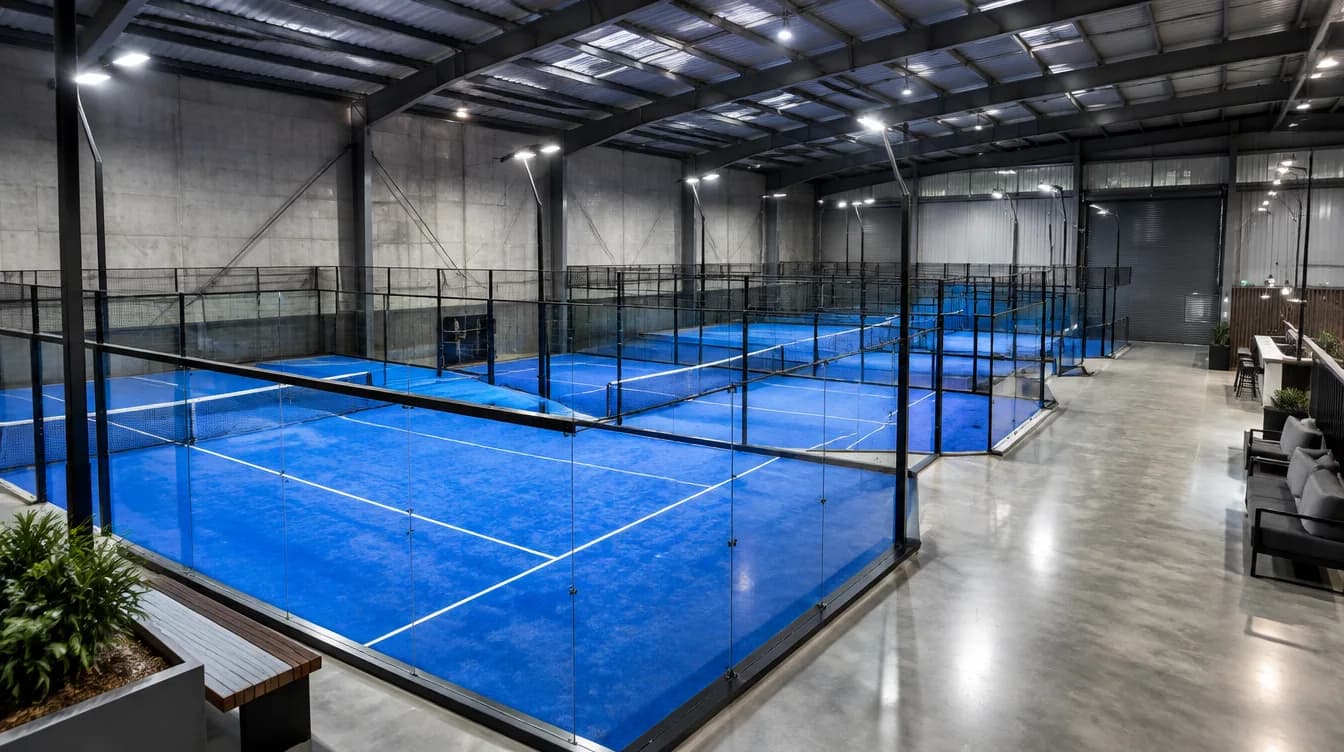
Glass-walled padel courts inside warehouses and sports centres, planned around your building's height, slab, lighting and approvals.
Jamie (24/7 quotes): 0468 069 002AS 1742.2 Compliant
Fully Insured
24/7 Availability

15+ Years
Get FREE Quote
Fixed-Price Quote Within 48 Hours
Trusted by 5,000+ businesses
VicRoads approved · AS/NZS compliant · $20M insured
Compliance-Ready Guarantee: every job is marked to AS/NZS 2890 & AS 1742, dimensionally verified, and delivered with full compliance documentation, backed by our 12-month workmanship guarantee.
Last updated:
What is Indoor Padel Courts?
Line Marking Australia builds indoor padel courts for padel centres, gyms and converted warehouses across Australia, covering slab preparation, glass and mesh enclosures, playing surface, lines and lighting. A padel court starts from about $60,000 (Sydney club build reported in the trade press), and indoor fit-outs are quoted per site.
Indoor padel takes the weather out of the business. No rain cancellations, no midday heat and lights on whenever members want to play.
The building does a lot of the work, but it also sets the limits. Here are the questions operators ask us before signing a lease or ordering courts.
Why build padel courts indoors?
Operators build padel courts indoors because bookings don't depend on weather. Indoor courts can run early mornings and late nights, players stay out of the sun and rain, and the venue can add a café, pro shop and lounge under one roof. In hot or wet parts of Australia, indoor padel keeps courts full all year.
- Year-round bookings with no rain-outs
- Longer opening hours
- Comfortable play in summer heat
- Room for social areas that lift spend per visit
How much does an indoor padel court cost?
An indoor padel court starts from about $60,000 per court, based on a Sydney club build reported in the trade press. Indoor projects are quoted per site, because the existing slab, number of courts, enclosure system, surface, lighting and any building works vary. Multi-court centres often get better value per court.
| Cost item | What drives it |
|---|---|
| Slab preparation | Levelness, cracks and anchoring for enclosure frames |
| Enclosure | Glass and mesh panel system, frame finish |
| Surface | Synthetic turf with infill or other padel surface |
| Lighting | Frame-mounted or suspended LED, glare control |
| Building works | Exits, amenities, ventilation and access, if required |
What size building do indoor padel courts need?
Each padel court has a 20 m by 10 m playing area inside its enclosure, plus walkways between courts and access to doors. An indoor centre needs a building long and wide enough for your chosen number of courts, with columns placed outside the courts. We plan the layout on your floor plan before you commit.
Columns, roller doors, sprinklers and fire exits often decide how many courts fit, more than the raw floor area.
We also allow space for a reception desk, seating where players can watch through the glass, equipment storage and clear exit paths. A layout that feels comfortable between games keeps members coming back.
How much ceiling height does indoor padel need?
Indoor padel needs generous clear height, because lobs are a big part of the game and players lose points when the ball hits the roof. Beams, lights, ducts and sprinklers all reduce usable height. We check your building's clear height and roof structure early, because it's the most common reason a warehouse doesn't suit padel.
If you're still choosing a building, send us the floor plan and the height to the underside of the lowest beam before you sign. It's much easier to walk away from an unsuitable warehouse than to work around a low roof later.
Can padel courts go on an existing warehouse slab?
Often, yes. Many indoor padel courts sit on an existing warehouse slab, as long as it's level, sound and able to anchor the enclosure frames. We survey the slab for level, cracks and joints, then grind, patch or level where needed. Poor slabs can be fixed, but the cost is better known before you sign a lease.
Do indoor padel centres need council approval?
An indoor padel centre usually needs council approval in Australia, because turning a warehouse into a sports venue is often a change of use. Councils may look at parking, hours, noise, exits, accessibility and amenities. The building owner must consent too. We check requirements early and supply court drawings for your planner and certifier.
How should indoor padel courts be lit?
Indoor padel courts need even, glare-free lighting, because players look up for lobs and the glass walls reflect light. Lighting is designed to the AS 2560 sports lighting standards, usually with LED fittings mounted on the enclosure frames or suspended above the courts. Good lighting design is one of the biggest differences between average and great centres.
Lights should sit outside the main lob path and be aimed to avoid bright reflections in the glass. Dimming and court-by-court switching linked to bookings save power when courts are empty.
How long does an indoor padel fit-out take?
An indoor padel fit-out usually takes a few weeks on site once approvals are in place and the enclosures have arrived. Slab preparation comes first, then frames and glass, surface and lines, and lighting. Enclosure lead times can be the longest part of the program, so we plan orders around your opening date.
- Floor plan layout and building checks
- Council approval and landlord consent
- Slab survey, grinding and levelling
- Enclosure frames, glass and mesh installed
- Surface laid, lines marked, nets fitted
- Lighting commissioned and handover
How we keep every indoor padel build compliant
Every indoor padel court we build is planned against council rules, safety laws and the right Australian Standards. That means change of use and landlord consent checked early, safe work methods for lifting glass and using mobile plant, silica dust controlled when we grind the slab, and lighting designed to the AS 2560 series.
- Padel court dimensions: 20 m × 10 m playing area
- Local council planning or building approval checked, including change of use
- Safe Work Method Statements for mobile plant and lifting
- Silica dust controls (on-tool vacuum extraction) when grinding or cutting indoors
- Sports lighting to AS 2560.1:2018 and AS 2560.2:2021
- Accessible entry and paths considered against AS 1428.1
- Builders who hold the licence your state requires, with public liability insurance
Read our padel court construction page for padel builds in general, our sports courts for gyms and padel centres page for other indoor work, and our sports court lighting page for lighting design.
What do you need from us to quote indoor padel courts?
To quote indoor padel courts, Line Marking Australia needs the building's floor plan, internal measurements and clear height, the slab condition and how many courts you want. Tell us about columns, exits and doors, your lease status and opening date. Photos and plans help us return an accurate, itemised quote and a court layout.
- Number of padel courts
- Floor plan, internal length, width and clear height
- Column, door, sprinkler and exit positions
- Slab condition and any known cracks or joints
- Preferred enclosure, surface and colours
- Lighting and any social or café areas planned
- Lease, landlord and council approval status
- Photos, opening date and budget
Key Benefits
Building checked first: clear height, columns, exits and slab
Complete fit-out: slab prep, enclosures, surface, lines and lighting
From about $60,000: per padel court, every item listed
Lighting done right: glare-controlled LED designed to AS 2560
Opening-date planning: enclosure orders scheduled around your launch

Site Inspection
Free assessment and detailed quote

Professional Marking
Expert application with premium materials

Quality Assurance
Final inspection and compliance sign-off
Compliance Standards
Padel court dimensions
20 m × 10 m playing area with walkways and door access planned.
Council & change of use
Change of use, exits, access and landlord consent checked early.
Silica dust controls
On-tool vacuum extraction when grinding the slab indoors.
AS 2560
Even, glare-controlled indoor lighting to AS 2560.1:2018 and AS 2560.2:2021.
WHS & SWMS
SWMS for lifting glass and mobile plant; licensed, insured builders.
Fully Compliant & Certified
All our work meets or exceeds Australian Standards and state road authority requirements
VicRoads Approved
Registered Contractor
$20M Public Liability
$10M Professional Indemnity
5,000+ Projects
Since 2009
Fixed Prices
Not Estimates
AS 1742
Traffic Control Devices
Specifies line colours, widths, arrow designs, and placement for road markings. Ensures all traffic control devices meet national safety standards.
AS/NZS 2890
Parking Facilities
Covers bay dimensions (2.4m × 5.4m standard, 2.4m × 5.4m accessible plus a 2.4m shared zone), aisle widths, and traffic flow requirements for compliant parking areas.
AS 4586
Slip Resistance
Defines slip resistance classifications (P rating) for pedestrian surfaces. Critical for wet areas, ramps, and high-traffic zones.
AS/NZS 1428
Access & Mobility
Sets requirements for accessible parking bays, tactile indicators, and mobility access. Essential for DDA compliance and accessibility audits.
What Our Clients Say
Results based on typical project outcomes. Individual results may vary.
Upload your site plans for a detailed quote within 48 hours
Get an accurate, fixed-price quote tailored to your specific project requirements
Frequently Asked Questions
A padel court starts from about $60,000, based on a Sydney club build reported in the trade press. Line Marking Australia quotes indoor padel fit-outs per site, because the slab, enclosure system, lighting and building works vary.
An indoor padel court has a 20 m by 10 m playing area inside its glass and mesh enclosure, plus walkways and door access. Line Marking Australia plans court layouts on your floor plan around columns and exits.
Indoor padel needs generous clear height because lobs are central to the game. Line Marking Australia checks your building's clear height, beams, lights and sprinklers early, since height is the most common reason a warehouse doesn't suit padel.
Often, yes, if the slab is level, sound and able to anchor enclosure frames. Line Marking Australia surveys the slab and grinds, patches or levels it where needed, ideally before you sign a lease.
Usually, because converting a warehouse to a sports venue is often a change of use. Councils may consider parking, hours, noise, exits and access. Line Marking Australia supplies court drawings for your planner and certifier.
An indoor padel fit-out usually takes a few weeks on site once approvals are in place and enclosures arrive. Line Marking Australia plans enclosure orders around your opening date, because lead times are often the longest step.
Related Services

Padel Court Construction
Learn more about this service
Sports Court Construction
Learn more about this service
Sports Court Lighting
Learn more about this service
Sports Courts for Gyms and Padel Centres
Learn more about this service
Ready to Get Your Line Marking Sorted?
Upload your site plans and receive a fixed-price quote within 48 hours. No surprises, no cost blowouts, just clear pricing you can take to your committee or manager.
Or call us directly: 0417 460 236