

Home Tennis Courts
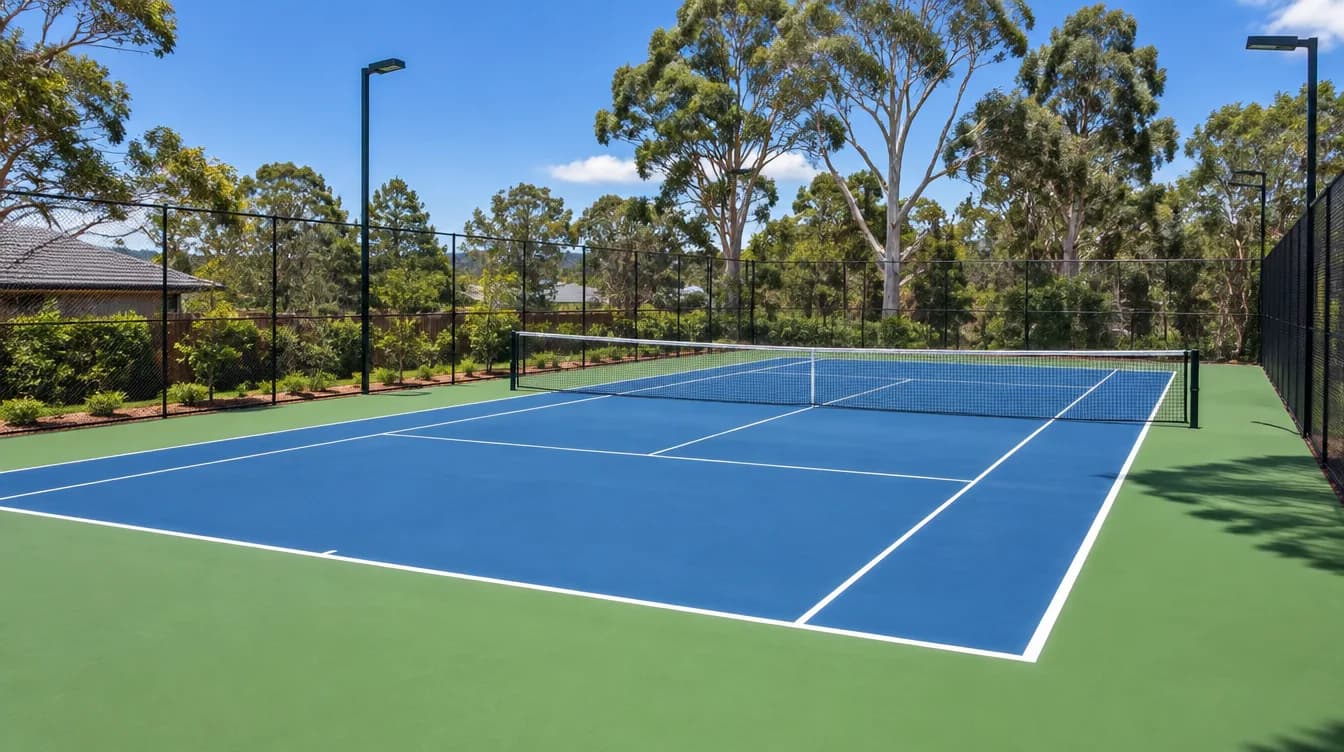
A private tennis court built on your property: base, acrylic or synthetic grass surface, lines, net, fencing and lights. From about $40,000.
Jamie (24/7 quotes): 0468 069 002AS 1742.2 Compliant
Fully Insured
24/7 Availability

15+ Years
Get FREE Quote
Fixed-Price Quote Within 48 Hours
Trusted by 5,000+ businesses
VicRoads approved · AS/NZS compliant · $20M insured
Compliance-Ready Guarantee: every job is marked to AS/NZS 2890 & AS 1742, dimensionally verified, and delivered with full compliance documentation, backed by our 12-month workmanship guarantee.
Last updated:
What is Home Tennis Courts?
Line Marking Australia builds home tennis courts across Australia, on acreage and larger suburban blocks. We manage the whole job: site checks, earthworks, base, acrylic hard court or synthetic grass surface, lines, net, fencing and lighting. A new tennis court starts from about $40,000 (Oneflare cost guide, 2026), quoted for your site.
A tennis court at home is a big project, and it's one you'll live with for decades. Getting the position, surface and drainage right at the start matters far more than any finishing touch.
These are the questions homeowners ask us before they build, answered the way we'd answer them standing on your block.
How much does it cost to build a tennis court at home?
A home tennis court in Australia starts from about $40,000 (Oneflare cost guide, 2026). The final cost depends on how much earthworks and retaining your block needs, the base, whether you choose acrylic or synthetic grass, and extras like full-height fencing, lighting and landscaping. Line Marking Australia itemises each part of the build.
The biggest cost drivers on residential tennis courts:
- Earthworks: sloping blocks need cut, fill and sometimes retaining walls
- Soil: reactive clay or soft ground needs a stronger base
- Drainage: stormwater from a large court has to go somewhere approved
- Surface: acrylic hard court, cushioned acrylic or synthetic grass
- Fencing and lighting: often the largest extras
- Access: long carries or tight gates add machine and labour time
How much space do I need for a home tennis court?
A home tennis court needs the 23.77 m by 10.97 m doubles playing area plus run-off behind the baselines and beside the sidelines, so players can chase the ball safely. Run-off is what makes a court feel right to play on. If space is tight, a pickleball court or a smaller hit-up area may suit better.
| Option | Playing area | Notes |
|---|---|---|
| Full tennis court (doubles) | 23.77 m × 10.97 m plus run-off | Needs a large, fairly level block |
| Tennis court with pickleball lines | Same as tennis | Extra lines in a second colour |
| Pickleball court | 13.41 m × 6.10 m plus run-off | Fits many suburban yards |
| Hit-up area with rebound wall | Sized to your space | Practice only, no match play |
We orient courts roughly north-south where we can, so the low sun isn't in a server's eyes at either end.
Synthetic grass or hard court for a home tennis court?
For a home tennis court, an acrylic hard court gives a true, consistent bounce and needs little day-to-day care, while synthetic grass is softer underfoot and plays in light rain but needs regular brushing and sand top-ups. Tennis Australia classifies both in its National Court Surface Policy. Choose on feel, upkeep and budget.
| Feature | Acrylic hard court | Synthetic grass |
|---|---|---|
| Feel | Firm, fast, true bounce | Softer, slower, easier on joints |
| Weekly care | Blow or sweep leaves | Brush, keep sand level |
| Wet weather | Slippery when wet; dries fast | Plays in light rain |
| Major renewal | Recoat about every 7 to 10 years | Replace about every 10 to 15 years |
Renewal intervals are from Tennis Australia's Victorian maintenance guides and vary with sun, shade and use.
What does building a home tennis court involve?
Building a home tennis court involves a site survey, approvals and service checks, earthworks and drainage, a compacted base, the slab or asphalt, then the surface, lines, net posts, fencing and lighting. Each stage depends on the one before, so a good base and drainage plan are what keep the court flat for decades.
- Site visit, levels and court position
- Council check and Before You Dig Australia search
- Earthworks, retaining and subsurface drainage
- Compacted base, then concrete or asphalt
- Acrylic coats or synthetic grass laid and sanded
- Line marking, net posts and net
- Fencing, lighting and handover
More detail is on our tennis court construction page.
Do I need council approval for a tennis court at home?
A home tennis court often needs council approval because of its size, earthworks, retaining walls, tall perimeter fencing and lighting. Fences over about 2 m, light spill onto neighbours, drainage, setbacks and heritage or flood overlays are the usual triggers. Line Marking Australia checks your council's requirements and helps prepare what it needs.
What fencing and lighting does a home tennis court need?
Most home tennis courts need perimeter fencing to keep balls in, and many owners add lighting for evening games. Tall fencing usually needs council sign-off, and lighting must avoid spilling onto neighbours. We design court lighting with the AS 2560 sports lighting series in mind and control obtrusive light under AS/NZS 4282.
- Chain-wire or mesh fencing with gates sized for maintenance access
- Windbreak mesh on exposed sites
- LED lights with shielding aimed onto the court
- Switching or timers to suit agreed playing hours
Can a home tennis court also have pickleball lines?
Yes. A home tennis court can carry two pickleball courts marked in a contrasting colour while keeping the tennis lines, so the whole family can play both. Portable pickleball nets let you switch games in minutes. If tennis use has dropped off, a full conversion to dedicated pickleball courts is another option.
See tennis court to pickleball conversion for how that works.
How long does it take to build a tennis court at home?
A home tennis court usually takes several weeks on site once approvals are in place. Earthworks and drainage come first, then the base and slab, which need curing time before an acrylic surface goes on. Synthetic grass and fencing follow. Wet weather affects earthworks, concrete and coatings, so we plan the program around the season.
How often does a home tennis court need resurfacing?
An acrylic home tennis court usually needs a fresh coat about every 7 to 10 years, and synthetic grass needs replacing about every 10 to 15 years, according to Tennis Australia's Victorian maintenance guides. Acrylic resurfacing starts from about $8,000 (Airtasker cost guide, 2026). Shade, leaf litter and heavy use shorten those intervals.
We can crack-repair, recoat and re-line your court when the time comes. See court resurfacing.
How we keep every home tennis court build compliant
Every home tennis court we build follows a clear compliance process. We check council requirements, run a Before You Dig Australia search, work under Work Health and Safety laws with Safe Work Method Statements, control silica dust and sediment, and use builders who hold the licence your state requires with public liability insurance.
- Council approval checked for earthworks, retaining, fencing, lighting, drainage, setbacks and overlays
- BYDA check before excavation
- SWMS for excavation and mobile plant
- Silica dust controls when cutting concrete
- Sediment and stormwater controls during earthworks
- Concrete to AS 3600; lighting to the AS 2560 series and AS/NZS 4282
- Court marked to tennis dimensions (23.77 m × 10.97 m doubles), following Tennis Australia guidance
What do you need from me to quote a home tennis court?
To quote a home tennis court, we need to see the site and understand how you'll use the court. Share the details below with photos, a site plan or survey if you have one, and we'll arrange a visit to check levels, soil, drainage and access before giving you an itemised quote.
- New court, resurfacing, or rebuilding an old court
- Where on the property, and the space available
- What's there now, and how much the ground slopes
- Drainage and soil issues you know about
- Access for excavators and trucks
- Acrylic, cushioned acrylic or synthetic grass
- Extra lines such as pickleball
- Fencing, lighting, power and any practice wall
- Approvals in place, plans, timing and budget
Key Benefits
From about $40,000: new home courts, every item listed in the quote
Hard court or synthetic grass: we explain feel, upkeep and renewal honestly
Drainage first: base and falls designed to keep the court flat
Pickleball-ready: extra lines in a contrasting colour if you want them
Resurfacing later: recoats and re-lining when the court is due

Site Inspection
Free assessment and detailed quote

Professional Marking
Expert application with premium materials

Quality Assurance
Final inspection and compliance sign-off
Compliance Standards
Tennis court dimensions
23.77 m × 10.97 m doubles court, marked following Tennis Australia guidance.
Local council approval
Earthworks, retaining walls, fences over about 2 m, lighting, drainage and overlays checked.
AS 3600 · BYDA
Concrete to AS 3600; underground services located before digging.
AS 2560 · AS/NZS 4282
Court lighting designed for even light with spill onto neighbours controlled.
WHS & sediment control
SWMS for excavation and plant; dust, sediment and stormwater controls.
Fully Compliant & Certified
All our work meets or exceeds Australian Standards and state road authority requirements
VicRoads Approved
Registered Contractor
$20M Public Liability
$10M Professional Indemnity
5,000+ Projects
Since 2009
Fixed Prices
Not Estimates
AS 1742
Traffic Control Devices
Specifies line colours, widths, arrow designs, and placement for road markings. Ensures all traffic control devices meet national safety standards.
AS/NZS 2890
Parking Facilities
Covers bay dimensions (2.4m × 5.4m standard, 2.4m × 5.4m accessible plus a 2.4m shared zone), aisle widths, and traffic flow requirements for compliant parking areas.
AS 4586
Slip Resistance
Defines slip resistance classifications (P rating) for pedestrian surfaces. Critical for wet areas, ramps, and high-traffic zones.
AS/NZS 1428
Access & Mobility
Sets requirements for accessible parking bays, tactile indicators, and mobility access. Essential for DDA compliance and accessibility audits.
What Our Clients Say
Results based on typical project outcomes. Individual results may vary.
Upload your site plans for a detailed quote within 48 hours
Get an accurate, fixed-price quote tailored to your specific project requirements
Frequently Asked Questions
A home tennis court in Australia starts from about $40,000 according to the Oneflare cost guide (2026). Earthworks, retaining, drainage, surface choice, fencing and lighting move the final price. Line Marking Australia quotes each home tennis court for its own site.
A tennis court at home needs the 23.77 m by 10.97 m doubles playing area plus run-off behind each baseline and beside each sideline. If the block is too small, a pickleball court or a hit-up area with a rebound wall may suit better.
Acrylic gives a home tennis court a true bounce and easy weekly care. Synthetic grass is softer and plays in light rain but needs brushing and sand top-ups. Line Marking Australia helps you weigh feel, upkeep and budget.
A home tennis court often needs council approval because of earthworks, retaining walls, fences over about 2 m and lighting. Line Marking Australia checks your council's requirements early and helps prepare drawings and details for the application.
Tennis Australia's Victorian maintenance guides suggest recoating acrylic courts about every 7 to 10 years and replacing synthetic grass about every 10 to 15 years. Acrylic resurfacing starts from about $8,000, according to the Airtasker cost guide (2026).
Yes. A home tennis court can carry two pickleball courts in a contrasting colour while keeping tennis lines. Line Marking Australia marks the extra lines and can supply portable pickleball nets so you can switch between games quickly.
Building a tennis court at home usually takes several weeks on site after approvals, covering earthworks, drainage, base, slab curing, surface, fencing and lighting. Line Marking Australia plans the program around the season, since rain affects concrete and coatings.
Related Services

Backyard Sports Courts
Learn more about this service
Court Resurfacing
Learn more about this service
Sports Court Fencing
Learn more about this service
Tennis Court Construction
Learn more about this service
Tennis Court Line Marking?
Learn more about this service
Tennis Court to Pickleball Conversion
Learn more about this service
More Sports & Playground Line Marking Services
Ready to Get Your Line Marking Sorted?
Upload your site plans and receive a fixed-price quote within 48 hours. No surprises, no cost blowouts, just clear pricing you can take to your committee or manager.
Or call us directly: 0417 460 236