Car Park Line Painting: How It's Done Step by Step
Car park line painting is set-out, prep, paint and cure, in that order. Here's how a proper job runs on site and where cheaper jobs cut corners.
Need this marked on your site? See Car Park Line Marking or get a fixed-price quote within 48 hours.
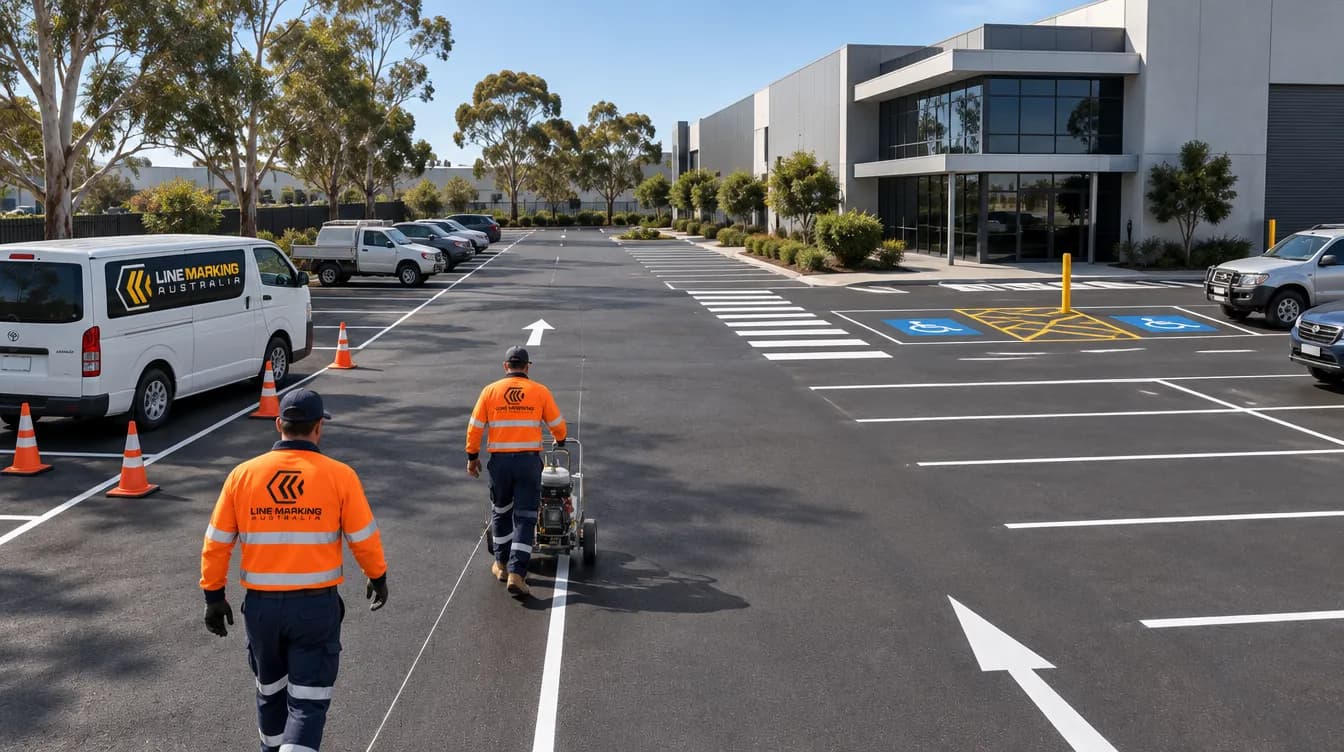
Car park line painting follows the same order every time: set out the layout, prep the surface, paint the lines, then keep traffic off until they're dry. Most of the quality is decided before the paint goes on. Here's how a proper job runs on site, what the paperwork says about it, and where cheap jobs cut corners.
How is car park line painting actually done?
A commercial car park is marked in four stages: layout set-out from a plan, surface preparation, paint application by machine and stencil, then a cure period with the area coned off. For a typical 200-bay site we usually finish in one overnight shift, so the car park is open again by morning.
That's the short version. The longer one matters because each stage has its own way of going wrong, and the problems rarely show up until the lines start peeling or someone notices the bays are crooked.
What happens before any paint goes down?
Before painting, we need to know what's being marked and where. That means a current site plan or measured sketch, a list of special bays (accessible, EV, motorcycle), and a look at the existing lines. If we're re-marking, the old layout becomes the reference. If it's a new surface, the plan is everything.
Say you manage a strata block with 40 faded bays and a few that were never in the right place. Walk it first with a tape and a phone. Photograph each bay number, note any bay that's been squeezed in beside a pillar, and mark which ones are accessible. That half hour saves a lot of back and forth later. Our guide on how to measure a car park for line marking shows what we like to see.
How do you set out the bays so they come out straight?
Setting out means transferring the plan onto the ground with small marks, then snapping lines or using a guide before anything is painted. We work from fixed points such as kerbs, columns and walls. Done properly, every bay lines up with its neighbour and the aisle widths stay true across the whole site.
It's slow, careful work, and it's where an experienced crew earns its money. One council pavement marking specification we've read puts the tolerance at no more than 20 mm from the drawn position, and that's for roads. A car park should be held to the same habit. Bays are laid out to suit the bay and aisle sizes in AS/NZS 2890.1, and our standard car park bay size post covers the numbers.
If your layout is wrong, painting it neatly only makes the mistake permanent. That's why we'd rather spend time on the set-out than rush to the paint.
How is the surface prepared?
The surface needs to be clean, dry and free of loose material, so the paint bonds to the car park and not to the dirt sitting on it. That usually means sweeping, blowing off dust, degreasing oil spots and, where old lines are flaking, removing them first. Cracks and loose patches get sorted before marking, not after.
The paperwork says the same. The Coffs Harbour City Council development specification for pavement markings says markings go on clean, dry surfaces, cleaned to give a satisfactory bond. Main Roads Western Australia's Specification 604 asks for the surface to be dry and air blasted before material goes on, and for foreign material to be removed.
Those are road specs, not car park rules, but the logic is the same: paint sticks to a clean surface. We go through the detail in how to prepare surfaces before re-marking. For smooth or sealed concrete the prep can go further, which our post on line marking on concrete explains.
What paint is used, and how is it applied?
Most car parks are marked with waterborne or solvent-based line marking paint, sprayed by a line marking machine for long runs and applied through stencils for numbers, arrows and symbols. Heavier duty areas can use epoxy, MMA or thermoplastic. The right choice depends on traffic, surface and how long you want it to last.
Road marking paints are covered by the AS 4049 series, with waterborne paint under AS 4049.3 and thermoplastic under AS 4049.2, according to the council specification above. Paint is applied to a minimum dry film thickness in those road specs (0.20 mm with one class of glass bead), which is why a thin, watery coat isn't a bargain even if it looks fine on day one.
If you're weighing up products, comparing line marking paint types and the best paint for car park lines go through the trade-offs. Our view: for a standard car park, a good waterborne paint properly applied is hard to beat for the money. For forklift lanes and high-wear zones, spend more.
What weather stops a car park line painting job?
Rain, a wet surface and heavy dew stop the job. Paint applied to a damp car park doesn't bond properly and can wash out or lift later. Very cold or very humid conditions also slow drying. We check the forecast before every shift and we'll postpone rather than gamble with your lines.
Both specifications we've cited rule out marking in wet weather. The council one adds that work shouldn't proceed if rain is likely during the process. Paint makers' datasheets add their own limits for temperature and surface moisture, so we work to the datasheet for whatever product is going down. It's one reason night work in winter can take a bit longer than you'd expect.
There's more in our post on weather and temperature for line marking.
How long until you can drive on the new lines?
Waterborne paints are usually dry to the touch in around 20 to 30 minutes, but full cure takes longer, so we stage the work and cone off fresh bays until it's safe to drive over. A 200-bay site is typically one overnight shift. Larger or more complex sites can run to a few nights.
Picture a shopping centre that can't close. We split the car park into zones, paint one section, cone it, then move on. By the time the last zone is done, the first is ready for cars. That's how you keep trading while the lines are redone.
Driving across fresh paint too early is the fastest way to ruin a good job, which is why the Main Roads specification puts the contractor on the hook for damage caused by traffic running over new markings. For timing in detail, see how long a car park re-mark takes and paint drying and curing times.
What does each stage look like, and what should you check?
The table below sets out each stage, what happens on site and what you can check. If a quote skips a stage, ask why.
| Stage | What happens on site | What you can check |
|---|---|---|
| Plan and set-out | Layout transferred from the plan using fixed points | Bay numbers, accessible bays and aisle widths match the plan |
| Surface prep | Sweep, blow off, degrease, remove failing old paint | No loose dirt or flaking paint left under the new lines |
| Marking | Machine for long lines, stencils for symbols | Straight edges, even coverage, no thin patches |
| Cure | Zones coned off until safe to drive | No tyre marks or tracking across fresh lines |
| Handover | Walk-through, cones removed | Every bay and symbol where the plan says |
What are the most common car park line painting mistakes?
The most common mistakes are painting over dirt, skipping the set-out, marking in marginal weather and opening the car park too early. Each one looks like a saving at quote time and turns into a re-do within a year or two.
- Painting over old, flaking lines. New paint over loose paint peels with it.
- Marking without a plan. Bays drift, and the accessible bay ends up in the wrong place.
- Going ahead on a damp surface. It might look dry. It often isn't underneath.
- One coat, too thin. Lines look fine for a few months, then go.
- No cure time. A car turning on fresh paint leaves a mark you'll see for years.
- Forgetting the accessible bays. These have their own requirements, covered in our disabled parking line marking guide.
What most people get wrong is judging a quote by the price per bay alone. Two quotes can look similar and hide a very different amount of prep.
Can you paint car park lines yourself?
You can for a small private area, such as a driveway or a few bays on your own property. For a commercial or strata car park we'd advise against it. The set-out, the paint and the traffic control all carry risk, and mistakes on accessible bays or aisle widths can cause compliance headaches later.
Our honest advice: hire or buy a basic marker for a private job if you must, but get the layout right first. For anything people park in every day, the cost of a redo and the liability if someone trips or reverses into a poorly marked bay usually outweigh the saving. Our DIY vs professional line marking cost comparison works through the numbers, and what drives car park line marking cost explains what you're paying for.
What should you do next?
Get your current site plan, or take a few photos and a rough sketch of the car park. Note the number of bays, any special bays and the surface type. That's enough for us to scope the work. If you want the full picture first, our car park line marking guide covers standards and planning, and our car park line marking service page shows what we do.
When you're ready, upload your plans for a fixed-price quote and we'll come back with the work priced against what we can see.
Need Professional Line Marking?
Upload your site plans and get a fixed-price quote within 48 hours. AS/NZS compliant. No call-out fees.
Frequently Asked Questions
How is a car park line painted?
The layout is set out from a plan, the surface is cleaned and dried, and lines are sprayed by machine with stencils for numbers and symbols. The area is coned off while the paint cures. Most of the quality comes from the set-out and prep, not the painting itself.
How long does car park line painting take?
A typical 200-bay car park usually takes one overnight shift, so it's open again by morning. Larger or more complex sites can need a few nights, often staged in zones so the car park keeps trading. Weather, surface condition and paint type all affect the timing.
How long does line marking paint take to dry on a car park?
Waterborne paint is usually dry to the touch in about 20 to 30 minutes, but it takes longer to cure fully. We cone off fresh bays until traffic can drive over them without marking the paint. The paint's datasheet gives the exact cure time for each product.
What paint is used for car park lines in Australia?
Most car parks use waterborne or solvent-based line marking paint. Heavier-wear areas such as forklift lanes can use epoxy, MMA or thermoplastic. Road marking paints are covered by the AS 4049 series. The right choice depends on traffic, surface type and how long you want the lines to last.
Can you paint car park lines in the rain?
No. Paint applied to a wet surface doesn't bond properly and can lift or wash out. Council and road authority specifications rule out marking in wet weather, and some say to stop if rain is likely. We check the forecast and postpone the job rather than risk your lines.
Do you need to remove old lines before repainting a car park?
Only where they're flaking or failing. Sound old paint can usually be painted over after cleaning, but loose paint will peel and take the new coat with it. We inspect the existing lines first and remove the failing sections so the new paint bonds to a solid surface.
Can I paint my own car park lines?
For a small private area, yes. For a commercial or strata car park we'd advise against it. The set-out, the paint, the traffic control and accessible bay requirements all carry risk, and a poorly marked bay can become a compliance or liability problem. Send us the plan and we'll quote.
How much does car park line painting cost?
It depends on the number of bays, the surface, the amount of prep, the paint type and the access hours, so we can't give an honest figure without seeing the site. Upload your plan and photos through our quote page and we'll come back with a fixed price based on what we can see.
Need this done? Get a fixed-price quote in 48 hours
Tell us where and what you need. AS/NZS compliant, no call-out fees, and a real fixed price — not an estimate that changes at invoicing.
Or call 0417 460 236Jamie (24/7 quotes): 0468 069 002Compliance-Ready Guarantee: every job is marked to AS/NZS 2890 & AS 1742, dimensionally verified, and delivered with full compliance documentation, backed by our 12-month workmanship guarantee.
Written by
Nizi BhandaryLine Marking Specialist, Line Marking Australia
Nizi Bhandary is a line marking specialist with Line Marking Australia, working hands-on across car park, warehouse, road and sports-court projects nationwide. Nizi focuses on AS/NZS 2890 and AS 1742 compliant work and writes these guides to help facility managers, builders and councils get compliant, long-lasting line marking — without the guesswork.
Related Articles
The Complete Guide to Car Park Line Marking in Australia (2026)
Everything you need to know about car park line marking in Australia — standards, costs, materials and how to choose the right contractor for AS/NZS 2890.1 compliance.
90-Degree Parking Bay and Aisle Width Explained
Discover the specifics of 90-degree parking dimensions in Australia. Our comprehensive guide covers everything from bay sizes to common mistakes.
Standard Car Park Bay Size in Australia
Discover the essentials of standard carpark width in Australia. Learn from Line Marking Australia's expertise on sizes, standards, and best practices.
Our Line Marking Services
Professional services related to the topics covered in this guide:
Ready to Get Your Line Marking Sorted?
Upload your site plans and receive a fixed-price quote within 48 hours. No surprises, no cost blowouts, just clear pricing you can take to your committee or manager.
Or call us directly: 0417 460 236